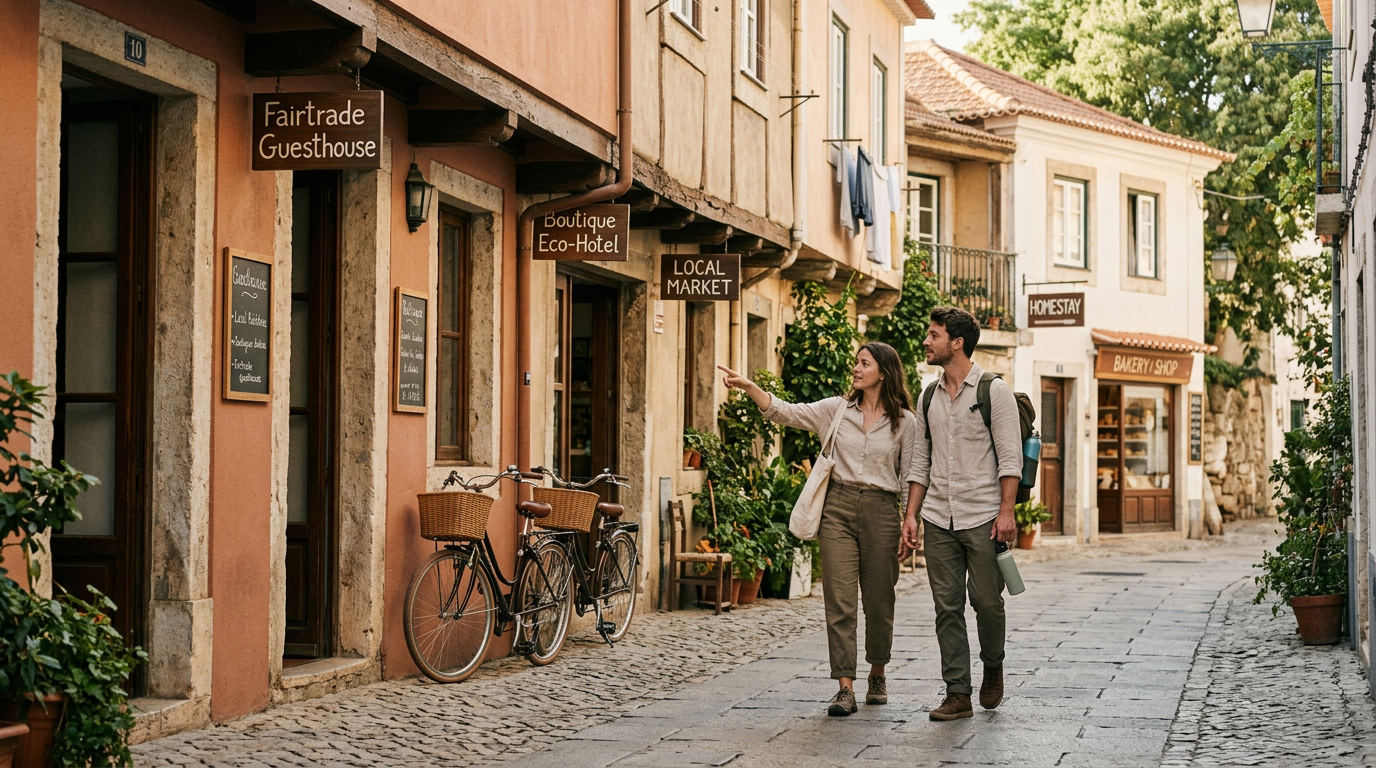
Travel accommodation is no longer simply about finding the cheapest room in the best location. More travelers are asking where their money goes, who benefits from their booking, and whether their accommodation choice affects the people who actually live in the destination.
That has made ethical alternatives to Airbnb an increasingly relevant topic for responsible tourists.
Airbnb itself points out that short-term rentals operate under different regulations around the world and says it works with governments on responsible hosting and local rules. At the same time, cities and governments in some destinations have introduced restrictions designed to protect housing availability and local communities. So, is there a better way to find accommodation?
Absolutely.
You can choose from locally owned B&Bs, regulated hotels, hostels, home exchanges, housesitting, community-focused accommodation platforms, and hosted stays. None is automatically perfect, but each can offer a different way to travel more thoughtfully.
The key is not simply avoiding one company. Responsible travel means considering the real impact of the accommodation you choose.
What Makes an Accommodation Ethical?
Before looking at specific Airbnb alternatives, it helps to define what “ethical” actually means.
There is no universal accommodation label that guarantees a property is sustainable or responsible. A small guesthouse can have poor environmental practices, while a large hotel might have strong local employment and sustainability programs.
Instead, look at several factors.
Local economic benefit
Does your spending support local owners, employees, suppliers, restaurants, and other businesses?
Housing impact
Is the accommodation specifically intended for visitors, or has an ordinary residential property been removed from the long-term housing market?
Legal compliance
Does the property follow the destination’s licensing, zoning, taxation, and short-term rental rules?
Community relationship
Are guests expected to respect neighbors, local customs, and residential areas?
Environmental responsibility
Does the property take meaningful steps to reduce energy use, waste, water consumption, and unnecessary resource use?
Authenticity
Does the accommodation allow you to experience the destination respectfully rather than treating a residential neighborhood like a temporary tourist resort?
These considerations are more useful than simply trusting words such as “eco,” “green,” or “ethical.”
Why Are Travelers Looking for Airbnb Alternatives?

Short-term rentals can provide genuine benefits. They can give families more space, help some hosts earn additional income, and allow travelers to stay in areas without traditional hotels. Airbnb itself reports that most of its hosts have only one entire-home listing and emphasizes its economic contribution to communities. However, the effects are not identical everywhere.
In destinations where housing is already under pressure, large numbers of full-time vacation rentals can become part of a broader debate about residential supply, affordability, and neighborhood change.
That is why several governments have introduced short-term-rental regulations. For example, the UK government announced planning and registration measures intended to help protect communities from excessive short-term lets. For travelers, this means one simple thing:
Don’t judge accommodation only by the booking platform. Look at the individual property and its local context.
Fairbnb: A Community-Focused Airbnb Alternative
Fairbnb is one of the most recognizable names when discussing ethical alternatives to Airbnb.
The cooperative platform was created as an attempt to develop a different model for short-term accommodation, emphasizing local regulations, community benefits, and more responsible hosting.
One of its distinctive ideas is that part of its commission can support community projects.
Academic research published in 2025 examined Fairbnb’s model and highlighted its focus on local regulation, transparency, and community contributions. The research also noted challenges including limited popularity and concerns about how an ethical platform can avoid reproducing some of the same characteristics of conventional short-term-rental platforms. That nuance is important.
A platform should not be considered automatically ethical simply because its mission sounds responsible.
What Makes Fairbnb Different?
Fairbnb’s approach has focused on principles such as:
- Supporting local communities
- Encouraging compliance with local rules
- Limiting professionalized hosting
- Promoting responsible tourism
- Funding community initiatives
- Creating a more cooperative approach to accommodation
Who Is Fairbnb Best For?
Fairbnb may be a good choice for travelers who want the privacy of an apartment but also want to investigate a platform built around community-oriented principles.
Availability is destination-dependent, so always check whether it has suitable properties where you are traveling.
A Responsible Traveler’s Tip
Before booking, investigate the actual listing rather than relying solely on the platform’s reputation.
Ask:
Who owns the property?
Is it legally permitted?
Is it someone’s occasional home or a dedicated tourist rental?
Those questions matter regardless of which platform you use.
Traditional Bed and Breakfasts

If you want an authentic stay with personal hospitality, a traditional B&B is one of the easiest alternatives to consider.
Bed and breakfasts have been part of tourism for generations. Many are independently owned and operated by people who live in the destination.
Instead of arriving at a self-check-in apartment and barely interacting with anyone, you may have breakfast with your host and receive recommendations based on their knowledge of the area.
That human connection can make a trip much more memorable.
Why Choose a B&B?
A locally operated B&B can provide:
- Personalized hospitality
- Local recommendations
- Breakfast
- A smaller-scale experience
- Direct interaction with residents
- Support for independent businesses
It can also be a particularly good choice in rural areas, historic towns, and smaller destinations where large hotel chains are limited.
How to Find a Genuine B&B
Don’t assume every property using “B&B” in its name operates like a traditional bed and breakfast.
Look for signs such as:
- A clearly established business
- Local contact information
- A host or staff member available during your stay
- Breakfast or hospitality services
- Registration with relevant tourism authorities where applicable
- Consistent guest reviews
- An official business website or tourism-directory listing
You can also contact the property directly and ask questions before booking.
Why Booking Direct Can Help
If the property offers secure direct booking, compare the price with major booking platforms.
Some independent accommodations may offer different rates, packages, or conditions when guests book directly.
If you save money, consider spending some of it at a locally owned restaurant, market, museum, or tour operator.
That helps spread tourism spending throughout the destination.
Hotels, Hostels and Serviced Apartments
Hotels are sometimes overlooked by travelers searching for authentic or sustainable accommodation.
But a properly regulated hotel can be a very practical responsible-tourism option.
Hotels are generally purpose-built or formally operated as visitor accommodation. They aren’t necessarily taking an ordinary long-term residential property away from residents.
That distinction can matter greatly in destinations facing housing pressure.
Why Hotels Can Be a Responsible Choice

A hotel may offer:
- Professional safety standards
- Reception and guest support
- Regulated operations
- Consistent accommodation standards
- Local employment
- Convenient tourist locations
- Housekeeping and shared facilities
However, not every hotel has the same environmental or social impact.
A huge international resort and a locally owned 20-room hotel can have very different economic footprints.
Consider Locally Owned Hotels
When two properties offer similar prices and locations, consider choosing the locally owned option.
Money spent there may circulate through local:
- Employees
- Food suppliers
- Maintenance businesses
- Tour operators
- Restaurants
- Transportation providers
This isn’t a guarantee of better ethics, but ownership is a useful factor to consider.
Hostels: Excellent for Budget Travelers
Hostels are another useful Airbnb alternative, particularly for solo travelers.
Modern hostels aren’t necessarily just dormitories. Many offer private rooms, shared kitchens, workspaces, lounges, and social events.
They can also encourage travelers to meet others without requiring everyone to rent a separate apartment.
Hostels Are Best For:
- Solo travelers
- Backpackers
- Young travelers
- Budget-conscious tourists
- Social travelers
- Short city breaks
If you want a private room but still want access to shared facilities, look for hostels offering private accommodation.
Serviced Apartments and Aparthotels
For longer trips, a serviced apartment can provide the comfort of an apartment without necessarily relying on a residential home being converted into a full-time vacation rental.
These properties often include:
- Kitchens
- Laundry facilities
- Living spaces
- Work areas
- Housekeeping
- Hotel-style services
They are particularly useful for families, business travelers, and people staying for several weeks.
Home Exchange
Would you rather live in an actual home than a hotel?
A home exchange could be worth considering.
The concept is simple: members allow other travelers to stay in their homes while they stay in another member’s property.
Some arrangements involve direct swaps, while other systems use points or credits.
HomeExchange, for example, describes responsible travel as involving choices that minimize negative environmental and community impacts.
Why Home Exchange Is Appealing
A home exchange can provide:
- Multiple bedrooms
- A full kitchen
- Laundry
- Living space
- A residential neighborhood
- A more ordinary daily routine
- Potentially significant savings for longer trips
For families, this can be particularly attractive.
Instead of booking two hotel rooms, a family might stay in a home with enough space for everyone.
Experience the Destination Like a Resident
Home exchange can encourage slower travel.
You might wake up, walk to the neighborhood bakery, shop at the local supermarket, cook dinner at home, and speak with nearby residents.
That can create a more meaningful experience than staying entirely within tourist districts.
But Is Home Exchange Always Ethical?
No accommodation model should receive a free ethical pass.
This is especially important when evaluating home exchanges.
Ask:
- Is this the owner’s actual home?
- How frequently is it being used by tourists?
- Is it legally permitted?
- Does the arrangement contribute to housing pressure?
- Is the property being operated commercially?
The context matters.
A genuine occasional home swap is very different from a property purchased specifically to function as a year-round tourist rental.
Housesitting
If you’re flexible with dates and don’t mind responsibility, housesitting can be one of the most interesting Airbnb alternatives.
The basic arrangement is an exchange of responsibilities.
A homeowner needs someone to look after their property, pets, plants, or garden while they’re away. A traveler gets somewhere to stay.
There may be no traditional nightly accommodation charge, although housesitting platforms can have membership fees and individual arrangements can vary.
What Does a Housesitter Usually Do?
Responsibilities can include:
- Feeding pets
- Walking dogs
- Watering plants
- Collecting mail
- Keeping the property secure
- Basic cleaning
- Looking after a garden
- Following household instructions
The exact requirements should always be agreed upon before accepting a stay.
Why Housesitting Supports Slow Travel
Housesitting naturally encourages longer stays.
Instead of spending two nights in one city and moving on, you may stay for several weeks.
That can lead to:
- Less frequent transportation
- Deeper local experiences
- More spending in neighborhood businesses
- Less pressure to constantly visit major tourist attractions
- A slower travel rhythm
It can be especially attractive to remote workers and digital nomads.
Is Housesitting Completely Free?
Not necessarily.
Some housesitting websites charge membership fees, and travelers are responsible for their own transportation, food, and other expenses.
Think of housesitting as a different accommodation model, rather than guaranteed free travel.
Couchsurfing
Couchsurfing is perhaps the most social option on this list.
Instead of renting a private apartment, travelers stay with local hosts.
The accommodation might be a couch, spare bedroom, or another area within the host’s home.
The primary attraction is often the cultural exchange rather than simply saving money.
Why Travelers Choose Couchsurfing
A local host may help you discover:
- Neighborhood restaurants
- Local markets
- Cultural customs
- Public transportation
- Less touristy attractions
- Local events
- Everyday life
For someone traveling alone, that interaction can completely change the experience of a destination.
Safety Should Come First
Couchsurfing requires more preparation than booking a hotel.
Before staying with someone:
- Read their profile carefully.
- Check reviews and references.
- Communicate through the platform.
- Ask about sleeping arrangements.
- Discuss house rules.
- Tell someone you trust where you are staying.
- Have a backup accommodation plan.
- Never ignore your instincts.
You should never feel pressured to stay somewhere simply because the accommodation is free.
Who Is Couchsurfing Best For?
It’s generally better suited to travelers who genuinely enjoy meeting people and sharing experiences.
If you value complete privacy, a hotel or private guesthouse will probably be a better match.
Ethical Airbnb Alternatives Compared
Choosing between these options can be difficult, so here’s a quick overview.
| Accommodation | Best For | Privacy | Local Interaction | Budget Potential |
| Fairbnb | Responsible apartment seekers | High | Medium | Medium |
| B&B | Couples & authentic stays | Medium–High | High | Medium |
| Hotel | Convenience | High | Low–Medium | Medium |
| Hostel | Solo & budget travelers | Low–Medium | High | High |
| Serviced apartment | Families & long stays | High | Medium | Medium |
| Home exchange | Families & homeowners | High | Medium | High |
| Housesitting | Slow travelers | High | Medium | Very High |
| Couchsurfing | Social travelers | Low | Very High | Very High |
Remember that prices and availability vary significantly between destinations.
How to Tell If an Accommodation Is Actually Ethical
This may be the most important section of the entire guide.
You can find a property on a supposedly responsible platform and still discover that it doesn’t align with your values.
Likewise, an accommodation on a mainstream booking website may be an excellent responsible choice.
Here’s what to investigate.
Check Local Laws
Search for your destination’s official short-term accommodation rules.
Some cities require permits, registration, or specific licenses.
For example, governments in some destinations have introduced rules specifically designed to control the growth of short-term rentals and protect residential communities.
Find Out Who Owns the Property
Local ownership isn’t everything, but it matters.
Ask whether the accommodation is:
- Family owned
- Independently operated
- Locally managed
- Part of a large property-management company
- Owned by an investment group
Look at the Number of Properties
One local host renting an occasional room is fundamentally different from an operator managing dozens of entire homes.
Large-scale ownership deserves additional scrutiny in cities experiencing housing shortages.
Check Whether the Host Lives There
For hosted accommodation, ask whether the owner actually lives on-site.
This can help distinguish a genuine homestay from a professionally managed vacation rental.
Search for an Official Tourism Listing
Many destinations have tourism organizations or accommodation directories.
If a property is listed by an official tourism organization or recognized accommodation association, that can provide another layer of information.
Read Recent Reviews
Don’t just look at the star rating.
Read what guests actually say.
Look for comments about:
- Host presence
- Noise
- Neighborhood relationships
- Cleanliness
- Check-in
- Property management
- Accuracy of the listing
Look at the Property’s Location
Ask yourself whether you’re staying in an area intended for tourism or directly inside a residential community.
Neither is automatically right or wrong, but understanding the context helps you make an informed choice.
What About Airbnb Itself?
It’s worth keeping the discussion balanced.
Airbnb says it has introduced tools for governments and communities to understand short-term rental activity and enforce local rules. It also says approximately 80% of its top 200 locations have some form of short-term-rental regulation. The platform also reports that 77% of hosts have only one entire-home listing. That means the question isn’t simply:
“Is Airbnb ethical?”
A better question is:
“Is this particular Airbnb appropriate for this destination and community?”
A spare bedroom in someone’s primary home can have a very different impact from an apartment operated commercially throughout the year.
Responsible travelers should therefore evaluate individual properties rather than making assumptions based only on the platform.
10 Ways to Make Your Accommodation More Responsible
Your accommodation choice is only one part of responsible tourism.
You can reduce your impact further with a few simple habits.
Stay Longer
Longer stays can reduce the need for frequent transportation and allow you to experience a destination at a slower pace.
Travel During Shoulder Season
If your schedule allows, consider visiting outside the busiest periods.
Choose Local Businesses
Eat at independent restaurants, shop at local markets, and book experiences with local operators.
Respect Residential Areas
Keep noise down, especially at night.
Remember that people may actually live next door.
Follow Recycling Rules
Waste systems differ between destinations. Learn the local system rather than assuming it works like the one at home.
Reduce Water Consumption
Reuse towels and avoid unnecessarily long showers.
Switch Off Energy
Turn off lights, heating, cooling, and appliances when they’re not needed.
Avoid Illegal Accommodation
A cheap room isn’t worth contributing to a property’s legal or community problems.
Use Public Transportation
Whenever practical, use trains, buses, walking, or cycling instead of private cars.
Respect Local Culture
Learn basic etiquette before you arrive.
Responsible tourism begins with understanding that you’re a guest.
Responsible Accommodation Doesn’t Have to Be Expensive
One misconception about sustainable travel is that it always costs more.
That’s not necessarily true.
Some of the most affordable accommodation options can also provide meaningful local experiences.
For example:
- Hostels can reduce accommodation costs.
- Housesitting can eliminate conventional nightly rates.
- Couchsurfing can connect travelers with hosts.
- Home exchanges can be cost-effective for families.
- Local guesthouses can compete with chain hotels.
- Longer stays may unlock better rates.
The important thing is to compare the total cost, not just the advertised nightly price.
Consider taxes, cleaning fees, transportation, food, parking, and other charges.
A slightly more expensive room in a central location might actually cost less overall if you can walk rather than pay for daily transportation.
How to Support the Local Community Beyond Your Hotel
Where you sleep is only one part of your tourism footprint.
Your daily spending can also influence the destination.
Instead of spending your entire trip inside large international businesses, consider directing some of your budget toward locally owned companies.
Eat Local
Choose independent restaurants, cafés, bakeries, and markets.
Shop Local
Purchase authentic products directly from local makers rather than mass-produced souvenirs.
Hire Local Guides
A knowledgeable local guide can provide cultural context while keeping tourism income within the community.
Visit Lesser-Known Areas Responsibly
Don’t simply replace one overcrowded attraction with another hidden location.
Research whether smaller communities actually welcome visitors and follow their guidance.
Respect Residents
The best responsible traveler is not the person who takes the perfect sustainability photo.
It’s the person who remembers that destinations are people’s homes.
The Most Sustainable Accommodation Is the One That Fits the Destination
There is no single accommodation type that works everywhere.
In one destination, a locally owned B&B may be ideal.
In another, a regulated hotel may make more sense.
For a long-term traveler, housesitting could be the best option.
For a family, home exchange or a serviced apartment might provide the right combination of space and practicality.
And in a city with serious housing pressure, avoiding full-time residential vacation rentals altogether may be the most responsible choice.
That’s why responsible tourism requires context.
Don’t follow a generic rule blindly.
Research the destination.
Conclusion
Choosing an ethical alternative to Airbnb can make your trip more meaningful while helping local communities, independent hosts, and sustainable tourism initiatives. Options such as homestays, hospitality-exchange networks, eco-friendly accommodations, and community-focused booking platforms can provide more authentic experiences than conventional short-term rentals.
The best choice depends on your destination, budget, travel style, and priorities. Before booking, check who owns the property, whether the accommodation follows local rules, how your money benefits the community, and what previous guests say about their experience.
Responsible tourism does not mean avoiding Airbnb at all costs. It means making thoughtful accommodation choices, supporting local businesses when possible, respecting neighborhoods, and considering the social and environmental impact of your stay. In 2026, choosing where you sleep can be one simple way to travel more responsibly.
Frequently Asked Questions
What are the best ethical alternatives to Airbnb in 2026?
Some popular options include Fairbnb, BeWelcome, Trustroots, eco-friendly accommodation providers, local homestays, and independent hotels or guesthouses. The right option depends on whether your priority is supporting communities, reducing environmental impact, or having a more authentic local experience.
Are ethical Airbnb alternatives usually cheaper?
Not always. Some alternatives may have similar or higher nightly prices, while others, such as hospitality exchanges, can significantly reduce accommodation costs. Instead of comparing only the advertised nightly rate, compare the total price, fees, location, and what is included.
How can I make sure my accommodation supports local communities?
Look for locally owned guesthouses, family-run homestays, community-based tourism projects, and properties where hosts clearly describe their connection to the destination. Community-led homestays can help keep tourism income within the local economy.
Is staying in a homestay more sustainable than using Airbnb?
A homestay can be a more responsible choice when it is genuinely locally operated and benefits the host community. Research also indicates that social, economic, and environmental benefits can influence travelers’ perceptions and intentions toward peer-to-peer accommodation.
Can I still use Airbnb and travel responsibly?
Yes. If Airbnb is the most practical option, choose locally operated properties where possible, avoid listings that appear to be part of large property portfolios, respect local rules and neighbors, and carefully read reviews before booking. Choosing responsible hosts can reduce some of the concerns associated with short-term rentals.
Banke Bihari Temple Timings: Darshan & Aarti 2026 | Experience My India
Cycling Holidays in the Netherlands | Cycling Holidays: 15 Amazing Routes, Tips & Places for 2026