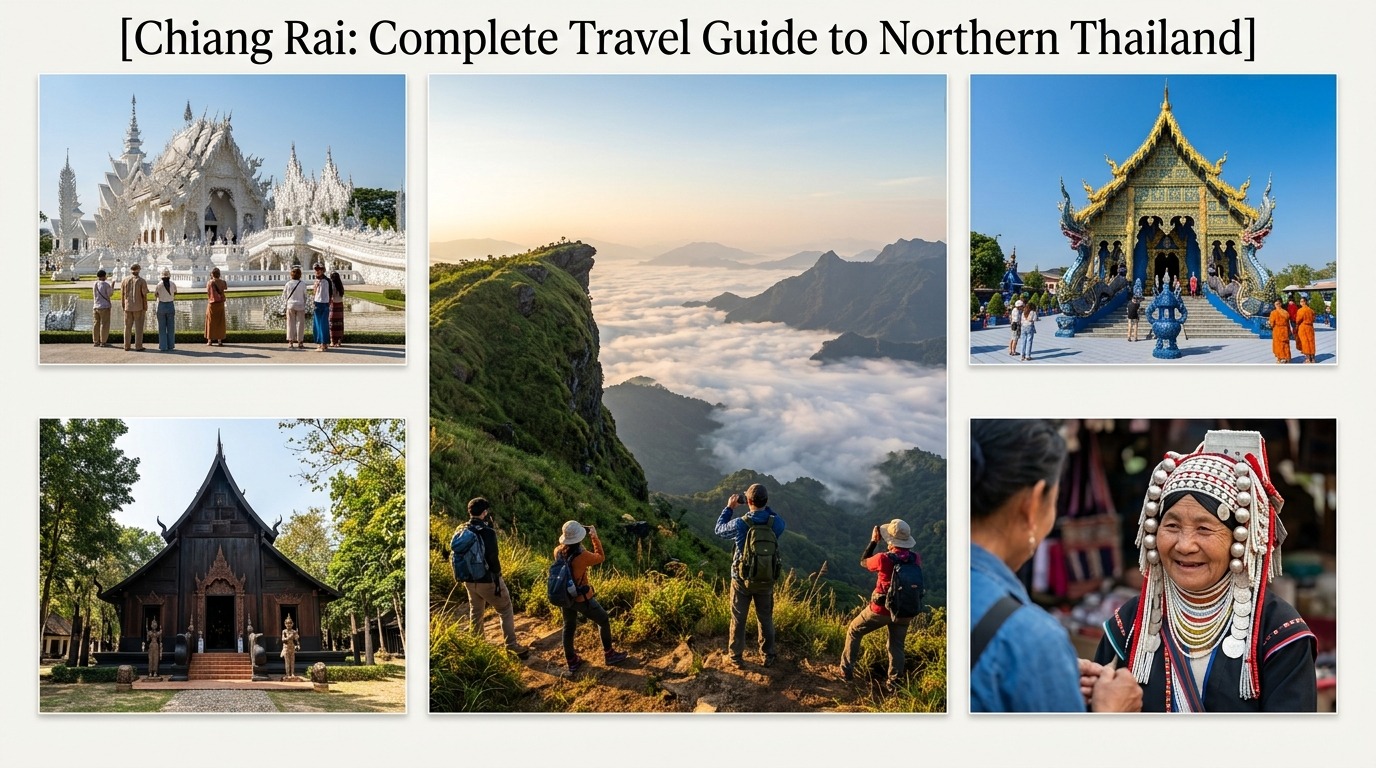
Chiang Rai is one of northern Thailand’s most rewarding destinations for travelers who want more than busy city streets and crowded tourist attractions. Surrounded by mountains, forests, rivers, and rural communities, the city offers a slower atmosphere while still providing plenty to see and do. It is best known for its distinctive temples, but its appeal goes well beyond religious landmarks, with local markets, coffee farms, art, food, and access to the wider landscapes of northern Thailand.
A trip to Chiang Rai can be as relaxed or adventurous as you choose. You can spend a morning exploring unusual temple architecture, visit tea plantations in the hills, discover local food markets, or take a day trip toward the Golden Triangle. The city also works well as part of a longer northern Thailand itinerary, particularly when combined with Chiang Mai. This guide covers the main attractions, best time to visit, transportation, places to stay, food, day trips, and practical advice for planning your trip.
Why Visit Chiang Rai?
Chiang Rai has a different character from Chiang Mai. While both cities are important destinations in northern Thailand, Chiang Rai generally feels smaller and less hectic. The pace makes it easier to spend a few days exploring without feeling that you have to rush from one attraction to another.
The city’s architecture is one of its biggest attractions. Wat Rong Khun, commonly called the White Temple, has become an international symbol of Chiang Rai because of its striking white exterior and detailed design. Wat Rong Suea Ten, known as the Blue Temple, offers another memorable example of contemporary Buddhist art and architecture.
Beyond the temples, Chiang Rai provides access to rural northern landscapes. Hills, tea plantations, waterfalls, forests, and villages surround the city, giving travelers plenty of options for day trips and outdoor experiences.
The city is also known for its food culture. Northern Thai cuisine includes dishes that may be quite different from the Thai food commonly found in international restaurants. Local markets are a good place to discover regional flavors at reasonable prices.
Chiang Rai is particularly suitable for travelers who enjoy culture, photography, nature, local food, and slower-paced exploration. It can also be a good choice for families and couples who want a destination with a mixture of sightseeing and relaxation.
Best Places to Visit in Chiang Rai
Chiang Rai has several well-known attractions, but the city is best experienced by combining major sights with smaller local discoveries.
Wat Rong Khun — The White Temple
Wat Rong Khun is Chiang Rai’s most famous attraction. The temple complex is recognized for its brilliant white architecture, intricate details, and unusual visual symbolism.
Unlike many historic Thai temples, Wat Rong Khun is a modern artistic creation. Its design combines Buddhist themes with contemporary artistic elements, making it visually different from traditional temple complexes.
Visitors should allow enough time to look closely at the details rather than simply taking photographs from outside. Some areas may have specific visitor rules, so follow signs and instructions from the temple.
Because it is one of Chiang Rai’s most visited attractions, arriving earlier can help you experience it before the busiest part of the day.
Wat Rong Suea Ten — The Blue Temple
Wat Rong Suea Ten is another of Chiang Rai’s distinctive temples. Its deep blue colors and elaborate interior decoration give it a very different appearance from the White Temple.
The temple is located within the city area, making it relatively easy to combine with other attractions.
As with any active religious site, visitors should dress respectfully and behave quietly inside the temple.
Wat Phra Kaew
Wat Phra Kaew is one of Chiang Rai’s important historical temples. It is associated with the discovery of the Emerald Buddha, which is now housed in Bangkok’s Temple of the Emerald Buddha.
The Chiang Rai temple itself remains an important religious and cultural site and provides a quieter experience than some of the city’s more heavily photographed attractions.
Wat Phra That Doi Chom Thong
This temple sits on a hill and is one of the older religious sites in Chiang Rai. It provides another opportunity to experience northern Thai Buddhist traditions without the crowds found at the city’s most famous attractions.
Clock Tower
Chiang Rai’s golden clock tower is a central landmark and becomes particularly attractive after dark when its lighting and display can be seen.
It is easy to combine with an evening walk through the city center, especially if you are already exploring nearby restaurants and markets.
Temples, Culture, and Local Experiences

Temples are an important part of Chiang Rai’s identity, but visitors should look beyond the most famous buildings to understand the local culture.
Northern Thailand has its own architectural traditions, food, festivals, handicrafts, and cultural influences. Chiang Rai’s location near the borders of Myanmar and Laos has also contributed to a diverse regional identity.
Temple Etiquette
Visitors should dress appropriately when entering temples. Shoulders and knees are generally expected to be covered, particularly in more formal religious spaces.
Remove shoes where required and avoid loud conversations or disruptive behavior.
Photography may be permitted in many areas, but visitors should follow posted restrictions and avoid photographing worshippers in an intrusive way.
Local Markets
Markets provide a more everyday view of Chiang Rai. You can find fresh produce, prepared food, clothing, crafts, and small souvenirs.
The Saturday Walking Street and Sunday Walking Street are among the city’s popular market experiences, although operating details can change, so check current local information.
The Chiang Rai Night Bazaar is another option for evening shopping and food.
Markets are best enjoyed without rushing. Walk around first, see what local dishes are available, and then decide what you want to try.
Hill-Tribe and Rural Experiences
The surrounding region is home to several ethnic communities with distinct traditions and histories.
If you want to visit villages or take part in cultural activities, choose responsible operators that work respectfully with local communities. Avoid experiences that turn people or traditional lifestyles into staged photo opportunities without meaningful benefit to residents.
Best Time to Visit Chiang Rai
Chiang Rai has a tropical climate with distinct seasonal differences. The best time for many visitors is the cooler and drier period, particularly from roughly November through February.
Temperatures are generally more comfortable for sightseeing during these months, although nights can feel cool compared with other parts of Thailand.
The hot season can make outdoor sightseeing more tiring, particularly around midday. The rainy season brings higher humidity and rainfall, but showers do not necessarily prevent a successful trip.
One important consideration is seasonal air quality. Northern Thailand can experience periods of agricultural burning and smoke, particularly around the late dry season. Conditions vary from year to year, so travelers with outdoor plans should check current air-quality information before visiting.
| Season | General Conditions | Best For | Considerations |
| November–February | Cooler and generally drier | Sightseeing and outdoor trips | Popular travel period |
| March–May | Hotter and potentially smoky | Flexible travelers | Check air quality |
| June–October | Wetter and humid | Green landscapes and quieter travel | Rain can affect outdoor plans |
How Many Days in Chiang Rai?
Two to three full days are enough to experience the main city attractions and one or two nearby areas.
Four or five days allow a slower itinerary with additional time for tea plantations, mountain areas, rural excursions, and local markets.
If Chiang Rai is part of a longer northern Thailand journey, even two nights can provide a worthwhile introduction.
How to Get to Chiang Rai
Chiang Rai is accessible by air and road, with connections to other major destinations in Thailand.
By Air
Mae Fah Luang–Chiang Rai International Airport serves the city and is located outside the central area.
Domestic flights make flying one of the quickest options for travelers coming from Bangkok or other connected destinations.
Airport transfer options include taxis and other local transportation. Confirm the current arrangements when you arrive.
From Chiang Mai
Traveling between Chiang Mai and Chiang Rai by road is common.
Buses provide a budget-friendly option, while private cars and drivers offer more flexibility for travelers who want to stop along the way.
The journey takes several hours depending on traffic and transport conditions, so it is better to plan it as a meaningful transfer rather than assuming it will be a quick trip.
By Bus
Long-distance buses connect Chiang Rai with other destinations in Thailand. This is often a practical choice for budget travelers.
For longer journeys, consider the departure time and whether you prefer daytime travel for scenery or an overnight service to save accommodation costs.
By Private Car
Hiring a private driver can be worthwhile if you want to visit several attractions outside the city.
It allows you to combine places that are difficult to reach efficiently by public transport and provides flexibility with departure times.
Getting Around Chiang Rai

Chiang Rai is relatively manageable, but the best transport option changes depending on where you want to go.
For city attractions, taxis, ride-hailing services where available, local transport, and hired vehicles can all be useful.
For rural areas, mountain destinations, and attractions outside the city, a private car or organized tour can be more convenient.
Motorbike rental is another option for experienced and legally permitted riders. Northern Thailand’s roads can include curves, steep sections, and changing traffic conditions, so only ride if you are confident and properly licensed.
Walking
Walking is enjoyable around central areas, particularly early in the morning or after sunset.
However, distances between major attractions can be considerable, and Chiang Rai’s heat can make long daytime walks uncomfortable.
Tuk-Tuks and Local Transport
Tuk-tuks can be useful for short journeys. Confirm the price before starting when a fixed fare is not displayed.
Rental Vehicles
A rental car offers the greatest flexibility for exploring outside Chiang Rai.
Before renting, check insurance, licensing requirements, fuel arrangements, and the condition of the vehicle.
Where to Stay in Chiang Rai
Chiang Rai has accommodation for different budgets, from inexpensive guesthouses to boutique hotels and larger properties.
Chiang Rai City Center
Staying near the city center is convenient for travelers who want access to markets, restaurants, cafés, and evening activities.
It is a good option for short visits because you can spend less time traveling between accommodation and city attractions.
Riverside Area
The Kok River area offers a quieter atmosphere while remaining reasonably close to the center.
Some hotels and guesthouses in this area provide peaceful surroundings and views.
Outside the City
Travelers looking for nature and relaxation can stay farther outside the urban area.
Accommodation near tea plantations, countryside, or mountain landscapes can create a more peaceful experience, although you will need transportation for sightseeing.
Choosing Accommodation
Consider your itinerary before booking.
If you plan to spend most of your time visiting city temples and markets, central accommodation is practical. If your trip focuses on rural landscapes and relaxation, staying outside the center may make more sense.
Look at:
- Location
- Airport transfer options
- Breakfast
- Air conditioning
- Pool facilities
- Parking
- Restaurant access
- Cancellation policy
- Transport availability
A cheaper hotel far from everything may not save money if you need multiple daily transfers.
Food to Try in Chiang Rai
Northern Thai cuisine is one of the highlights of visiting Chiang Rai. The flavors can be different from the sweet, spicy, and coconut-heavy dishes many international travelers associate with Thailand.
Khao Soi
Khao soi is a northern Thai noodle dish made with noodles and a rich curry-style broth, usually served with chicken or another protein and topped with crispy noodles.
It is one of the regional dishes travelers should try while in northern Thailand.
Sai Ua
Sai ua is a northern Thai sausage flavored with herbs and spices. It can be found in markets and local restaurants.
It is often served alongside vegetables, dips, and other northern dishes.
Nam Prik Ong
Nam prik ong is a northern-style chili dip commonly prepared with tomatoes and minced meat. It is usually eaten with fresh or cooked vegetables.
Local Snacks and Desserts
Markets are useful places to sample smaller portions and discover dishes you may not see on standard restaurant menus.
Try a few different foods rather than ordering only familiar international dishes. Chiang Rai is a good place to experiment with northern flavors.
Coffee and Tea
The hills around Chiang Rai are associated with coffee and tea production. Some countryside cafés and plantations offer visitors an opportunity to enjoy locally produced drinks while taking in rural scenery.
Best Day Trips From Chiang Rai
One of Chiang Rai’s biggest strengths is its location. The surrounding region offers several worthwhile day trips.
Golden Triangle
The Golden Triangle is the area where Thailand, Laos, and Myanmar meet around the Mekong and Ruak rivers.
It has a complicated history connected to regional trade and the opium trade, and modern tourism often focuses on viewpoints, museums, river scenery, and cultural attractions.
The area is quite different from central Chiang Rai and can be included in a full-day excursion.
Mae Salong
Doi Mae Salong, also known as Santikhiri, is a mountainous area known for tea cultivation and scenic landscapes.
The winding journey is part of the experience, but travelers should allow plenty of time because mountain roads can be slower than expected.
Tea plantations and local communities provide a different perspective on northern Thailand.
Doi Tung
Doi Tung is another important destination north of Chiang Rai. The area is associated with gardens, mountain scenery, cultural projects, and the Mae Fah Luang Foundation.
It is a good option for travelers who want a mixture of nature and cultural sightseeing.
Khun Korn Waterfall
Khun Korn is one of the area’s better-known waterfalls and is surrounded by forest.
Outdoor conditions can change during the rainy season, so check current access information before making the trip.
Chiang Saen
Chiang Saen is an old town near the Mekong River with historic temples and archaeological remains.
It can be combined with a Golden Triangle trip for travelers interested in northern Thai history.
| Day Trip | Main Attraction | Best For | Typical Trip Style |
| Golden Triangle | Mekong region and viewpoints | History and scenery | Full day |
| Mae Salong | Tea plantations and mountains | Nature and food | Full day |
| Doi Tung | Gardens and mountain culture | Families and sightseeing | Half or full day |
| Khun Korn | Forest and waterfall | Hiking and nature | Half day |
| Chiang Saen | Historic sites and Mekong | History | Half or full day |
Distances and travel times vary, so check current road conditions and transport options before leaving Chiang Rai.
Outdoor Adventures and Nature

Chiang Rai is surrounded by mountains and forests, making it a good destination for travelers who want outdoor experiences.
Hiking
Several areas around Chiang Rai offer walking and hiking opportunities.
Routes range from easy nature walks to more demanding mountain trails. Conditions can change significantly during the rainy season.
If you hike independently, tell someone where you are going, carry sufficient water, and avoid unfamiliar remote trails without reliable information.
Tea Plantations
Tea-growing areas such as Mae Salong provide scenic landscapes and an opportunity to learn about regional agriculture.
The hills are particularly attractive for travelers interested in photography and slower rural experiences.
Waterfalls
Waterfalls can be particularly appealing during or after the rainy season, when water levels may be higher.
However, wet-season trails can become muddy and slippery. Do not climb around waterfalls simply to reach a better photograph.
Cycling
Cycling can be enjoyable around quieter rural roads, but heat, hills, and traffic should be considered.
For longer rides, start early, carry sufficient water, and choose routes appropriate to your fitness and cycling experience.
Nature and Wildlife
Northern Thailand supports a wide range of plant and animal life.
If you visit forest areas, observe wildlife from a distance and never feed wild animals. Responsible behavior helps protect ecosystems and reduces potentially dangerous interactions.
Shopping, Nightlife, and Things to Do After Dark
Chiang Rai’s nightlife is generally more relaxed than that of Thailand’s major party destinations.
The city is better suited to evening markets, restaurants, cafés, live music, and riverside walks than large-scale nightlife.
Chiang Rai Night Bazaar
The Night Bazaar is a convenient place to explore local food, souvenirs, clothing, and crafts.
It is particularly useful for travelers who want an easy evening activity after a day of sightseeing.
Walking Streets
Weekend walking streets can combine food, shopping, entertainment, and local products.
Check current schedules because market days and operating arrangements can change.
Evening at the Clock Tower
The Clock Tower is worth seeing after dark when its lighting display creates a different atmosphere from the daytime.
It is located in an area with restaurants and other places to continue your evening.
Local Handicrafts
Chiang Rai and the surrounding region have a strong craft tradition.
Depending on where you shop, you may find textiles, handmade products, ceramics, tea, coffee, and small decorative items.
When purchasing products marketed as traditional or community-made, asking about their origin can help you support genuine local businesses.
Practical Tips for Visiting Chiang Rai
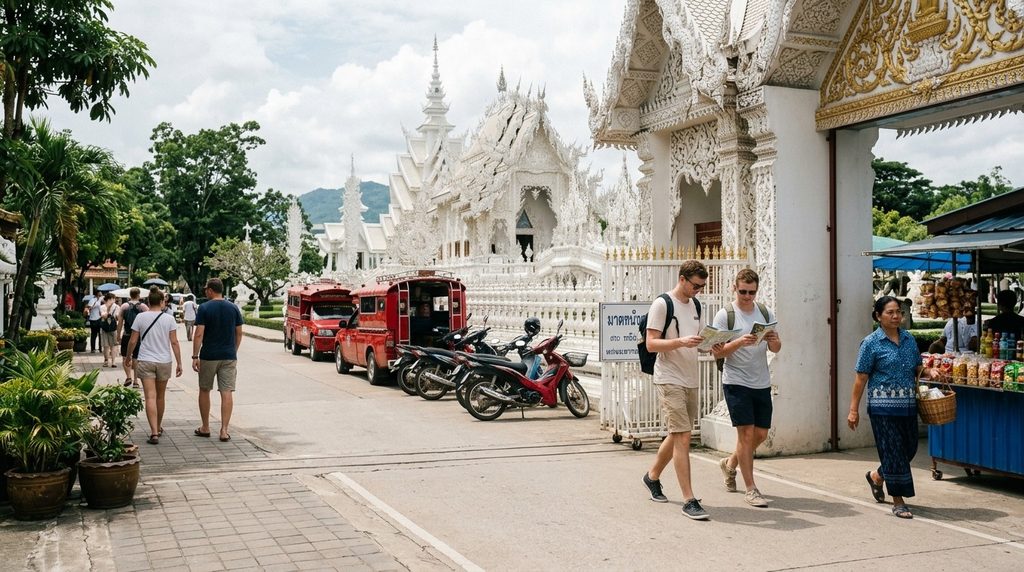
A few simple preparations can make a Chiang Rai trip much easier.
Carry Sun Protection
Northern Thailand can be very sunny and hot, particularly outside the cooler months.
Pack sunscreen, sunglasses, a hat, and light clothing.
Keep Temple Clothing Handy
If temples are an important part of your itinerary, carry a lightweight shirt or cover-up that can provide additional coverage when needed.
Start Outdoor Activities Early
Morning is often more comfortable for walking and sightseeing than the middle of the day.
Starting early also gives you more time to explore without feeling rushed.
Carry Cash
Cards are accepted at many hotels and larger businesses, but cash remains useful for markets, small restaurants, local transport, and rural areas.
Check Air Quality
If you are visiting during the late dry season, check current air-quality conditions before planning long outdoor activities.
Smoke and haze can vary considerably from year to year.
Use Reliable Transport
For day trips into mountain areas, choose transportation appropriate to the roads and weather.
If you rent a motorbike, make sure you meet the legal requirements and have appropriate insurance and safety equipment.
Respect Local Communities
Chiang Rai’s surrounding villages and cultural sites are living communities, not attractions created solely for tourists.
Ask permission before photographing people, follow local rules, and avoid entering private areas.
Learn a Few Thai Words
A few simple Thai phrases can make everyday interactions more pleasant.
Even a basic greeting or thank-you shows respect and can be appreciated by local residents.
FAQs
Is Chiang Rai worth visiting?
Yes. Chiang Rai is worth visiting for its distinctive temples, northern Thai food, mountain scenery, tea plantations, markets, and access to attractions such as the Golden Triangle.
How many days are enough for Chiang Rai?
Two to three days are enough for the major attractions, while four or five days provide more time for mountain areas, tea plantations, rural excursions, and relaxed exploration.
What is Chiang Rai famous for?
Chiang Rai is particularly famous for Wat Rong Khun, Wat Rong Suea Ten, northern Thai culture, mountain landscapes, tea-growing areas, and its location near the Golden Triangle.
What is the best month to visit Chiang Rai?
November through February is generally popular because temperatures are more comfortable and conditions are often suitable for sightseeing. Travelers should still check current weather and air quality.
Can you visit Chiang Rai and Chiang Mai together?
Yes. Chiang Rai and Chiang Mai are commonly combined in northern Thailand itineraries. Traveling between the two by road is practical, although the journey takes several hours.
Conclusion:
Chiang Rai offers a quieter and more culturally focused side of northern Thailand, with distinctive temples, mountain landscapes, local markets, regional food, and rural communities all within reach. The city is easy to enjoy at a relaxed pace, but it also provides a gateway to tea plantations, waterfalls, historic towns, and the Golden Triangle. That combination makes it suitable for travelers who want both cultural sightseeing and time outdoors.
Whether you stay for two days or build a longer northern Thailand itinerary around the city, Chiang Rai rewards travelers who leave room for exploration. Visit the famous temples, but also make time for local food, mountain scenery, markets, and the surrounding countryside. With thoughtful planning, respect for local communities, and flexibility around weather and seasonal conditions, Chiang Rai can become one of the most memorable stops on a Thailand trip.
Read more:Da Nang: Complete Travel Guide to Vietnam’s Beautiful Coastal City