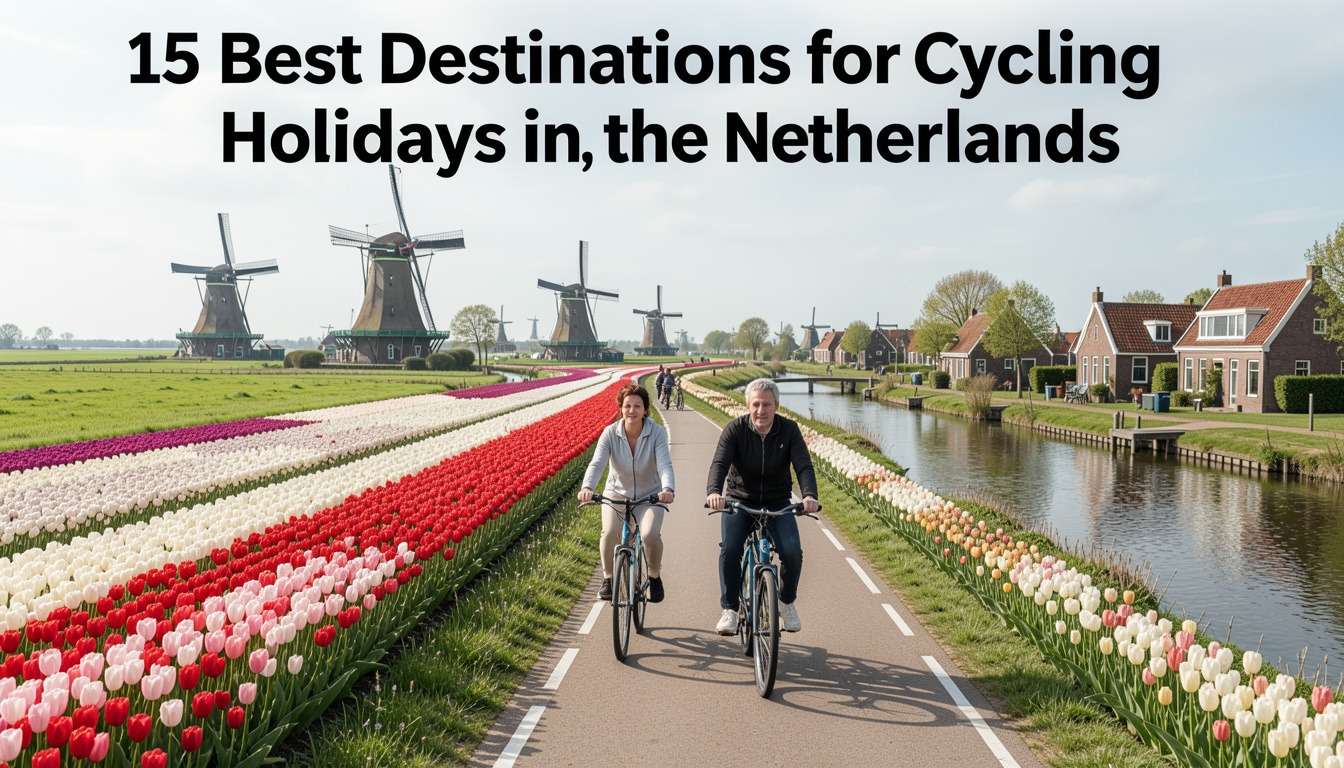
Imagine waking up beside a peaceful Dutch canal, grabbing your bicycle, and spending the day riding past colorful tulip fields, historic villages, green countryside, and iconic windmills. That is the magic of cycling holidays in the Netherlands. With flat landscapes, well-maintained cycle paths, charming towns, and an extensive network of cycling routes, the Netherlands makes it easy to explore at your own pace.
Whether you are a first-time visitor from the USA, a couple looking for a memorable European getaway, or an experienced cyclist planning a multi-day adventure, the Netherlands offers a route for almost every travel style. You can enjoy a relaxed ride around Amsterdam and Waterland, follow the Dutch coast, explore Friesland, visit Zeeland, or take a longer journey through peaceful countryside and historic cities.
In this guide, you will find the 15 best cycling routes and destinations in the Netherlands, along with the best time to visit, estimated costs, bike-rental advice, packing tips, safety information, itinerary ideas, common mistakes, and expert planning tips. By the end, you will have everything you need to plan a comfortable and unforgettable Dutch cycling adventure in 2026.
Quick Answer: Are Cycling Holidays in the Netherlands Worth It?
Yes. Cycling holidays in the Netherlands are an excellent choice for travelers who want to combine outdoor adventure, scenic landscapes, historic towns, food, and relaxed sightseeing. The country is famously flat, compact, and built around cycling, making it suitable for beginners, families, couples, and experienced riders.
The Netherlands has an extensive cycling network, including long-distance routes and numbered cycle junctions, making it possible to create your own itinerary. Official Dutch tourism information highlights destinations ranging from the Wadden Islands and Zeeland to Friesland, the Green Heart, the IJssel region, and the Dutch coast.
For a first trip, plan 5–8 days, choose a comfortable touring or e-bike setup, and aim for roughly 30–60 kilometers (19–37 miles) per day, depending on your fitness and sightseeing plans.
Why Choose Cycling Holidays in the Netherlands?
The Netherlands is one of Europe’s easiest countries to explore by bicycle. You do not need to be a serious athlete to enjoy a Dutch cycling vacation.
The landscape is mostly flat, distances between towns are manageable, and dedicated cycling infrastructure makes route planning easier than in many other destinations. Official tourism guidance notes that the country has tens of thousands of kilometers of bicycle paths, while its cycle-junction network covers much of the country.
For American travelers, this creates a very different experience from a traditional European road trip. Instead of spending hours behind a steering wheel, you can pedal between villages, stop at a café, visit a museum, photograph a windmill, and continue when you are ready.
The biggest advantages
- Mostly flat terrain
- Excellent cycling infrastructure
- Scenic countryside and waterways
- Historic cities and villages
- Easy access by train
- Excellent bike-rental options
- Routes for beginners and experienced cyclists
- E-bike-friendly travel
- Plenty of cafés and accommodations
- Flexible self-guided and organized tours
The result is a form of slow travel that lets you experience more of the landscape instead of simply passing through it.
15 Best Destinations for Cycling Holidays in the Netherlands

The best cycling destination depends on what you want to see. Some regions are ideal for tulips and windmills, while others focus on beaches, forests, historic towns, or waterways.
Here are some of the strongest options for a cycling itinerary in the Netherlands.
Amsterdam and the Surrounding Countryside
Amsterdam is a convenient starting point for first-time visitors.
While cycling in the city can be busy, the countryside outside Amsterdam quickly becomes quieter. You can ride toward Waterland, traditional villages, canals, farms, and historic landscapes.
Consider combining Amsterdam with nearby destinations such as:
- Waterland
- Volendam
- Edam
- Marken
- Zaanse Schans
This option works especially well if you want to combine a city break with a short cycling tour.
Best for: First-time visitors, couples, photographers, and short trips.
The Dutch Coast
The Dutch Coastal Route offers a completely different experience.
The official route stretches approximately 610 kilometers and follows beaches, dunes, seaside communities, and parts of the Wadden region. You do not need to ride the entire distance; shorter sections can be combined into multi-day vacations.
Expect:
- North Sea views
- Dunes
- Beach towns
- Coastal wildlife
- Quiet countryside
- Fresh sea air
Best for: Beach lovers and long-distance cyclists.
Zeeland
Zeeland is a strong choice for travelers interested in coastal scenery and Dutch water-management engineering.
Cycling routes pass through islands, villages, dikes, and areas connected with the famous Delta Works. Official Dutch tourism guidance specifically highlights Zeeland for cycling through its islands, villages, natural landscapes, and Delta Works infrastructure.
Best for: Coastal scenery, food, history, and relaxed rides.
Friesland and the Eleven Cities
Friesland offers a distinct cultural experience.
The famous Eleven Cities Tour connects eleven historic Frisian cities and covers more than 200 kilometers. Along the way, you can experience lakes, canals, villages, museums, and the distinctive character of the northern Netherlands.
You can complete the route as a multi-day journey or use individual sections for shorter trips.
Best for: Culture, lakes, history, and multi-day cycling.
The Green Heart
Located between some of the country’s major urban areas, the Green Heart offers a peaceful contrast to city life.
Expect:
- Polders
- Rivers
- Meadows
- Windmills
- Farms
- Historic towns
- Small cafés
This region is particularly good for travelers who want scenic cycling without committing to a difficult athletic route.
Best for: Families, beginners, photographers, and relaxed cycling.
South Holland: Rotterdam, Delft and Kinderdijk
This region combines modern architecture with traditional Dutch landscapes.
A cycling trip can connect Rotterdam with quieter areas around Delft, Gouda, and Kinderdijk. The famous windmills at Kinderdijk provide one of the most recognizable photo opportunities in the Netherlands.
You can combine sightseeing with relatively easy cycling and return to a major city for the evening.
Best for: Architecture, history, windmills, and first-time visitors.
The Veluwe
If forests and wildlife are more appealing than canals, consider the Veluwe.
This large natural region offers wooded cycling routes, heathlands, open landscapes, and nature reserves.
It is a useful choice for travelers who want their Netherlands bike tour to feel more like a countryside escape.
Best for: Nature, forests, wildlife, and active travelers.
South Limburg
South Limburg is one of the better choices if you want more challenging terrain.
Unlike much of the Netherlands, Limburg has hills. That makes it attractive to experienced road cyclists and travelers looking for a physical challenge.
Best for: Road cyclists, hills, and fitness-focused trips.
The Wadden Islands
For something quieter, head north toward the Wadden region.
Cycling here can combine beaches, dunes, villages, wildlife, and wide-open landscapes. The Wadden Sea is also recognized as a UNESCO World Heritage area.
Best for: Nature, photography, wildlife, and peaceful cycling.
IJssel River and Hanseatic Towns
The IJssel region offers a mix of riverside scenery and historic cities.
Towns such as Deventer and Zutphen provide opportunities to combine cycling with medieval architecture, local food, and cultural attractions. Dutch tourism officials also highlight the IJssel floodplains and Hanseatic cities among notable cycling destinations.
Best for: History, architecture, rivers, and food.
Utrecht and Utrechtse Heuvelrug
Utrecht makes a convenient base for cycling trips because it combines a lively historic city with access to countryside.
The nearby Utrechtse Heuvelrug adds forests, estates, and slightly more varied terrain.
Best for: City-and-nature combinations.
Flevoland
Flevoland offers a fascinating landscape because much of the province was reclaimed from water.
Cycling routes can take you through polders, lakes, forests, and seasonal flower fields.
Best for: Modern Dutch engineering, open landscapes, and tulips.
North Holland Tulip Region
Spring is an especially beautiful time to cycle through flower-growing areas.
Tulip season generally runs from late March through mid-May, with mid-April often being a particularly good period for blooms.
Best for: Spring travel, photography, couples, and first-time visitors.
Brabant
Brabant offers a mixture of countryside, villages, forests, food, and art-related attractions.
Travelers interested in Vincent van Gogh can combine cycling with landscapes associated with his life and work.
Best for: Art, food, nature, and cultural travel.
The Maas Route
The Maas Route follows the River Maas through different Dutch landscapes.
Official tourism information describes the route as approximately 480 kilometers, connecting Maastricht with the area around Rotterdam and the North Sea.
Best for: Long-distance cycling, rivers, villages, and history.
Best Dutch Cycling Routes for a Multi-Day Trip

If you want a true multi-day bicycle vacation, choosing the right route matters more than simply choosing a city.
The Netherlands has long-distance cycling routes known as LF routes, along with a separate cycle-junction system that lets riders create customized day trips. Official tourism guidance describes LF routes as a major network for longer journeys.
| Route | Approx. Length | Best For | Difficulty |
| Dutch Coastal Route | 610 km | Beaches and dunes | Easy–Moderate |
| Maas Route | 480 km | Rivers and villages | Easy–Moderate |
| Zuiderzee Route | 440 km | IJsselmeer and historic towns | Easy–Moderate |
| Waterlinieroute | 410 km | Forts and military history | Easy–Moderate |
| Eleven Cities | 200+ km | Friesland and culture | Easy |
| Ronde van Nederland | 1,385 km | Serious long-distance touring | Challenging |
Route lengths and characteristics can change as Dutch route networks are updated, so confirm current signage and route information before departure.
How the Dutch cycle-junction system works
The knooppunten or numbered-node system is one of the easiest ways to plan a flexible bike trip.
Instead of following one long route from start to finish, you select numbered junctions and connect them into your own itinerary. Signs guide you toward the next number.
This means you can:
- Choose a starting point.
- Select several numbered junctions.
- Connect them into a loop.
- Add attractions along the way.
- Shorten the route if the weather changes.
Many routes are suitable for day trips of roughly 30–50 kilometers, although your actual distance can vary.
How to Plan Cycling Holidays in the Netherlands
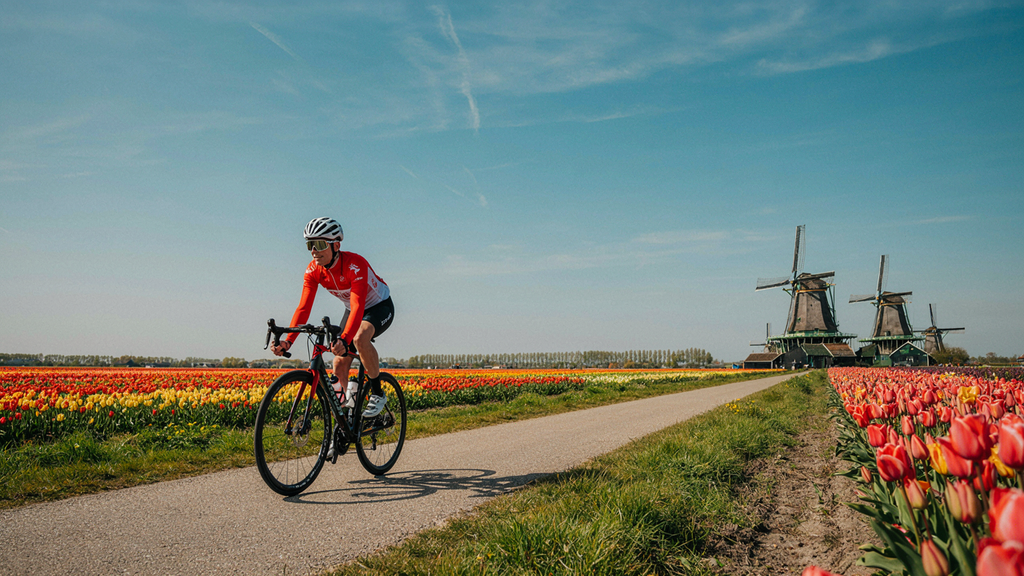
Planning does not have to be complicated.
The biggest decision is whether you want a self-guided cycling holiday, an organized tour, or a hybrid trip where you plan most things yourself but use luggage-transfer or accommodation services.
Step 1: Choose your travel style
Self-guided: Best for independent travelers who enjoy flexibility.
Organized: Best if you want accommodation, luggage transfers, route planning, and support handled for you.
Bike-and-barge: Ideal for travelers who want to cycle during the day while keeping the same accommodation on a boat.
Day-trip base: Best for first-time visitors who prefer sleeping in one hotel.
Step 2: Choose the right daily distance
Do not confuse a flat route with an effortless route.
Wind, rain, luggage, sightseeing stops, and headwinds can make a supposedly easy day much longer.
A practical starting point:
| Traveler Type | Suggested Daily Distance |
| Beginner | 20–35 km |
| Casual cyclist | 30–50 km |
| Regular cyclist | 45–70 km |
| Experienced touring cyclist | 60–100+ km |
Build sightseeing time into your schedule.
A 50-kilometer route with museums, cafés, photographs, and town visits can take much longer than a 50-kilometer training ride.
Step 3: Pick the right bicycle
For most travelers, a comfortable hybrid, touring bike, or e-bike is more practical than a racing bicycle.
Look for:
- Comfortable saddle
- Upright or semi-upright position
- Reliable brakes
- Gears
- Front and rear lights
- Rear rack
- Pannier compatibility
- Fenders if rain is expected
An e-bike can be especially useful if you want to cover longer distances without turning the trip into a fitness challenge.
Step 4: Book accommodation strategically
Look for hotels, B&Bs, and campsites that understand cyclists.
Useful features include:
- Secure bicycle storage
- Charging facilities for e-bikes
- Early breakfast
- Laundry access
- Repair tools
- Nearby restaurants
Booking ahead is particularly important during popular spring and summer travel periods.
Best Time for Cycling Holidays in the Netherlands
You can cycle in the Netherlands during much of the year, but the best season depends on your priorities.
Spring: March to May
Spring is one of the most visually appealing seasons.
Tulips, daffodils, fresh green landscapes, and longer days make it popular with visitors. Tulip season generally runs from late March to mid-May, with peak blooms often around mid-April.
Best for: Tulips and photography.
Downside: Popular areas can be crowded.
Summer: June to August
Summer provides long daylight hours and generally pleasant conditions for cycling.
However, popular destinations can become busy, and accommodation may cost more.
Best for: Long-distance touring and families.
Fall: September to October
Fall brings cooler temperatures and beautiful countryside colors.
It can be an excellent option for travelers who prefer quieter routes.
Best for: Nature, photography, and relaxed cycling.
Winter: November to February
Winter cycling is possible but requires more preparation.
Shorter daylight hours, wind, rain, and cold temperatures can make long-distance touring less comfortable.
Best for: Experienced cyclists and travelers who do not mind variable weather.
Cycling Holidays in the Netherlands: Cost and Budget Guide
The total cost depends heavily on your accommodation, bike type, travel season, and whether you choose an organized package.
A realistic planning budget for an American traveler might look like this:
| Expense | Budget Style | Comfortable Style |
| Bike rental | €15–€35/day | €35–€60+/day |
| E-bike rental | €30–€60/day | €50–€80+/day |
| Accommodation | €60–€110/night | €120–€250+/night |
| Meals | €25–€50/day | €50–€100+/day |
| Local transport | €10–€30/day | €20–€50/day |
| Attractions | €10–€30/day | €20–€50/day |
These are planning ranges rather than fixed prices. Seasonal rates, city demand, bike specifications, and booking dates can significantly change the final cost.
How to save money
- Travel outside peak periods.
- Stay outside the most expensive city centers.
- Use supermarkets for picnic lunches.
- Rent bikes for multiple days.
- Choose self-guided routes.
- Compare accommodation packages.
- Avoid changing hotels every night.
- Use trains strategically for longer transfers.
Self-Guided vs Organized Cycling Tours
Both styles can work well.
| Feature | Self-Guided | Organized |
| Flexibility | Excellent | Moderate |
| Planning effort | Higher | Lower |
| Cost | Often lower | Usually higher |
| Route support | Self-managed | Included |
| Luggage transfers | Usually DIY | Often included |
| Accommodation | You choose | Usually arranged |
| Best for | Independent travelers | Convenience seekers |
A self-guided trip is ideal if you enjoy planning and want to change your schedule.
An organized tour is better if your priority is convenience.
What to Pack for a Netherlands Bike Tour
Pack light.
Most cycling travelers regret carrying too much rather than too little.
Cycling essentials
- Helmet
- Comfortable cycling shorts or pants
- Breathable shirts
- Lightweight rain jacket
- Gloves
- Sunglasses
- Water bottle
- Small daypack
- Phone
- Power bank
- Basic repair kit
Travel essentials
- Passport
- Travel insurance documents
- Credit/debit card
- Universal adapter
- Prescription medication
- Lightweight layers
- Casual clothes for evenings
For longer tours
Consider:
- Waterproof panniers
- Dry bags
- Cycling lock
- Spare inner tube
- Tire levers
- Small pump
- Portable charger
- Reflective clothing
Packing Checklist
- Passport and travel documents
- Cycling helmet
- Comfortable cycling clothing
- Waterproof jacket
- Comfortable shoes
- Water bottle
- Phone and charger
- Power bank
- Travel adapter
- Basic repair supplies
- Bicycle lock
- Travel insurance information
- Lightweight casual clothing
Dutch Cycling Rules and Safety Tips
The Netherlands is cycling-friendly, but visitors should still understand local road behavior.
Stay in the correct cycling lane
Use designated cycling infrastructure whenever it is provided.
Do not assume that a bicycle path works like a pedestrian sidewalk.
Watch intersections carefully
Dutch cities can have many bicycles, pedestrians, cars, buses, and trams moving at the same time.
Slow down at complicated intersections.
Be predictable
Signal before turning, maintain a steady line, and avoid sudden stops.
Watch for trams
In cities such as Amsterdam, tram tracks deserve special attention.
Cross tracks carefully and avoid catching a bicycle wheel in the rails.
Use lights after dark
If cycling at night or in poor visibility, make sure your bicycle has the required lighting and that you are clearly visible.
Respect other cyclists
Do not stop in the middle of a cycle path for photographs.
Pull over safely when checking your phone or map.
Common Mistakes to Avoid

Even experienced travelers can make planning mistakes.
Trying to see everything
The Netherlands looks small on a map, but sightseeing takes time.
Choose a region rather than attempting to cover the entire country in a few days.
Underestimating wind
Flat does not mean effortless.
A strong headwind can make a simple route surprisingly tiring.
Packing too much
Keep your luggage compact, especially if you are carrying it yourself.
Booking hotels too far apart
A route that looks perfect on paper may become uncomfortable if you need to cycle 90 kilometers after a long sightseeing day.
Ignoring weather
Rain can change your experience quickly.
Check the forecast before setting out and keep a waterproof layer accessible.
Treating city cycling like countryside cycling
Amsterdam and other busy cities require more attention than rural cycle paths.
Planning only by Google Maps
General navigation apps can be useful, but dedicated Dutch cycling-route resources and numbered junction systems can provide a better cycling experience. Official tourism guidance specifically recommends cycle-junction tools and cycling apps for route planning.
Expert Tips for a Better Dutch Cycling Vacation
Plan less than you think
Leave room for spontaneous stops.
A small village café or unexpected viewpoint can become one of the best memories of your trip.
Start early
Early starts provide quieter roads and more time for sightseeing.
Keep your rain gear accessible
Do not bury your rain jacket at the bottom of your luggage.
Carry snacks
A small snack can help when you are between towns.
Use e-bikes strategically
An e-bike is not only for people who cannot cycle long distances. It can allow you to explore farther while keeping more energy for sightseeing.
Combine cycling with trains
For American visitors, the Dutch rail network can make it easier to create a flexible itinerary.
Cycle one region, take a train to another, and continue your trip there.
Build rest days into longer tours
After several consecutive cycling days, a rest day can make the entire trip more enjoyable.
Choose accommodation near your route
A hotel that requires a long detour can add unnecessary kilometers.
Eat locally
Try Dutch pancakes, cheese, herring if it appeals to you, pastries, and regional specialties.
Remember that the goal is the experience
You do not need to maximize kilometers.
A slower route with more time in villages can be more rewarding than a demanding itinerary.
Pros and Cons of Cycling Holidays in the Netherlands
| Pros | Cons |
| Mostly flat terrain | Wind can be tiring |
| Excellent cycling infrastructure | Weather can change quickly |
| Easy route planning | Popular areas can be crowded |
| Beautiful countryside | Accommodation can be expensive |
| Great public transportation | Busy cities require attention |
| Suitable for many fitness levels | Long tours still require preparation |
| Many bike rental options | Peak-season bookings fill quickly |
| Excellent for slow travel | Rain can affect plans |
Overall, the advantages strongly outweigh the disadvantages for most recreational cyclists.
Best 7-Day Netherlands Cycling Itinerary
If this is your first trip from the United States, a seven-day itinerary can offer a good balance.
Day 1: Arrive in Amsterdam
Spend the first day adjusting to the time zone and exploring Amsterdam.
Avoid planning a major cycling distance immediately after a long international flight.
Day 2: Amsterdam to Waterland
Cycle north toward quieter countryside.
Enjoy canals, farms, villages, and open landscapes.
Day 3: Waterland to Edam and Volendam
Explore traditional towns and waterfront scenery.
Return to your accommodation or continue to the next overnight stop.
Day 4: Move toward the Green Heart
Travel toward the quieter countryside around Gouda or nearby areas.
Day 5: Gouda and Kinderdijk
Combine cycling with Dutch cheese culture and iconic windmills.
Day 6: Delft or Rotterdam
Choose between historic Delft or modern Rotterdam depending on your interests.
Day 7: Return to Amsterdam
Use cycling or public transportation to return to Amsterdam before your departure.
Alternative: For a more nature-focused itinerary, replace the Amsterdam-centered route with Friesland, the Veluwe, Zeeland, or the Wadden region.
Who Should Take a Netherlands Cycling Holiday?
Cycling vacations in the Netherlands are suitable for a surprisingly broad range of travelers.
Beginners
Choose short routes, an easy bicycle, and accommodation in one or two locations.
Families
Use shorter cycling days and select protected, low-stress routes.
Couples
Combine cycling with boutique hotels, cafés, museums, and romantic countryside stops.
Solo Travelers
The extensive cycling network can make independent travel easier, although normal travel-safety precautions still apply.
Experienced Cyclists
Consider longer LF routes, South Limburg, coastal tours, or multi-region itineraries.
E-bike Travelers
E-bikes are particularly useful for travelers who want to cover longer distances without excessive physical effort.
How Many Days Do You Need for Cycling Holidays in the Netherlands?
For a first trip, 5–8 days is a practical starting point.
3–4 days
Choose one region, such as Amsterdam and Waterland.
5–7 days
You can comfortably explore several destinations without rushing.
8–14 days
This gives you enough time for a proper multi-day cycling tour.
2+ weeks
Consider a long-distance route or combine several regions.
The most important point is to match the number of days with your preferred daily distance rather than trying to cover a certain number of destinations.
Frequently Asked Questions
Is the Netherlands good for cycling holidays?
Yes. The Netherlands is particularly suitable because of its extensive cycling infrastructure, flat terrain, route networks, and cycling-friendly culture. It offers options ranging from short countryside rides to multi-day tours.
What is the best month for cycling in the Netherlands?
April and May are excellent for travelers interested in spring landscapes and tulips. Summer is better for long daylight hours, while September and early October can offer cooler conditions and quieter routes.
How many miles should I cycle each day?
For a relaxed vacation, around 19–37 miles (30–60 km) per day is a reasonable starting range. Experienced cyclists can ride farther, while beginners may prefer shorter days.
Do I need to bring my own bicycle?
No. Bike rentals are widely available, and travelers can choose from standard bicycles, touring bikes, and e-bikes depending on location and provider.
Are cycling holidays in the Netherlands suitable for beginners?
Yes. Beginners can choose short routes, flat terrain, guided trips, or an e-bike. The key is to avoid overplanning the daily distance.
Is Amsterdam safe for cycling tourists?
Amsterdam has extensive cycling infrastructure, but its busy streets require attention. Visitors should learn local cycling behavior, watch for trams and intersections, and avoid stopping in active cycle lanes.
What are LF routes?
LF routes are long-distance cycling routes designed for multi-day journeys. They connect different parts of the Netherlands and can be used for longer cycling vacations.
What is the Dutch cycle-junction network?
The cycle-junction network uses numbered nodes called knooppunten. Cyclists can select a sequence of numbers and follow signs between them, making it easy to build customized routes.
Are e-bikes good for a Netherlands cycling vacation?
Yes. E-bikes can be useful for longer routes, windy days, travelers with different fitness levels, or anyone who wants more energy for sightseeing.
Are Netherlands cycling holidays expensive?
They can be affordable or luxurious depending on your choices. Bike rental, accommodation, meals, attractions, and transportation are the main costs. Self-guided trips and smaller towns can help reduce the overall budget.
Final Thoughts
For travelers who want to slow down and experience a destination rather than simply check off attractions, cycling holidays in the Netherlands are hard to beat.
You can spend one day riding beside canals, another exploring historic villages, and the next following a coastal route through dunes. The country’s extensive cycling infrastructure and flexible route systems make it possible to design a vacation around your own pace and interests.
First-time visitors should keep the itinerary simple: choose one region, plan manageable daily distances, rent a comfortable bicycle or e-bike, and leave time for spontaneous stops.
Whether you are dreaming about tulip fields in spring, peaceful Friesland, the Dutch coast, windmills at Kinderdijk, or a longer LF adventure, the Netherlands gives you plenty of ways to turn a bicycle trip into a memorable European vacation.
Ready to start planning? Pick your region, choose your ideal cycling distance, book your bike, and build a Netherlands itinerary that leaves enough room to enjoy the journey—not just reach the destination.
Banke Bihari Temple Timings: Darshan & Aarti 2026 | Experience My India