Hanuman Jayanti in 2026 is a major Hindu festival honoring Lord Hanuman, who is seen as a symbol of strength, bravery, dedication, and loyalty. The festival will be observed on Thursday, April 2, 2026, which is the Chaitra Purnima. People throughout India go to Hanuman temples to pray, chant the Hanuman Chalisa, fast, and participate in special worship ceremonies and gatherings.
This guide provides essential details for anyone looking for information on the 2026 Hanuman Jayanti date, when to perform puja, the rituals, fasting rules, and how it’s celebrated across India. You’ll find out how the festival is celebrated, what offerings are typically made, what foods can be eaten during the fast, and how customs might vary in different parts of India.
If you’re planning to celebrate Hanuman Jayanti at home or visit India for the festival, understanding the local traditions and temple schedules will help make your experience more meaningful. From the spiritual feel of the temples to the vibrant decorations, devotional songs, aarti ceremonies, and community events, Hanuman Jayanti offers a special look into India’s living religious and cultural practices.
Quick Answer:
Hanuman Jayanti 2026 will be celebrated on Thursday, April 2, 2026, according to the Chaitra Purnima tradition followed widely across North India. It falls on Chaitra Shukla Purnima, the full moon day of the Chaitra month.
The Chaitra Purnima Tithi begins at 7:06 AM on April 1 and ends at 7:41 AM on April 2, 2026, according to the cited Indian Panchang calculations. Exact local puja muhurat can differ by city, sunrise, and temple tradition, so devotees should confirm the final timing with a local Panchang or temple.
| Festival Detail | Hanuman Jayanti 2026 |
| Date | Thursday, April 2, 2026 |
| Hindu Date | Chaitra Shukla Purnima |
| Occasion | Birth anniversary of Lord Hanuman |
| Main Deity | Lord Hanuman |
| Common Names | Hanuman Jayanti, Hanumath Jayanti, Anjaneya Jayanti |
| Main Worship | Hanuman Puja |
| Popular Practices | Hanuman Chalisa, Sundarkand, temple visit, fasting, sindoor offering |
| Best Place to Confirm Local Muhurat | Local Panchang or temple |
Note: Hanuman Jayanti is observed on different dates in some parts of India because regional calendars and traditions vary. The April 2 date refers to the widely followed Chaitra Purnima observance, especially in North India.
What Is Hanuman Jayanti and Why Is It Celebrated?
Hanuman Jayanti is the traditional celebration of the birth of Lord Hanuman, one of the most revered figures in Hindu tradition. Devotees remember Hanuman for his devotion to Lord Rama, courage, strength, humility, and dedication to duty.
The festival is especially important for people who worship Hanuman as Bajrangbali, Anjaneya, Pavan Putra and Kesari Nandan. Many devotees visit temples, recite the Hanuman Chalisa, listen to the Ramayana, perform puja and observe a vrat on this day.
The Chaitra Purnima observance is particularly popular in North India. However, the date is not identical across every Indian region because communities follow different calendars and local traditions.
For travelers from the United States planning a cultural trip to India, Hanuman Jayanti can also be an opportunity to experience traditional temple rituals, processions, devotional music, and local celebrations. Visitors should remember that temples can become extremely crowded, particularly around major Hanuman temples.
Hanuman Jayanti 2026 Date and Chaitra Purnima Timings

The most widely observed Hanuman Jayanti 2026 date is April 2, Thursday. The festival falls on Chaitra Shukla Purnima, the full moon day of the Chaitra lunar month.
According to the referenced Panchang, the Purnima Tithi begins at 7:06 AM on April 1 and ends at 7:41 AM on April 2. These timings are useful for understanding the lunar date, but they should not be treated as a universal puja time for every city.
Why Can Hanuman Jayanti Dates Differ?
Hindu festivals are often calculated according to lunar tithis rather than a fixed Gregorian date. India also follows multiple regional calendar traditions.
For example, the Chaitra Purnima Hanuman Jayanti is especially prominent in North India. In contrast, Andhra Pradesh, Telangana, Tamil Nadu and Karnataka have different regional observances associated with Hanuman worship.
This is why someone searching for “Hanuman Jayanti date 2026” may find different dates depending on the state or calendar used.
Important Timing Tip
If you are attending a temple ceremony, follow the temple’s published schedule rather than relying only on a generic online time. Puja timings can change according to the local sunrise, Panchang calculation, and temple tradition.
Hanuman Jayanti 2026 Puja Timings: What Time Should You Worship?

There is no single universal clock time that applies to every location in India. The most appropriate worship period depends on the local Panchang and the temple’s schedule.
Many devotees perform Hanuman worship during the morning or evening, while some temples organize special ceremonies around the traditional birth celebration. Devotees may also participate in bhajans, Hanuman Chalisa recitations, and Sundarkand readings throughout the day.
For an accurate local time, check:
- Your city’s Panchang.
- The official schedule of the temple you plan to visit.
- Local sunrise and sunset timings.
- The specific tradition followed by your family or community.
Simple Puja Timing Guide
| Activity | Suggested Time |
| Wake up and take a bath | Early morning |
| Home cleaning and altar preparation | Morning |
| Sankalp / prayer | After personal purification |
| Hanuman Puja | According to local Panchang |
| Hanuman Chalisa | Morning or evening |
| Sundarkand | Daytime or evening |
| Temple visit | According to temple hours |
| Aarti | As announced by temple |
| Vrat completion | According to family/temple tradition |
Do not assume that midnight is automatically the correct Hanuman Jayanti birth puja time. Local traditions differ, and the exact ceremony should be confirmed locally.
Hanuman Jayanti Puja Vidhi: Step-by-Step Ritual at Home
A simple home puja does not need to be complicated. The most important elements are sincere devotion, cleanliness, and respectful worship.
Step 1: Clean the Puja Area
Clean your prayer space and place a clean cloth on the altar. Keep the Lord Hanuman image or murti in a respectful position.
Step 2: Take a Bath and Wear Clean Clothes
Devotees traditionally begin worship after bathing and wearing clean clothes. Some people prefer red, orange, or saffron clothing, although clothing color is not the central requirement of worship.
Step 3: Light a Diya
Light an oil or ghee lamp and incense if your family tradition uses them.
Step 4: Offer Flowers
Offer fresh flowers, especially marigolds, along with other traditional offerings used by your family.
Step 5: Offer Sindoor
Sindoor is a well-known offering associated with Hanuman worship. Use only clean, appropriate devotional materials and follow your family’s or temple’s practice.
Step 6: Offer Prasad
Fruits, sweets, and other vegetarian offerings can be prepared as prasad.
Step 7: Recite Hanuman Chalisa
The Hanuman Chalisa is among the most popular devotional recitations associated with Lord Hanuman.
Step 8: Read Sundarkand or Ramayana
Devotees who have enough time may read the Sundarkand or listen to passages from the Ramayana.
Step 9: Perform Aarti
Complete the puja with a traditional Hanuman aarti according to your family or temple tradition.
Step 10: Share Prasad
After the prayer, distribute prasad among family members and, where appropriate, guests or other devotees.
Simple Home Puja Checklist
- Clean the puja area
- Lord Hanuman image or murti
- Diya
- Incense
- Fresh flowers
- Sindoor, according to tradition
- Fruits
- Sweets or prasad
- Puja thali
- Hanuman Chalisa
- Aarti
- Clean drinking water
Hanuman Jayanti 2026 Fasting Rules: What Can You Eat?
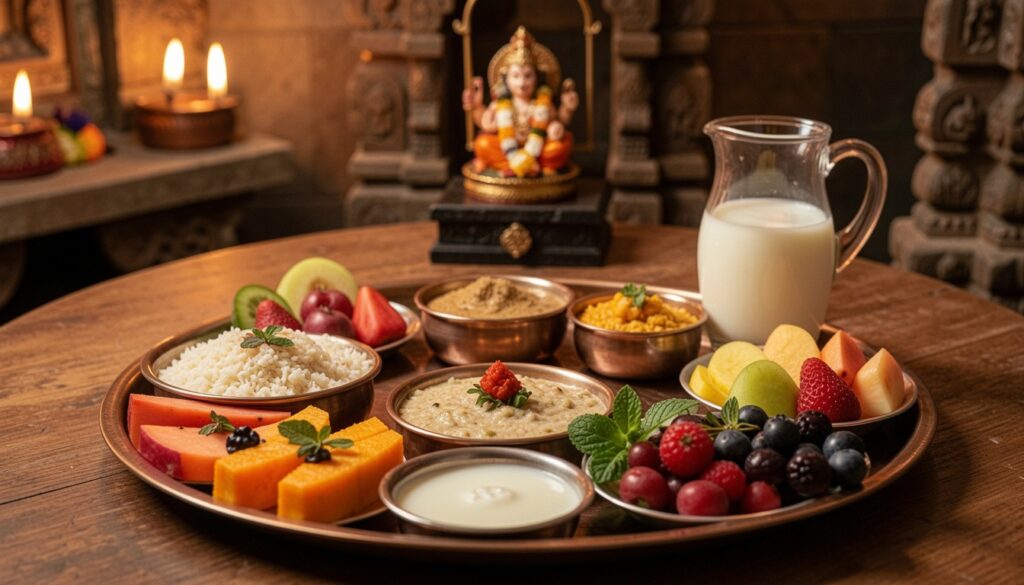
Fasting practices vary widely among families and regions. There is no single diet that every Hanuman devotee must follow.
Some devotees observe a strict fast, while others follow a fruit-based or light vrat diet. Some people avoid grains and certain foods during the fast. Family traditions and the advice of one’s religious teacher may also influence the practice.
Common Vrat Foods
Depending on the tradition followed, devotees may choose:
- Fruits
- Milk
- Yogurt
- Nuts
- Coconut
- Sabudana
- Potatoes
- Singhara flour
- Rajgira
- Vrat-friendly preparations
Foods Commonly Avoided During a Vrat
Many vrat traditions avoid:
- Regular grains
- Meat
- Fish
- Eggs
- Alcohol
- Tobacco
- Certain spices or processed foods
However, fasting rules are not identical everywhere.
Should Everyone Fast?
No. People who cannot safely fast should not force themselves to do so. Children, older adults, pregnant people, and anyone with medical or dietary needs should follow appropriate personal guidance rather than copying a strict vrat routine.
For a religiously specific rule, follow your family’s tradition or ask a qualified priest.
Hanuman Jayanti Celebrations in India: Best Places and Experiences

Hanuman Jayanti is celebrated throughout India, but the scale and style of celebrations vary by region.
Major Hanuman temples can attract large crowds, devotional singers, local processions and special aarti ceremonies. In some cities, streets near temples are decorated with saffron flags, flowers and lights.
Ayodhya
Ayodhya is strongly associated with Lord Rama and therefore has deep cultural significance for Hanuman devotees. Hanuman Garhi is one of the city’s best-known Hanuman temples.
If visiting during a major festival, plan transportation and temple access in advance. Large religious gatherings can involve crowd-control measures and temporary traffic changes.
Varanasi
Varanasi is one of India’s major pilgrimage cities and has several important Hanuman shrines. Devotees can combine temple visits with the city’s broader spiritual and cultural attractions.
Delhi
Delhi hosts Hanuman Jayanti celebrations at various temples and community locations. Festival-day crowds can be substantial, so travelers should check local traffic and temple arrangements before leaving.
Rajasthan and North India
Hanuman worship is deeply rooted across many parts of North India. Local celebrations may include bhajans, bhandaras, temple decorations and devotional processions.
Southern India
Southern states may follow different Hanuman Jayanti or Hanumath Jayanthi traditions. Andhra Pradesh, Telangana, Tamil Nadu and Karnataka have their own calendar practices and observances.
What to Expect When Visiting a Hanuman Temple on Jayanti
A temple visit during Hanuman Jayanti can be a memorable cultural experience, but it requires preparation.
Expect Large Crowds
Popular temples can become extremely busy. Arrive early if the temple allows it and avoid carrying unnecessary bags.
Dress Respectfully
Wear modest clothing suitable for a religious place. Remove footwear where required and follow posted temple rules.
Follow Photography Rules
Not every temple permits photography inside the shrine. Always follow the instructions of temple staff.
Keep the Temple Clean
Do not leave plastic, food wrappers, or other waste near religious areas.
Respect Ritual Space
Do not interrupt prayers or ceremonies to take photographs or videos.
Plan Transportation
Major festival days can affect traffic. If traveling to a major pilgrimage city, leave extra time for road closures, parking restrictions, and crowds.
Hanuman Jayanti 2026: Regional Celebration Differences
One of the most important things travelers should know is that Hanuman Jayanti does not have one identical observance across all Indian states.
The Chaitra Purnima celebration is especially common in North India, but other regions use different lunar or solar calendar traditions.
| Region | Common Tradition |
| North India | Chaitra Purnima Hanuman Jayanti |
| Andhra Pradesh | Extended Hanuman-related observances may be followed |
| Telangana | Regional Hanuman Jayanti traditions |
| Tamil Nadu | Hanumath Jayanti follows a different calendar tradition |
| Karnataka | Hanuman Vratam / regional observance |
| Other regions | Local Panchang and temple traditions may apply |
Drik Panchang notes that Andhra Pradesh and Telangana have a 41-day Hanuman-related observance beginning around Chaitra Purnima, while Tamil Nadu and Karnataka follow different calendar dates for their regional celebrations.
This regional diversity is one reason visitors should check local information instead of assuming that every Indian temple follows the same schedule.
Hanuman Jayanti Travel Tips for Visitors From the USA
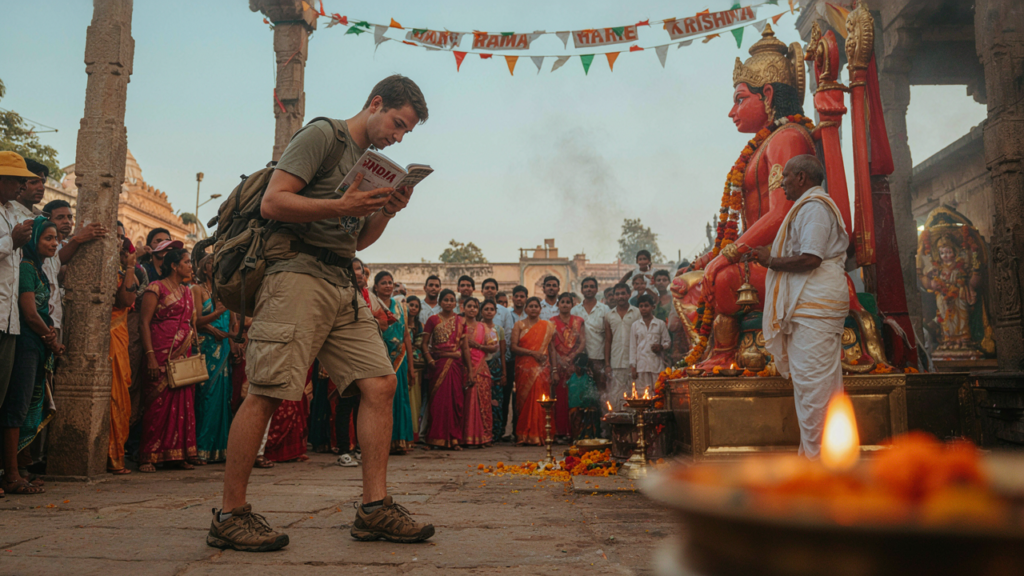
If you are traveling from the United States to India specifically for Hanuman Jayanti, planning can make your trip much easier.
Book Accommodation Early
Popular pilgrimage cities can become busy during major religious festivals.
Choose a Hotel With Easy Transport
Staying close to a temple is convenient, but the closest areas may also be the busiest. A hotel with reliable transportation can sometimes be a better choice.
Check Temple Rules
Temple entry rules, photography policies, and opening hours can change.
Carry Small Essentials
Keep water, identification, required medication, and basic personal items with you.
Respect Local Customs
Observe what local devotees are doing and follow temple instructions.
Avoid Unofficial Guides
If you want a guided religious or cultural experience, use a reputable tour operator or official tourism resource.
Check Local Festival Updates
Crowd-control arrangements, road restrictions and event schedules can change close to the festival.
Keep Digital and Printed Information
International travelers should keep hotel details, emergency contacts and important travel information available offline.
Pros and Cons of Visiting India During Hanuman Jayanti
| Pros | Cons |
| Experience authentic religious traditions | Major temples can be extremely crowded |
| See special temple decorations | Traffic may be heavier |
| Enjoy devotional music and celebrations | Hotel prices may increase in popular areas |
| Learn about Indian culture | Some temples may have restricted access |
| Combine pilgrimage with sightseeing | Long queues are possible |
For first-time visitors, the best strategy is to embrace the cultural experience while planning around crowds.
Common Mistakes to Avoid on Hanuman Jayanti

Assuming Every State Celebrates on the Same Date
Regional calendars differ. Always verify the tradition for your destination.
Treating One Online Muhurat as Universal
Puja timings can vary by location. Check the local Panchang.
Ignoring Temple Rules
Festival days can have special entry, queue and photography rules.
Arriving Without a Travel Plan
Popular temples can become crowded very quickly.
Following Extreme Fasting Rules
A religious fast should be practiced responsibly. Do not ignore your personal dietary needs.
Taking Photos During Private Rituals
Ask before photographing people or ceremonies.
Treating a Religious Festival Like an Ordinary Tourist Attraction
Hanuman Jayanti is a religious observance first. Visitors should behave respectfully.
Expert Tips for Hanuman Jayanti 2026
Expert Tip 1: Confirm the date using a reliable Panchang for your destination.
Expert Tip 2: If you plan to visit a famous temple, check its official announcement before traveling.
Expert Tip 3: Arrive early rather than trying to reach the temple at peak crowd times.
Expert Tip 4: Keep your itinerary flexible because religious events may change local traffic conditions.
Expert Tip 5: If you are visiting India from the USA, allow extra time for transportation and cultural orientation.
Expert Tip 6: Learn basic temple etiquette before visiting.
Expert Tip 7: Don’t assume that a ritual shown in one region is mandatory everywhere.
Expert Tip 8: For fasting, follow your own family tradition and personal dietary needs.
Expert Tip 9: Use official tourism boards and temple sources when planning a pilgrimage.
Expert Tip 10: Combine your festival visit with nearby cultural attractions, but keep the religious purpose of the trip central.
Hanuman Jayanti 2026 Checklist for Devotees and Travelers
Before Hanuman Jayanti, use this simple checklist:
- Confirm the local Hanuman Jayanti date
- Check the local Panchang
- Confirm temple opening hours
- Check special festival arrangements
- Plan transportation
- Book accommodation if traveling
- Prepare appropriate temple clothing
- Learn basic temple etiquette
- Prepare puja materials if worshipping at home
- Plan your fasting routine
- Keep water and essential personal items available
- Check photography rules
- Keep your travel documents safe
- Arrive early at major temples
- Respect local customs and devotees
Frequently Asked Questions
When is Hanuman Jayanti 2026?
Hanuman Jayanti 2026 is observed on Thursday, April 2, 2026, according to the widely followed Chaitra Purnima tradition.
What is the Hanuman Jayanti 2026 date in India?
The widely observed North Indian date is April 2, 2026. However, some regions follow different calendar traditions, so local dates can vary.
What are the Hanuman Jayanti 2026 puja timings?
There is no single universal puja clock time for every city. The Purnima Tithi begins at 7:06 AM on April 1 and ends at 7:41 AM on April 2 according to the referenced Panchang. For puja, devotees should verify their local Panchang or temple schedule.
What should I offer Lord Hanuman on Hanuman Jayanti?
Common devotional offerings include flowers, sindoor, fruits, sweets, and other items, followed by the devotee’s family or temple tradition.
Can I fast on Hanuman Jayanti?
Yes, many devotees observe a Hanuman Jayanti vrat. Fasting practices differ, so follow your family tradition and personal dietary needs.
Can I eat fruits during Hanuman Jayanti fasting?
Many devotees choose fruits, milk, nuts and other vrat-friendly foods, but fasting rules vary by tradition.
Which prayers are popular on Hanuman Jayanti?
The Hanuman Chalisa, Sundarkand, Ramayana readings and Hanuman aarti are among the popular devotional practices.
Is Hanuman Jayanti celebrated throughout India?
Yes, Hanuman worship and celebrations occur across India, but the date and specific customs can differ by region and calendar tradition.
Is Hanuman Jayanti a good time to visit Hanuman temples?
Yes, it can be a meaningful time for a cultural and religious visit, but major temples can become very crowded. Travelers should plan.
Why do different websites show different Hanuman Jayanti dates?
Different Indian regions use different calendar traditions. The Chaitra Purnima observance is particularly prominent in North India, while some southern regions follow separate traditions.
Final Thoughts
Hanuman Jayanti 2026 is on Thursday, April 2, according to the widely followed Chaitra Purnima tradition. It is a significant day for devotees who honor Lord Hanuman through prayer, fasting, temple visits, Hanuman Chalisa recitation, Sundarkand, and acts of devotion.
For travelers, the festival also offers a meaningful window into India’s living religious culture. From decorated temples and devotional music to traditional food and community gatherings, Hanuman Jayanti can become an unforgettable cultural experience when approached with preparation and respect.
The most important thing to remember is that regional traditions matter. Dates, fasting practices, and puja timings can vary, so always confirm the local Panchang and temple schedule before making a pilgrimage.
If you are planning to experience Hanuman Jayanti in India, save this guide, check your destination’s local festival information, and prepare your trip early. Jai Bajrangbali!
Krishna Janmashtami 2026: Date, Tithi, Puja Timings and Complete Festival Guide
Spain for Foodies. 10 Dishes You Must Try While in Spain: The Ultimate 2026 Culinary Bucket List