
Set among the green hills of Tirumala in Andhra Pradesh, Tirupati Temple is one of India’s most revered pilgrimage destinations. Dedicated to Lord Venkateswara, a form of Lord Vishnu, the temple attracts devotees throughout the year and is known for its spiritual importance, traditional rituals, and distinctive hilltop setting.
For travelers, a visit to Tirupati Temple is both a religious journey and an opportunity to experience the culture of southern India. From planning darshan and choosing the right season to understanding transport, accommodation, nearby attractions, and temple etiquette, a little preparation can make the visit much more comfortable and meaningful.
History and Religious Significance of Tirupati Temple
Tirupati Temple, officially associated with Sri Venkateswara Swamy Temple at Tirumala, has a long religious history and is one of the most important Vaishnavite pilgrimage centers in India. The temple is dedicated to Lord Venkateswara, who is worshipped by devotees as a manifestation of Lord Vishnu.
The temple sits on the Tirumala Hills, while the city of Tirupati lies below. The surrounding landscape, religious traditions, and continuous flow of pilgrims have made the area an important spiritual destination for generations.
The temple is administered by the Tirumala Tirupati Devasthanams (TTD), which manages pilgrimage services and facilities associated with the Tirumala temple complex.
Why Tirupati Is Important to Pilgrims
Devotees visit to seek Lord Venkateswara’s blessings, participate in darshan, and take part in traditional religious practices. The temple is also famous for its elaborate rituals and strong devotional atmosphere.
Temple Architecture and Sacred Setting
The temple’s architecture reflects the rich traditions of South Indian temple design. Its ornate structures, detailed decorative elements, and distinctive gopuram create an impressive appearance even before visitors enter the main worship areas.
Tirumala itself adds another dimension to the experience. The temple is surrounded by hills and forested landscapes, creating a setting that feels distinctly different from the urban environment of Tirupati below.
What Visitors Should Notice
Travelers interested in architecture and culture can pay attention to the temple’s entrances, traditional design details, religious symbols, and the way different areas of the complex are organized around worship.
However, the temple remains an active place of worship rather than simply a historic monument. Visitors should always prioritize religious customs and temple instructions.
Darshan and Temple Visit Experience

Darshan is the central part of a pilgrimage to Tirupati. Because the temple receives a very large number of devotees, different forms of darshan and entry arrangements may be available depending on current TTD policies.
Travelers should check official TTD information before their journey rather than relying on old booking details found online. Availability, procedures, identification requirements, and entry arrangements can change.
Planning Your Darshan
If you have a scheduled darshan, arrive with enough time for security checks and movement through the designated areas. Keep your booking information and required identification readily available.
Visitors should also check restrictions on bags, electronic devices, photography, and other personal belongings before entering the temple.
Best Time to Visit Tirupati Temple
Tirupati can be visited throughout the year, but weather and religious calendars can affect the overall experience. The cooler months are generally more comfortable for exploring Tirupati and the surrounding area, while summer can be hot.
Major festivals and special occasions attract exceptionally large numbers of devotees. These periods can be spiritually significant but may also involve longer queues, heavier traffic, and greater demand for accommodation.
| Travel Period | General Experience | Planning Consideration |
| October–February | More comfortable weather | Popular period, so plan ahead |
| March–May | Warmer conditions | Schedule outdoor activities carefully |
| June–September | Monsoon influence | Check rainfall and travel conditions |
| Major festivals | Very high pilgrim numbers | Book services well in advance |
| Regular weekdays | Potentially less crowded | Useful for travelers seeking a calmer visit |
How to Reach Tirupati Temple
Most visitors first travel to Tirupati city and then continue to Tirumala, where the main temple is located. Tirupati has strong road and rail connections with several parts of southern India.
Tirupati Railway Station is convenient for travelers arriving by train. Tirupati Airport, also known as Sri Venkateswara Airport, serves travelers arriving by air.
From Tirupati, visitors can use approved transportation services to travel up the Tirumala Hills. Road access is well established, while pilgrims may also choose traditional walking routes if they want to make the journey on foot.
Travel Options
- By air: Fly to Tirupati Airport and continue toward Tirumala.
- By train: Arrive at Tirupati Railway Station and transfer to Tirumala.
- By road: Buses, taxis, and private vehicles connect Tirupati with other cities.
- On foot: Pilgrims can use designated footpaths to reach Tirumala.
Accommodation in Tirupati and Tirumala
Accommodation is available both in Tirupati and on Tirumala. Choosing between them depends largely on your schedule and the type of pilgrimage experience you want.
Staying on Tirumala can be convenient for visitors with early or scheduled temple activities, while staying in Tirupati may provide more accommodation choices and easier access to city restaurants and transport.
TTD-managed accommodation can be in high demand, especially during busy periods, so travelers should check official availability well ahead of time.
| Stay Location | Main Advantage | Best For |
| Tirumala | Close to the temple | Pilgrims with early temple schedules |
| Tirupati | More city facilities | Longer stays and sightseeing |
| Near transport hubs | Convenient transfers | Travelers using trains or buses |
| Budget accommodation | Lower overall cost | Pilgrims focused on essentials |
Nearby Places to Visit in Tirupati
A trip to Tirupati does not have to end after temple darshan. The region has several religious and natural attractions that can be included in a broader itinerary.
Sri Kapileswara Swamy Temple is a notable Shiva temple in Tirupati, while Sri Govindaraja Swamy Temple is another important religious site in the city. Visitors can also explore natural areas and viewpoints around the Tirumala Hills.
Travelers interested in religious tourism may choose to visit additional temples associated with the Tirupati region.
Making a Longer Itinerary
If you have more than one day, divide the trip between temple visits and local sightseeing. This avoids trying to fit every attraction into the same few hours as your main darshan.
Tirupati Temple Festivals and Religious Traditions
The temple calendar includes numerous religious celebrations and rituals throughout the year. Among the most important is Brahmotsavam, a major annual festival associated with Lord Venkateswara.
Festival periods can transform the atmosphere around Tirumala, with increased devotional activity and very large pilgrim gatherings. Travelers should understand that festival travel requires additional planning compared with an ordinary temple visit.
Respecting Religious Traditions
Visitors should remember that rituals and ceremonies are meaningful religious practices. Follow instructions from temple staff, avoid unnecessary disruption, and observe any rules concerning clothing, photography, food, and personal belongings.
Food and Local Experiences Around Tirupati
Food is an important part of experiencing the region. Tirupati offers many restaurants serving South Indian cuisine, while temple-associated food traditions are also an important part of the pilgrimage experience.
Travelers can try familiar dishes such as idli, dosa, vada, pongal, and other regional preparations. If you have dietary restrictions, check ingredients and preparation methods before ordering.
A Simple Travel Approach
Rather than rushing between restaurants and attractions, use meals as natural breaks in your itinerary. A relaxed breakfast before sightseeing or an early dinner after returning from Tirumala can make the day easier.
Practical Tips for Visiting Tirupati Temple
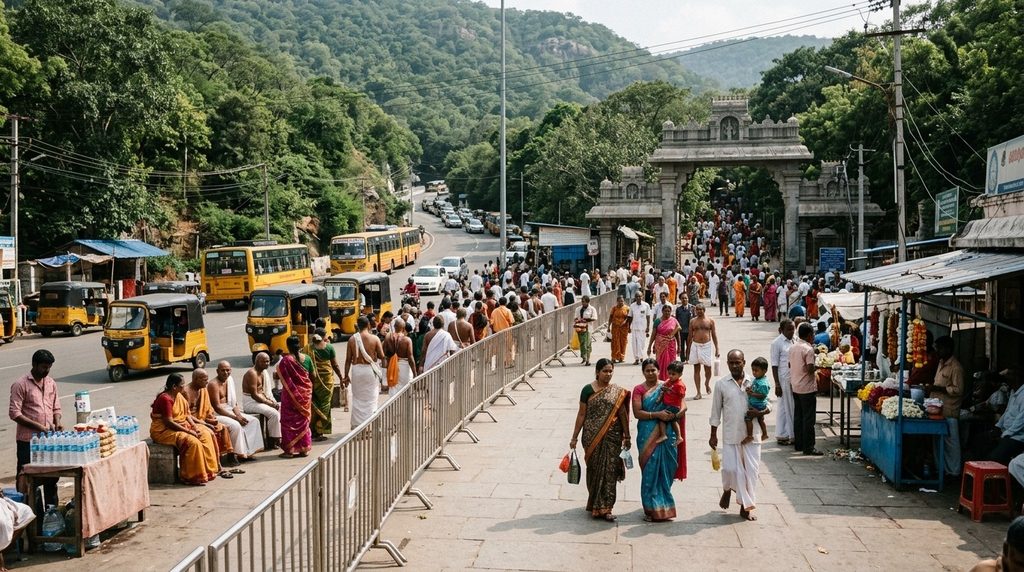
A successful pilgrimage depends heavily on preparation. Temple rules and services can change, so travelers should confirm the latest information through official TTD channels before departure.
Crowds, weather, and transportation can all affect your schedule. Give yourself extra time, particularly if you have a fixed darshan reservation or onward train or flight.
Useful Tips for First-Time Visitors
- Check official TTD information before booking your trip.
- Keep your darshan details and identification accessible.
- Follow the temple dress and entry requirements.
- Carry only permitted belongings.
- Arrive early for scheduled services.
- Keep valuables secure in crowded areas.
- Wear comfortable clothing and footwear for walking.
- Check weather conditions before traveling.
- Allow extra time during festivals.
- Respect temple customs and staff instructions.
FAQs
Why is Tirupati Temple so famous?
Tirupati Temple is famous for its religious importance as the sacred abode of Lord Venkateswara and for attracting millions of devotees. Its hilltop setting and traditional rituals also make it a major pilgrimage destination.
What is the best time to visit Tirupati Temple?
The cooler months from roughly October to February can be comfortable for travel and sightseeing. However, the best time also depends on whether you want to avoid major festival crowds or experience a particular religious celebration.
How can I book darshan at Tirupati Temple?
Darshan and other pilgrimage services are managed through TTD. Travelers should use official TTD channels to check current booking procedures, availability, requirements, and applicable rules.
How many days are enough for a Tirupati trip?
A two-day itinerary can work well for many travelers, allowing time for the main temple visit and several nearby attractions. Longer stays provide more flexibility for additional temples and local sightseeing.
Can visitors reach Tirumala from Tirupati by road?
Yes. Tirupati and Tirumala are connected by road, and visitors can use available bus, taxi, and other approved transportation options. Pilgrims can also use designated walking routes.
Conclusion:
A visit to Tirupati Temple is a meaningful journey for anyone interested in India’s spiritual traditions, South Indian culture, and historic pilgrimage centers. The temple’s hilltop setting, distinctive architecture, devotional atmosphere, and long religious heritage give the destination a character that extends well beyond ordinary sightseeing.
Whether you are traveling as a pilgrim, with family, or as part of a wider South India itinerary, thoughtful planning can make your experience smoother. Check current TTD requirements, choose accommodation according to your schedule, allow extra time for crowds, and approach the sacred spaces with respect. With the right preparation, Tirupati Temple can become one of the most memorable stops on your journey.
Read more:Dagdusheth Ganpati: A Complete Guide to Pune’s Famous Ganesh Temple