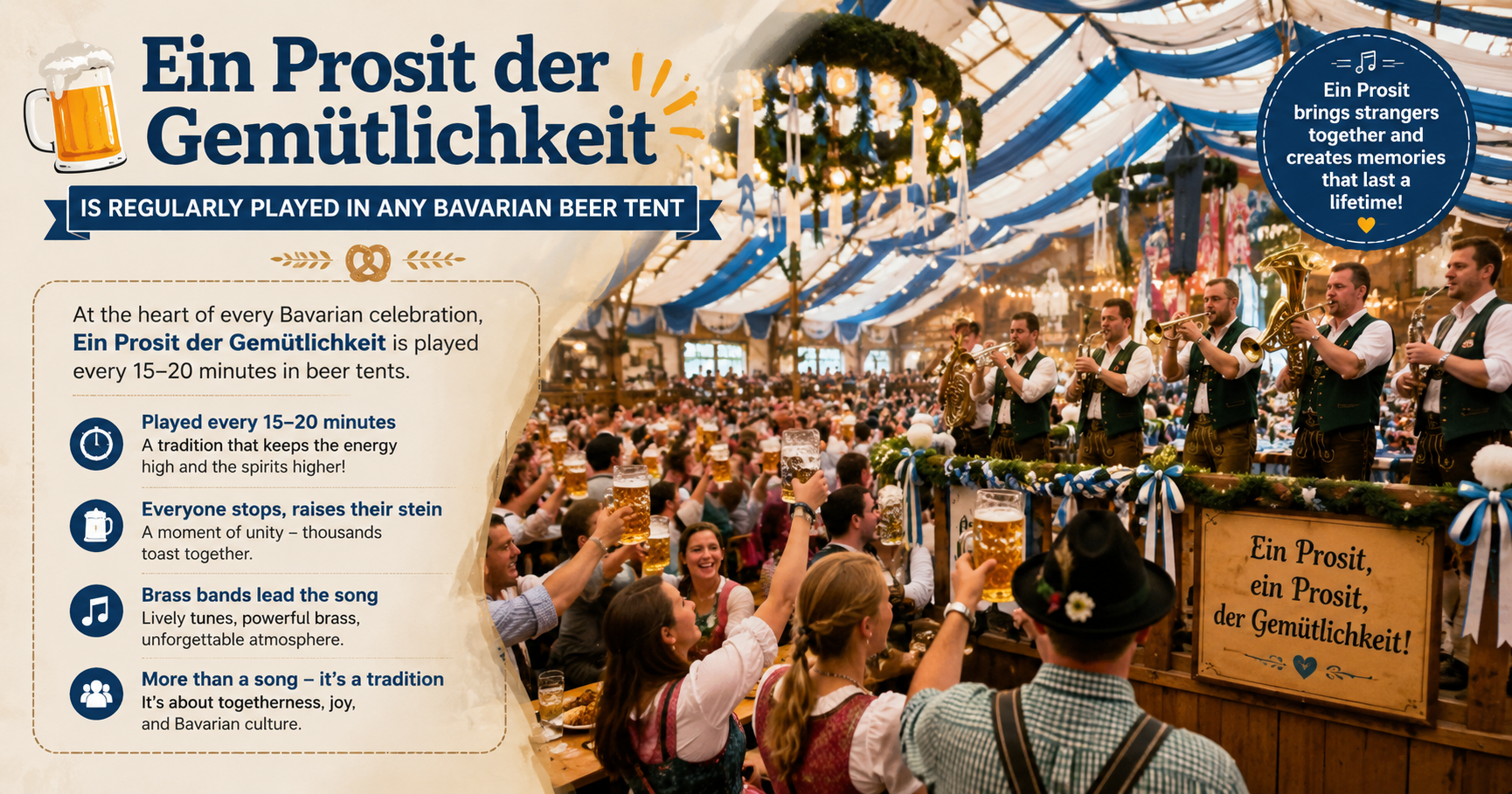
Ein Prosit der Gemütlichkeit is one of the most recognizable and celebrated drinking songs in the world, especially during Oktoberfest in Germany. It is more than just a catchy tune; it represents Bavarian culture, hospitality, and the spirit of togetherness. Whenever this song plays in beer tents, thousands of people raise their glasses, sing along, and toast in unity, creating an unforgettable atmosphere of joy and celebration.
The phrase Ein Prosit der Gemütlichkeit roughly translates to “A toast to coziness, comfort, and good cheer.” It captures the essence of Bavarian social life, where friends, strangers, and families gather to enjoy food, beer, and music. This article explores the meaning, history, cultural impact, and global popularity of this iconic song in detail.
Meaning of Ein Prosit der Gemütlichkeit
At its core, Ein Prosit der Gemütlichkeit is a toast song. The word “Prosit” comes from Latin and means “may it be beneficial” or simply “cheers.” “Gemütlichkeit” is a German word that does not have a direct English translation but refers to a feeling of warmth, friendliness, relaxation, and belonging.
So, when combined, the phrase means:
“A toast to comfort, warmth, and good times together.”
This expression is deeply rooted in Bavarian culture, where social bonding and hospitality are highly valued. It is not just about drinking beer—it is about celebrating life with others in a joyful and welcoming environment.
Origin and History
The song Ein Prosit der Gemütlichkeit was popularized in the early 20th century. It was composed by Georg Kunz, a Bavarian musician who wanted to create a simple, easy-to-sing tune that could bring people together during festivals.
Originally, it was not specifically tied to Oktoberfest. However, as the festival grew in popularity, the song became a central part of the celebration. By the mid-1900s, it was already being played regularly in beer tents, and today it is considered an essential part of the Oktoberfest experience.
The structure of the song is intentionally simple:
- Short lyrics
- Repetitive melody
- Easy rhythm for group singing
This makes it perfect for large crowds, even those who may not speak German.
Role in Oktoberfest Celebrations
Oktoberfest, held annually in Munich, is the world’s largest beer festival. During this event, Ein Prosit der Gemütlichkeit is played every 15 to 20 minutes in beer tents.
When the song begins:
- People immediately stop talking.
- Waiters and waitresses pause serving.
- Everyone raises their beer steins.
- The crowd sings and toasts together.
This creates a powerful sense of unity and excitement. It is one of the rare moments where tens of thousands of people synchronize their actions in perfect harmony.
The song is not just entertainment—it is a ritual.
Lyrics of Ein Prosit der Gemütlichkeit
| Lyrics (Original) | English Translation | Meaning / Notes |
| Ein Prosit, ein Prosit der Gemütlichkeit | A toast, a toast to comfort and good cheer | Celebration and happiness |
| Ein Prosit, ein Prosit der Gemütlichkeit | A toast, a toast to comfort and good cheer | Repeated line for emphasis |
| Eins, zwei, drei, g’suffa! | One, two, three, drink up! | Final cheer / call to drink |
| g’suffa | drink up / cheers | Bavarian dialect word |
Cultural Significance
1. Symbol of Bavarian Identity
The song reflects the heart of Bavarian traditions—hospitality, community, and celebration. It is deeply connected to regional pride and cultural identity.
2. Social Bonding
During Oktoberfest, strangers become friends through shared singing and drinking. The song acts as a social bridge, encouraging interaction and unity.
3. Global Recognition
Today, Ein Prosit der Gemütlichkeit is known worldwide. Even people who have never visited Germany recognize the tune from movies, festivals, and international Oktoberfest celebrations.
Musical Structure and Simplicity
The success of the song lies in its simplicity:
- Short musical phrases
- Repetitive chorus
- Easy to memorize lyrics
- Strong rhythmic beat
This structure ensures that even large crowds with diverse languages can participate effortlessly.
Musicians typically play it using brass instruments such as:
- Trumpets
- Tubas
- Trombones
- Clarinets
These instruments give the song its lively and festive character.
How It Enhances the Oktoberfest Experience
The repeated playing of Ein Prosit der Gemütlichkeit is not random. It is carefully integrated into the festival experience.
Encourages Drinking Rhythm
The song creates natural breaks for drinking and socializing.
Builds Energy
Each performance increases excitement and keeps the crowd engaged.
Creates Memory Moments
Visitors often remember Oktoberfest through this song more than anything else.
Global Influence
Although it originated in Germany, the song has spread globally:
- Oktoberfest events in the USA
- Beer festivals in Canada
- Cultural festivals in Australia
- German-themed celebrations worldwide
It has become a universal symbol of celebration and joy.
Modern Adaptations
Today, many modern bands and DJs include Ein Prosit der Gemütlichkeit in remixed versions at festivals. However, traditional brass band performances remain the most popular and authentic form.
Even with modernization, the core message remains unchanged: togetherness and celebration.
Why the Song Still Matters Today

In a fast-paced digital world, traditions like Ein Prosit der Gemütlichkeit remind people of simple joys:
- Sharing a drink with friends
- Singing together in harmony
- Enjoying the present moment
- Celebrating cultural heritage
Its continued popularity shows that human connection remains at the heart of celebration.
FAQs
What does Ein Prosit der Gemütlichkeit mean in English?
It means “A toast to comfort, warmth, and good cheer.” It is a traditional German drinking toast celebrating togetherness.
Why is Ein Prosit der Gemütlichkeit played at Oktoberfest?
It is played to create a festive atmosphere, encourage group toasting, and bring people together in celebration every 15–20 minutes.
Who created Ein Prosit der Gemütlichkeit?
The song is credited to Bavarian musician Georg Kunz and became popular in the early 20th century, eventually becoming a key part of Oktoberfest culture.
Conclusion
Ein Prosit der Gemütlichkeit is more than just an Oktoberfest song—it is a cultural tradition that brings people together across languages, borders, and generations. Its simple lyrics and joyful rhythm have made it a global symbol of celebration, unity, and happiness.
From its Bavarian roots to international beer festivals, the song continues to define the spirit of communal joy. Whether you are in Munich or at a local Oktoberfest event abroad, when the music starts, everyone becomes part of the same moment of cheer.