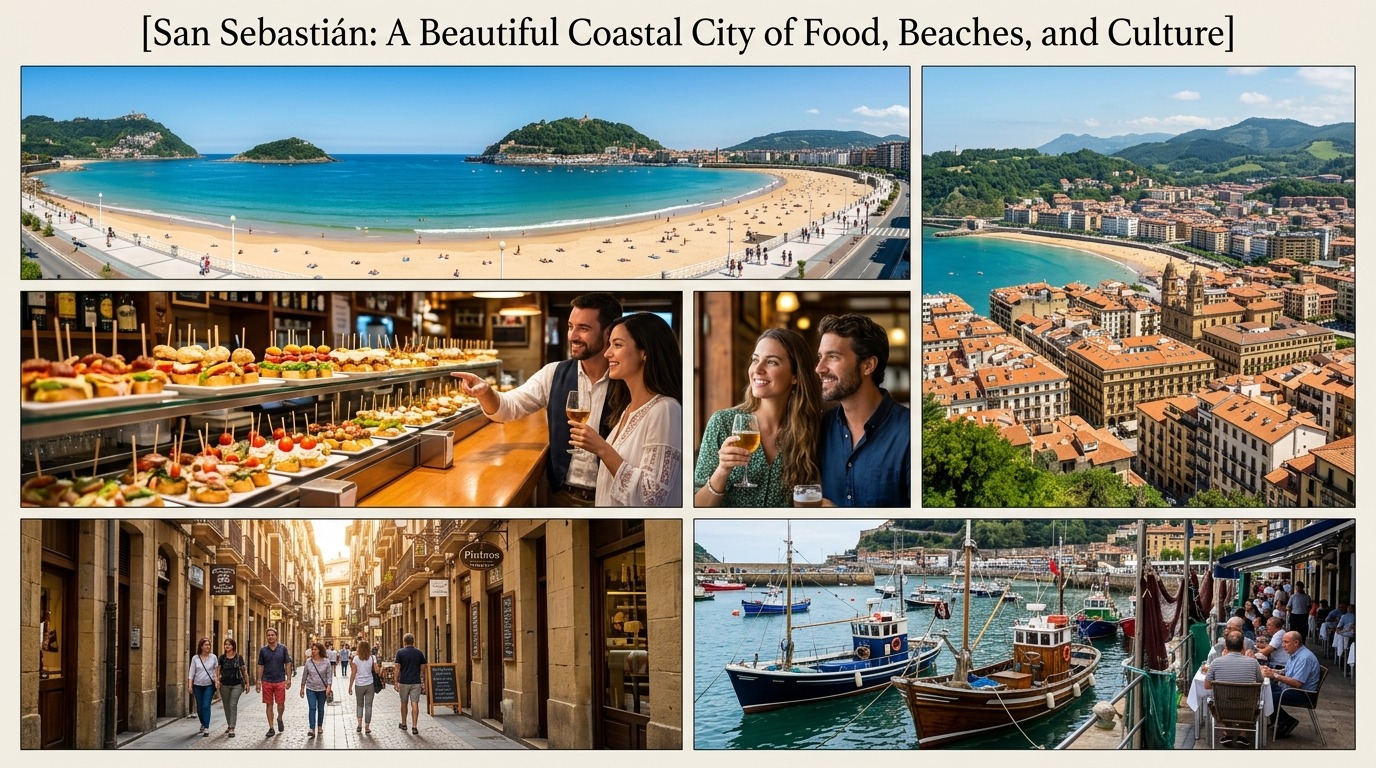
San Sebastián is one of Spain’s most appealing coastal destinations, combining elegant beaches, green hills, historic streets, world-class food, and a relaxed Basque atmosphere. Located in the Basque Country near the French border, this seaside city is known for its beautiful bay, lively pintxos culture, and distinctive blend of traditional and modern experiences.
A visit to San Sebastián can be as active or peaceful as you prefer. You can spend the morning walking along La Concha Beach, explore the narrow streets of the Old Town, enjoy small plates in local bars, and finish the day watching the sunset from a hilltop viewpoint. With its compact center and excellent dining scene, San Sebastián is a rewarding destination for couples, families, food lovers, photographers, and travelers seeking a memorable Spanish city break.
Where Is San Sebastián?
San Sebastián, also known by its Basque name Donostia, is located in the province of Gipuzkoa in northern Spain’s Basque Country. It sits along the Bay of Biscay, close to the French border and surrounded by green hills.
Unlike many Mediterranean coastal destinations, San Sebastián has a cooler Atlantic influence. The landscape is lush, the weather can change quickly, and the city has a distinctly northern Spanish character.
San Sebastián is accessible by road, rail, and nearby airports. The closest major airport options include San Sebastián Airport, Bilbao Airport, and Biarritz Airport in France. Travel times depend on the airport, traffic, and transportation method.
Its central districts are walkable, making it easy to explore many attractions without a car. Public transport is useful for reaching neighborhoods and nearby towns.
Why Visit San Sebastián?
San Sebastián offers an unusual combination of beach-city comfort and strong local identity. It has the atmosphere of a refined European seaside resort, but it still feels connected to everyday Basque life.
The city is particularly famous for its food. Pintxos bars fill the Old Town, and restaurants range from casual neighborhood spots to internationally recognized dining establishments.
Beyond food, visitors can enjoy:
- Beautiful urban beaches
- Historic streets and churches
- Coastal walking routes
- Hilltop viewpoints
- Museums and cultural attractions
- Traditional markets
- Surfing and water activities
- Day trips along the Basque coast
San Sebastián is also a destination where travelers can enjoy a full itinerary without feeling pressured to visit a long list of attractions. Much of its appeal comes from simple experiences such as walking beside the sea, sitting in a plaza, or enjoying a leisurely meal.
Explore La Concha Bay and Its Beaches
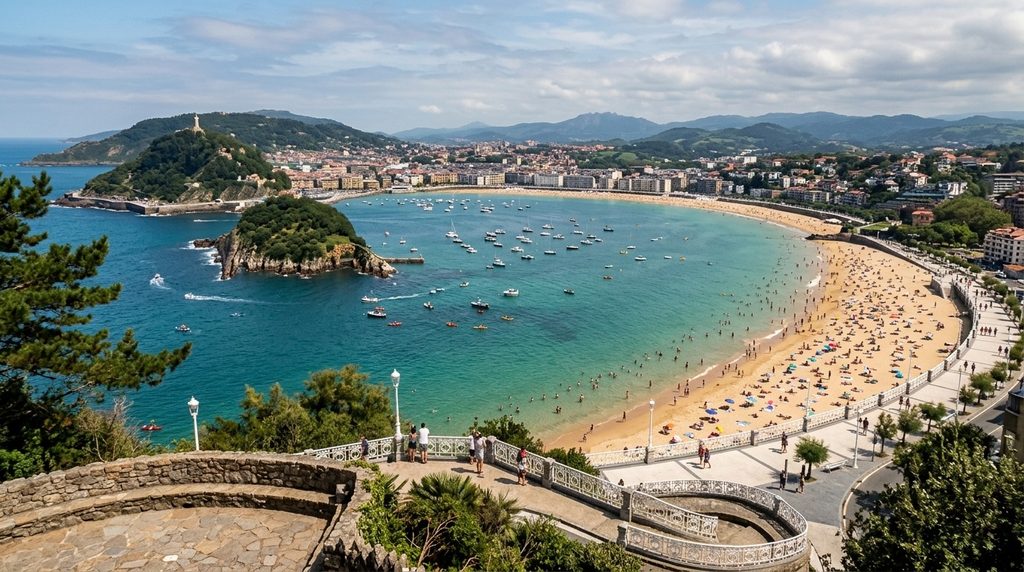
La Concha Bay is the visual centerpiece of San Sebastián. Its curved shoreline, calm-looking waters, elegant promenade, and surrounding hills create one of the city’s most recognizable scenes.
La Concha Beach
La Concha Beach is the city’s most famous beach and a popular place for swimming, sunbathing, walking, and relaxing by the water.
The beach is backed by a wide promenade where visitors can enjoy views across the bay. Its urban location means that cafés, restaurants, shops, and public facilities are nearby.
Ondarreta Beach
Ondarreta Beach lies toward the western side of the bay. It is generally associated with a more residential atmosphere and provides another pleasant place for beach time.
Zurriola Beach
Zurriola Beach is especially popular with surfers and younger visitors. Its waves and open Atlantic setting make it different from the more sheltered feel of La Concha.
The beach is also a good place to watch surfers, enjoy a coastal walk, or experience a livelier seaside atmosphere.
Visitors should remember that Atlantic conditions can change quickly. Always pay attention to local swimming notices, waves, currents, and beach safety information.
Discover the Old Town of San Sebastián
The Parte Vieja, or Old Town, is one of the best places to experience the city’s character. Its narrow streets are filled with pintxos bars, traditional restaurants, small shops, churches, and lively public squares.
The area is especially active around meal times, but it is also enjoyable during quieter hours when you can appreciate the architecture and atmosphere.
Plaza de la Constitución
Plaza de la Constitución is a historic square surrounded by buildings with numbered balconies. It has long been an important gathering place in the city.
The square is a useful starting point for exploring nearby streets and learning about San Sebastián’s urban history.
Iglesia de San Vicente
The Church of San Vicente is one of the Old Town’s important religious landmarks. Its historic architecture provides a contrast to the busy food scene surrounding it.
Basilica of Santa María del Coro
This beautiful church stands near the edge of the Old Town and is known for its detailed façade and interior design.
Mercado de la Bretxa
The Bretxa Market has a long connection with local food and daily life. It is an interesting stop for travelers who want to understand the ingredients and culinary traditions behind Basque cuisine.
The Old Town is best explored slowly. Rather than rushing between landmarks, allow time to enter a small bar, browse a shop, or pause in a quiet street.
Experience San Sebastián’s Pintxos Culture
Food is one of the main reasons travelers visit San Sebastián. The city is widely associated with pintxos, small portions of food often served in bars and enjoyed with a drink.
Pintxos are related to tapas but have their own Basque traditions and presentation styles. Some are simple slices of bread topped with ingredients, while others are carefully prepared small dishes.
How to Enjoy Pintxos
A common way to experience pintxos is to visit several bars rather than staying in one restaurant for the entire evening.
You might order one or two items, enjoy them with a drink, and then continue to another place. This makes it possible to sample different flavors and explore several parts of the Old Town.
Popular ingredients may include:
- Local seafood
- Anchovies
- Cod
- Mushrooms
- Peppers
- Iberian ham
- Cheese
- Seasonal vegetables
- Cured meats
Menus change regularly, and many bars display their options at the counter.
Dining Tips
Meal times in Spain may differ from what some international visitors expect. Dinner often begins later in the evening, although pintxos can be enjoyed at various times.
Some bars are casual and busy, while others focus on carefully prepared dishes. It is useful to observe local ordering customs and ask staff for recommendations when the menu is unfamiliar.
| Pintxos experience | What to expect | Helpful tip |
| Traditional bar | Small plates and local drinks | Try one or two items before moving on |
| Seafood-focused menu | Fish, anchovies, cod, and shellfish | Ask about seasonal specialties |
| Modern pintxos bar | Creative presentations and unusual combinations | Check displayed ingredients |
| Market-style food stop | Fresh produce and local products | Visit earlier for a quieter atmosphere |
| Sit-down Basque restaurant | Larger portions and a slower meal | Reservations may be useful |
Visit Monte Igueldo and Monte Urgull
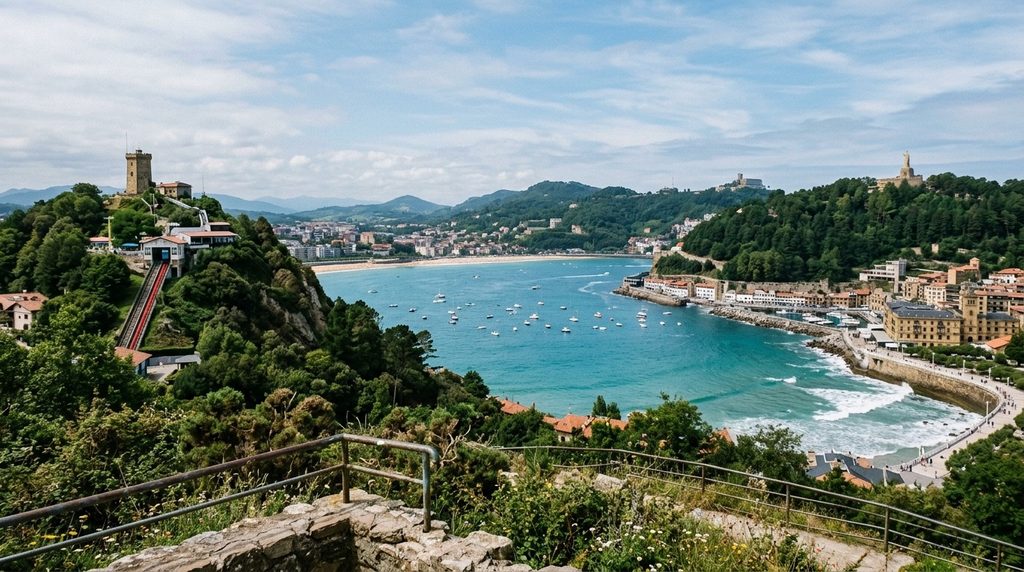
San Sebastián is surrounded by hills that provide excellent viewpoints over the city and coastline.
Monte Igueldo
Monte Igueldo rises on the western side of the bay and is one of the most popular places for panoramic views.
A funicular railway provides access to the hill, where visitors can enjoy views over La Concha Bay, the city, and the surrounding coastline. The summit also has a historic amusement area, making it an appealing stop for families.
Monte Urgull
Monte Urgull stands beside the Old Town and offers walking paths through greenery and historic remains.
At the top, visitors can find the remains of fortifications and views across the sea and city. The walk can involve slopes and uneven paths, so comfortable shoes are recommended.
Which Hill Should You Choose?
Monte Igueldo is ideal for broad postcard-style views and a classic visitor experience. Monte Urgull is better suited to travelers who enjoy walking, history, and exploring a hill close to the city center.
If you have time, visiting both provides two different perspectives of San Sebastián.
Enjoy the City’s Museums and Cultural Attractions
San Sebastián has a strong cultural identity shaped by Basque traditions, maritime history, art, music, and food.
San Telmo Museoa
San Telmo Museoa is one of the city’s leading cultural institutions. It explores Basque society, history, art, and cultural heritage.
The museum is housed partly in a former Dominican convent, adding architectural interest to the visit.
Aquarium
The San Sebastián Aquarium is located near the harbor and focuses on marine life and the region’s relationship with the sea.
It can be a good option for families or for travelers looking for an indoor attraction during rainy weather.
Tabakalera
Tabakalera is a contemporary culture center housed in a former tobacco factory. It hosts exhibitions, creative projects, performances, and cultural programs.
Its schedule changes, so check current events before visiting.
Kursaal Congress Centre
The Kursaal is a striking modern building located near Zurriola Beach. It hosts cultural events, concerts, conferences, and film-related activities.
Its architecture also makes it a popular subject for photography.
Walk the Waterfront and Coastal Promenades
Walking is one of the simplest and most enjoyable things to do in San Sebastián.
The city’s waterfront paths connect beaches, parks, viewpoints, and neighborhoods, allowing visitors to experience the landscape without needing a detailed plan.
The promenade along La Concha is especially attractive in the morning or near sunset. Benches and open views make it easy to stop and enjoy the bay.
The route toward Ondarreta Beach offers a calmer atmosphere, while the area around Zurriola Beach feels more energetic and connected to the city’s surfing culture.
For a longer outing, travelers can explore coastal paths beyond the main beaches. Conditions vary, and some routes include stairs, slopes, or uneven surfaces.
Bring water, wear comfortable shoes, and check the weather before setting out.
Best Time to Visit San Sebastián
San Sebastián can be visited throughout the year, but the experience changes with the seasons.
Summer is popular for beach visits, outdoor dining, festivals, and long evenings. July and August can be busy, and accommodation prices may be higher.
Spring often brings fresh greenery, moderate temperatures, and good conditions for sightseeing. Rain is still possible because of the city’s Atlantic climate.
Autumn is an excellent time for food-focused trips, coastal walks, and cultural visits. The city may feel calmer than during the peak summer season.
Winter is quieter, although weather can be cool and rainy. Travelers who enjoy museums, restaurants, and atmospheric city walks may still find plenty to appreciate.
| Season | Best for | Considerations |
| Spring | Walking, sightseeing, gardens | Rain and changing temperatures |
| Summer | Beaches, festivals, outdoor dining | Busy streets and higher demand |
| Autumn | Food trips, culture, coastal scenery | Cooler evenings and occasional rain |
| Winter | Museums, restaurants, quiet travel | Shorter days and wetter weather |
If you want to combine beach time with comfortable sightseeing, late spring and early autumn may offer a useful balance.
Where to Stay in San Sebastián
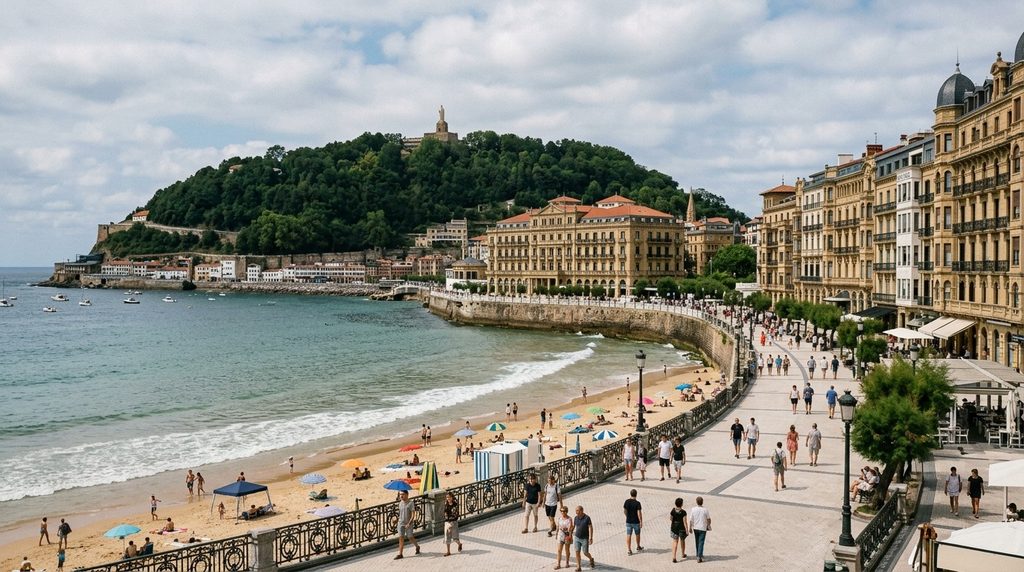
Choosing the right neighborhood can shape your experience of the city.
Parte Vieja
The Old Town is ideal for travelers who want to stay close to pintxos bars, historic streets, and evening activity. It can be lively and noisy, particularly during weekends and festival periods.
Centro
The central area offers convenient access to shops, restaurants, La Concha Beach, and major transport connections. It is a practical choice for first-time visitors.
Gros
Gros is located near Zurriola Beach and has a relaxed, modern atmosphere. It is popular with surfers, younger travelers, cafés, and visitors who prefer a less traditional neighborhood.
Antiguo
Antiguo is near Ondarreta Beach and Monte Igueldo. It can suit travelers seeking a more residential setting while remaining within reach of major attractions.
When booking accommodation, consider walking distance, accessibility, noise levels, parking, and whether air conditioning is available during warmer months.
Day Trips and Practical Travel Tips
San Sebastián is an excellent base for exploring nearby coastal towns and Basque Country attractions.
Hondarribia
Hondarribia is a picturesque town near the French border, known for its colorful waterfront, historic quarter, and traditional architecture.
Getaria
Getaria is a coastal fishing town associated with seafood, maritime heritage, and scenic views. It is a good choice for travelers interested in local food and smaller seaside communities.
Zarautz
Zarautz is known for its long beach and surfing culture. It can be a pleasant stop for a coastal day trip.
Bilbao
Bilbao is farther away but offers museums, architecture, food, and a different urban experience within the Basque Country.
Practical Tips
San Sebastián is highly walkable, so comfortable shoes are more useful than relying on taxis for short distances.
Carry a light rain jacket because showers can occur even during warmer months.
Book popular restaurants in advance, especially if you have a particular dining experience in mind.
Use public transportation for nearby towns when convenient, but check schedules before planning a full-day trip.
Respect local customs and remember that Basque culture is an important part of the city’s identity.
If you plan to visit during a major festival or event, reserve accommodation early.
FAQs
Is San Sebastián worth visiting?
Yes, San Sebastián is worth visiting for its beautiful beaches, pintxos culture, historic Old Town, coastal scenery, museums, viewpoints, and distinctive Basque atmosphere.
How many days do you need in San Sebastián?
Two to three days are enough to explore the main city attractions, enjoy the food scene, visit the beaches, and take a short excursion. A longer stay allows more relaxed day trips.
What food is San Sebastián famous for?
San Sebastián is famous for pintxos, fresh seafood, Basque-style dishes, local cheeses, cider, and fine dining. Visiting several pintxos bars is a popular way to experience the local food culture.
What is the best time to visit San Sebastián?
Summer is ideal for beaches and outdoor events, while spring and autumn are often comfortable for sightseeing and food-focused trips. Rain is possible throughout the year.
Is San Sebastián walkable?
Yes, many major attractions, beaches, restaurants, and historic areas are within walking distance. Public transportation is useful for reaching farther neighborhoods and nearby towns.
Conclusion:
San Sebastián brings together many of the experiences travelers hope to find in northern Spain: beautiful beaches, historic streets, remarkable food, green hills, cultural attractions, and a welcoming coastal atmosphere. From enjoying pintxos in the Old Town to watching the waves at Zurriola Beach or admiring the bay from Monte Igueldo, the city offers memorable experiences at every turn.
Whether you visit for a weekend of food and culture or use the city as a base for exploring the Basque coast, San Sebastián rewards travelers who take their time. Walk along the waterfront, explore beyond the busiest streets, try local specialties, and allow the city’s relaxed rhythm to become part of your journey.
Read more:Williamsburg Virginia: A Historic Escape Filled with American Charm