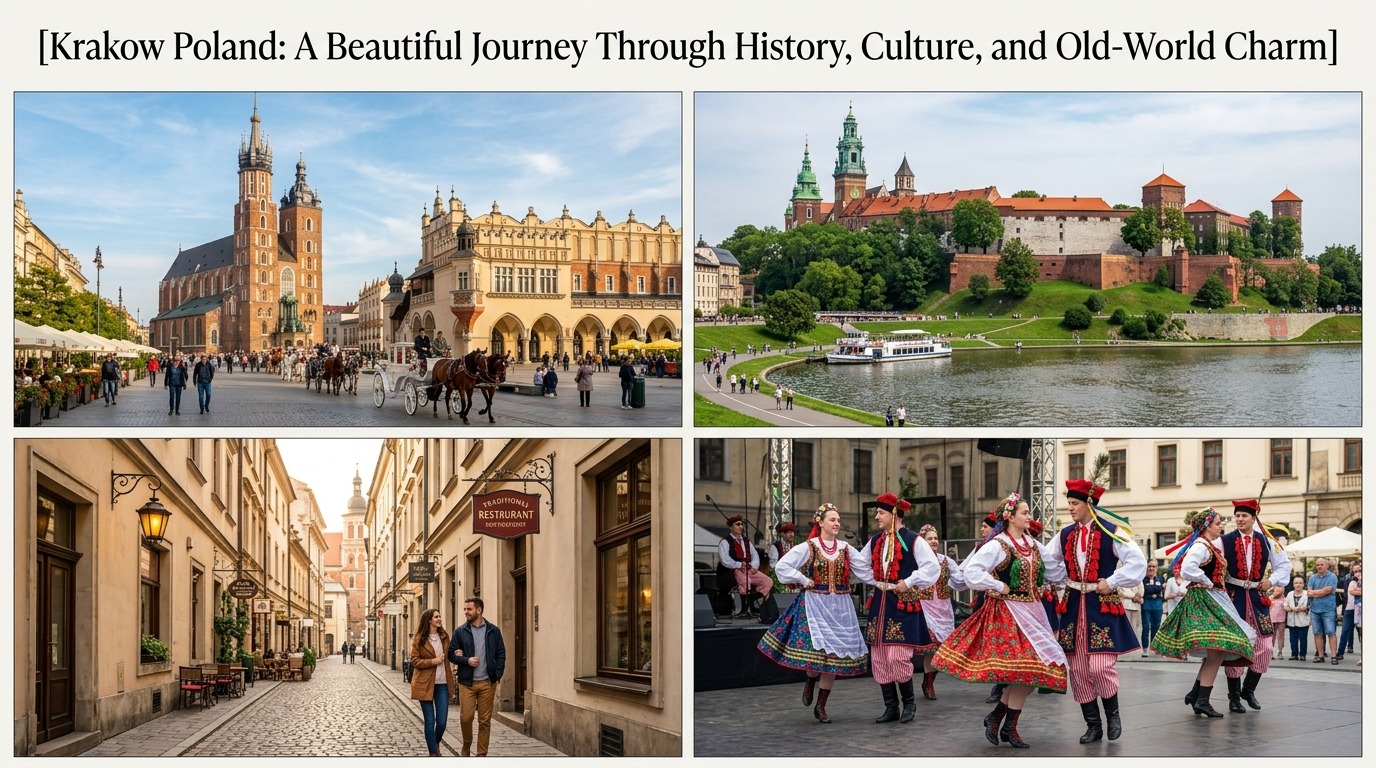
Krakow Poland is one of Europe’s most captivating historic cities, combining medieval architecture, lively public squares, riverside walks, traditional restaurants, and a deep cultural heritage. Once the royal capital of Poland, Krakow is filled with grand churches, historic courtyards, atmospheric streets, and landmarks that reflect centuries of European history. Its compact old town also makes it an enjoyable destination for travelers who prefer exploring on foot.
Beyond its famous monuments, Krakow offers a welcoming blend of art, cafés, museums, local markets, and relaxed neighborhoods. Visitors can spend the morning admiring royal architecture, enjoy Polish food in a traditional restaurant, and finish the day beside the Vistula River. Whether you are planning a weekend city break, a cultural holiday, or a longer journey through southern Poland, Krakow provides an experience filled with character and memorable discoveries.
Where Is Krakow Poland?
Krakow is located in southern Poland on the banks of the Vistula River. It is one of the country’s oldest and most historically important cities, situated relatively close to the Tatra Mountains and the Slovakian border.
The city is served by John Paul II Kraków-Balice International Airport, which has connections to several European destinations. Krakow is also linked by train and bus to Warsaw, Wrocław, Katowice, Gdańsk, and other major Polish cities.
Most first-time visitors focus on the historic center, but Krakow extends into several distinctive neighborhoods, each offering a different atmosphere. The Old Town is convenient for major attractions, Kazimierz is known for its cultural and Jewish heritage, and Podgórze provides a quieter setting with important historical landmarks.
Krakow’s central location makes it a useful base for exploring southern Poland, including Wieliczka Salt Mine, Auschwitz-Birkenau, and mountain destinations.
Why Visit Krakow Poland?
Krakow Poland appeals to travelers who appreciate history, architecture, culture, and authentic local experiences. Its historic center is visually impressive, but the city also feels active and lived-in rather than preserved only for tourists.
The city is particularly attractive for short breaks because many major sights are close together. You can explore royal buildings, medieval streets, churches, museums, and public squares without needing complicated transportation.
Some of the main reasons to visit Krakow include:
- A beautifully preserved medieval Old Town
- Wawel Royal Castle and Cathedral
- Historic market squares and colorful streets
- Traditional Polish food and bakeries
- Jewish heritage and cultural attractions in Kazimierz
- Museums covering art, history, and wartime experiences
- Riverside walks along the Vistula
- Easy day trips to important nearby attractions
- A lively café, restaurant, and nightlife scene
Krakow also offers a wide range of accommodation, from budget hostels and apartments to boutique hotels and luxury properties. This makes it suitable for different travel styles and budgets.
Exploring Krakow Old Town and Main Market Square
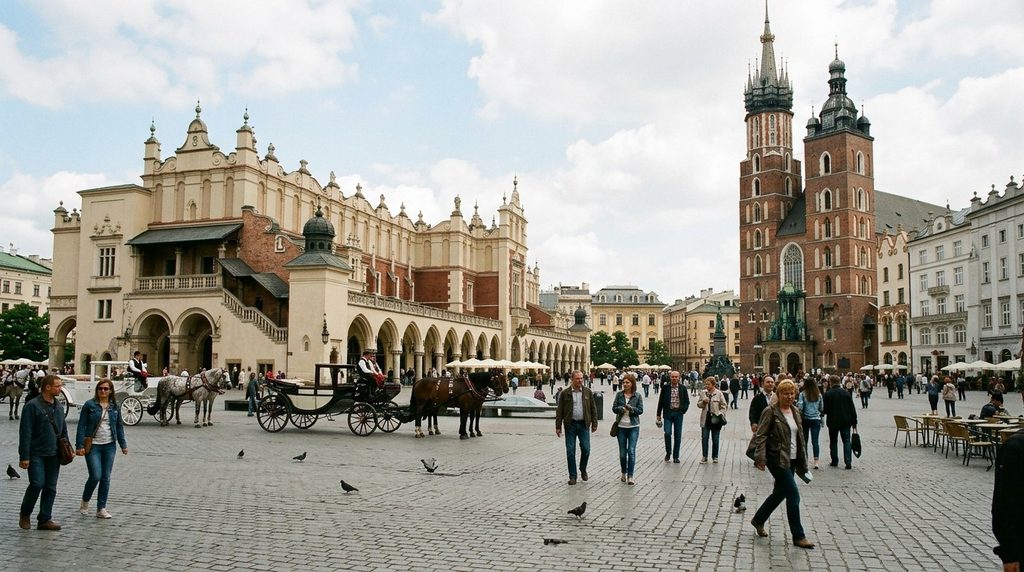
Krakow’s Old Town is the heart of the city and one of its most enjoyable areas to explore. Surrounded by historic buildings and enclosed by the Planty Park ring, the district is filled with churches, cafés, museums, shops, and architectural details.
Main Market Square
Main Market Square, known locally as Rynek Główny, is one of the largest medieval town squares in Europe. It has served as a center of trade, public gatherings, celebrations, and city life for centuries.
The square is surrounded by impressive buildings and is home to several major landmarks, including St. Mary’s Basilica and the Cloth Hall.
Cloth Hall
The Cloth Hall, or Sukiennice, stands at the center of the market square. Historically used by merchants, it now contains stalls selling souvenirs, crafts, jewelry, and traditional Polish products.
Its upper level also houses part of the National Museum’s art collection.
St. Mary’s Basilica
St. Mary’s Basilica is recognized for its twin towers and richly decorated interior. Every hour, a traditional trumpet signal known as the Hejnał Mariacki is played from one of the towers.
The sound is closely associated with Krakow and has become one of the city’s best-known traditions.
St. Florian’s Gate and Barbican
St. Florian’s Gate and the nearby Barbican are remnants of Krakow’s historic defensive system. They provide a sense of how the medieval city was protected and once formed part of a larger network of walls and fortifications.
A walk through this area is especially pleasant when entering or leaving the Old Town.
Wawel Castle and Poland’s Royal Heritage
Wawel Castle is one of Krakow’s most important landmarks and a central symbol of Polish history. Located on Wawel Hill beside the Vistula River, the complex includes royal buildings, courtyards, museums, and religious structures.
For centuries, Wawel served as a royal residence and a major center of political and cultural life in Poland.
Wawel Royal Castle
The castle combines architectural influences from different periods, including Gothic, Renaissance, and Baroque elements. Visitors can explore selected state rooms, royal apartments, treasury collections, and exhibitions, depending on the current visitor program.
Because exhibitions may require separate tickets or timed entry, checking official information before arrival is recommended.
Wawel Cathedral
Wawel Cathedral is closely connected with Poland’s monarchy and religious history. Many Polish kings and important national figures are buried there.
The cathedral’s interior contains chapels, tombs, artwork, and architectural details from several centuries.
Dragon’s Den
A popular attraction beneath Wawel Hill is Dragon’s Den, a cave connected with the legendary Wawel Dragon. The story is deeply rooted in Krakow’s folklore and is particularly appealing to families.
The route may involve stairs and seasonal access restrictions, so visitors should check current opening arrangements.
Wawel Hill also offers attractive views over the Vistula River and is a pleasant place to slow down after visiting the castle interiors.
Museums, Art, and Cultural Experiences
Krakow has a rich museum scene, covering Polish art, medieval history, Jewish heritage, wartime experiences, and modern culture. Travelers should choose museums according to their interests rather than trying to visit too many in one day.
National Museum in Krakow
The National Museum houses important collections of Polish art, European painting, decorative arts, and historical objects. Its exhibitions provide insight into the country’s artistic development.
Schindler’s Factory Museum
Located in the former enamel factory associated with Oskar Schindler, this museum presents Krakow’s experience during the Second World War. Exhibits focus on the occupation of the city, the lives of residents, and the wider historical context.
The museum is popular, and advance booking may be useful during busy periods.
Rynek Underground Museum
Beneath Main Market Square, the Rynek Underground Museum explores Krakow’s medieval history through archaeological remains, reconstructed streets, objects, and multimedia displays.
It is a particularly interesting attraction for visitors who want to understand how the city developed beneath its modern surface.
MOCAK Museum of Contemporary Art
MOCAK presents modern and contemporary art in a former industrial area of Krakow. Its exhibitions explore social, political, and cultural themes through different artistic mediums.
| Museum or Cultural Site | Main Focus | Best For |
| National Museum | Polish and European art | Art lovers and culture travelers |
| Schindler’s Factory | Krakow during World War II | History and education |
| Rynek Underground | Medieval Krakow and archaeology | Families and history enthusiasts |
| MOCAK | Contemporary art | Modern culture and creative travelers |
| Wawel Castle exhibitions | Royal history and architecture | First-time visitors and heritage lovers |
Museum opening hours and ticket arrangements can vary, particularly on public holidays. Check official websites before planning a museum-focused day.
Kazimierz and Krakow’s Jewish Heritage
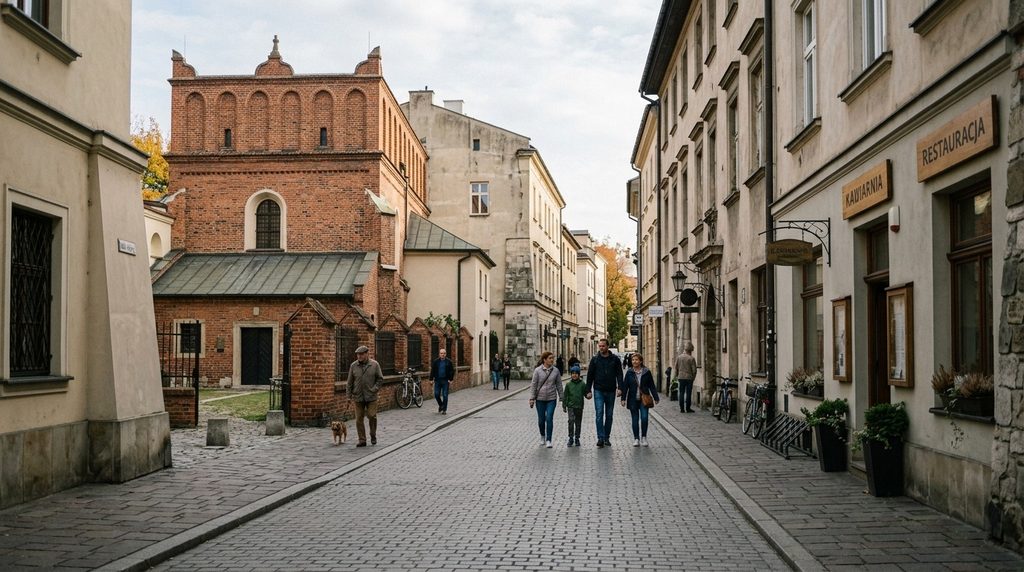
Kazimierz is one of Krakow’s most distinctive neighborhoods. Once a separate town, it became an important center of Jewish life and culture before the Second World War. Today, the district combines historic synagogues, memorial sites, independent cafés, restaurants, galleries, and lively evening venues.
Historic Synagogues
Several synagogues remain important landmarks in Kazimierz. The Old Synagogue is especially significant and now functions as a museum presenting Jewish religious traditions and history.
Other synagogues, including the Remuh Synagogue, reflect the neighborhood’s long religious and cultural heritage.
Plac Nowy
Plac Nowy is a popular meeting place surrounded by food stalls, cafés, and restaurants. It is known for casual street food and a relaxed local atmosphere.
Visitors often come here to try zapiekanka, a Polish open-faced baguette topped with ingredients such as mushrooms, cheese, and other additions.
Jewish Heritage Tours
Walking tours can help visitors understand the history of Kazimierz, including its religious institutions, former residential areas, memorials, and cultural traditions.
It is important to approach heritage sites respectfully. Some locations are active religious spaces or memorials connected with painful historical events.
Kazimierz is also a pleasant neighborhood for an evening walk, especially when historic streets begin to fill with restaurant terraces and small cultural venues.
Vistula River, Parks, and Outdoor Activities
Although Krakow is known for its historic buildings, it also offers opportunities to enjoy open spaces and outdoor activities.
Vistula River Boulevards
The Vistula River boulevards are popular for walking, cycling, relaxing, and enjoying views of Wawel Hill. During warmer months, riverside areas become lively with locals, visitors, cafés, and seasonal activities.
A riverside walk is a good way to take a break from busy sightseeing streets.
Planty Park
Planty Park forms a green belt around Krakow’s Old Town. It was created in the area once occupied by the medieval city walls and now includes pathways, lawns, trees, statues, and benches.
The park is useful for walking between attractions while enjoying a quieter environment.
Błonia Meadow
Błonia is a large open meadow near the city center. It is used for recreation, public events, walking, and outdoor activities.
Its wide space provides a different perspective on Krakow, especially for travelers who enjoy open landscapes within an urban setting.
Zakrzówek
Zakrzówek is a former limestone quarry transformed into a scenic recreational area. Its clear water and rocky surroundings have made it a popular place for outdoor relaxation, although access and swimming rules may change.
Visitors should follow current safety instructions and use only officially permitted areas.
Polish Food and Dining in Krakow
Food is an essential part of the Krakow experience. The city offers traditional Polish restaurants, modern eateries, bakeries, food markets, vegetarian cafés, and international dining options.
Polish cuisine is often hearty and comforting, with dishes based on potatoes, cabbage, mushrooms, meat, grains, and dairy products. Krakow also has its own regional specialties and street-food traditions.
Traditional Foods to Try
- Pierogi: Dumplings filled with ingredients such as potato and cheese, cabbage, mushrooms, or meat
- Obwarzanek krakowski: A ring-shaped bread snack commonly sold from street carts
- Żurek: A sour rye soup often served with sausage or egg
- Bigos: A slow-cooked dish made with cabbage, sauerkraut, and meat
- Kielbasa: Traditional Polish sausage
- Placki ziemniaczane: Crispy potato pancakes
- Zapiekanka: A toasted open-faced baguette with toppings
- Makowiec: A sweet poppy-seed pastry
Where to Eat
Traditional milk bars, known as bar mleczny, offer simple Polish meals at generally accessible prices. They are useful for travelers who want to try local dishes in a casual setting.
Kazimierz has a wide range of restaurants and cafés, while the Old Town offers everything from traditional dining rooms to modern international restaurants.
For a more relaxed experience, consider exploring smaller streets away from the busiest parts of Main Market Square.
Best Neighborhoods to Stay in Krakow
Krakow offers several good areas for accommodation, and the best choice depends on your priorities. Staying near the center is convenient for sightseeing, while neighborhoods farther out may offer a quieter atmosphere.
Old Town
The Old Town is ideal for first-time visitors who want easy access to major landmarks, restaurants, cafés, and public transportation.
It can be lively and busy, particularly during peak travel periods, so travelers seeking peace should check the exact location of their accommodation.
Kazimierz
Kazimierz is suitable for visitors who enjoy culture, food, nightlife, historic streets, and a creative atmosphere. It is within walking distance of the Old Town and has many independent restaurants and boutique stays.
Podgórze
Podgórze is located across the Vistula River and offers a quieter environment with important historical attractions, parks, and local cafés.
It may appeal to travelers who prefer staying outside the busiest tourist district.
Grzegórzki
Grzegórzki is a practical residential area with access to transport links, shopping centers, and the city center. It can be a useful choice for longer stays or travelers seeking modern apartments.
| Neighborhood | Atmosphere | Suitable For |
| Old Town | Historic, central, lively | First-time visitors and short breaks |
| Kazimierz | Cultural, artistic, energetic | Food lovers and nightlife |
| Podgórze | Quieter and historically significant | Couples and independent travelers |
| Grzegórzki | Residential and convenient | Longer stays and families |
| Near the Vistula River | Scenic and relaxed | Walkers and travelers seeking views |
When choosing accommodation, consider noise levels, walking distance, access to public transport, and whether the building has stairs or an elevator.
Day Trips from Krakow Poland
Krakow is an excellent base for exploring several important destinations in southern Poland. Some can be visited independently, while others are easier through organized tours.
Wieliczka Salt Mine
The Wieliczka Salt Mine is one of the region’s best-known attractions. Its underground route includes salt chambers, sculptures, chapels, and historic mining spaces.
The visit involves walking and stairs, and some routes may not be suitable for travelers with mobility limitations. Advance reservations are often helpful.
Auschwitz-Birkenau
The Auschwitz-Birkenau Memorial and Museum preserves the site of the former Nazi concentration and extermination camps. Visiting is an important educational experience that requires a respectful and thoughtful approach.
The site is located outside Krakow, and visitors should allow sufficient time for transportation and the full visit.
Tatra Mountains and Zakopane
Zakopane is a mountain town near the Tatra Mountains, known for wooden architecture, regional food, outdoor activities, and access to hiking routes.
It is farther from Krakow than Wieliczka, so a visit is best planned as a full-day trip or overnight stay.
Ojców National Park
Ojców National Park offers limestone cliffs, forests, caves, walking trails, and historic ruins. Its proximity to Krakow makes it a good option for travelers seeking nature.
The park is especially attractive during spring, summer, and early autumn.
| Day Trip | Main Attraction | Recommended Duration |
| Wieliczka Salt Mine | Underground salt chambers and chapels | Half day |
| Auschwitz-Birkenau | Historical memorial and museum | Full day |
| Zakopane | Mountain scenery and regional culture | Full day or overnight |
| Ojców National Park | Hiking, caves, and limestone landscapes | Half or full day |
| Tyniec Abbey | Historic abbey beside the Vistula | Half day |
Transport schedules, entry requirements, and seasonal conditions should be checked before arranging day trips.
Best Time to Visit Krakow Poland and Practical Tips
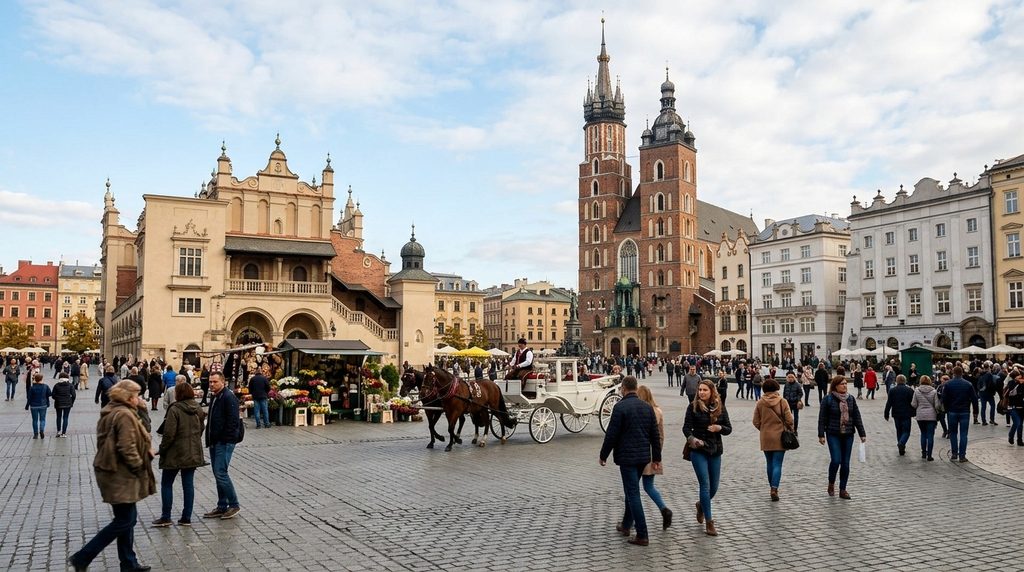
Krakow can be visited throughout the year, but the atmosphere changes considerably by season.
Spring brings mild temperatures, flowering parks, and comfortable sightseeing conditions. Summer is lively, with outdoor cafés, festivals, and long daylight hours, although popular attractions may be crowded.
Autumn offers colorful parks and cooler weather, making it a pleasant season for walking and museums. Winter can be cold, but Krakow’s historic streets, seasonal markets, and cozy restaurants create a special atmosphere.
Practical Travel Tips
- Wear comfortable shoes for cobbled streets and long walking days.
- Book popular attractions ahead during busy travel periods.
- Carry some Polish złoty for small purchases and local markets.
- Use official transportation services when traveling to and from the airport.
- Check museum schedules before visiting on Mondays or public holidays.
- Dress respectfully at religious and memorial sites.
- Keep an extra layer available during spring and autumn evenings.
- Allow plenty of time for day trips outside the city.
- Stay aware of belongings in crowded squares and transport areas.
For a first visit, three days provide enough time to explore the Old Town, Wawel Hill, Kazimierz, and selected museums. Four or five days allow a more relaxed pace and room for a day trip.
FAQs
Is Krakow Poland worth visiting?
Yes, Krakow Poland is worth visiting for its medieval Old Town, royal landmarks, museums, traditional food, cultural neighborhoods, and nearby historical attractions. It is a strong choice for both short city breaks and longer holidays.
How many days do you need in Krakow?
Three days are enough to explore Krakow’s main attractions at a comfortable pace. Staying four to five days gives you more time for museums, Kazimierz, riverside walks, and a day trip.
What is the best time to visit Krakow Poland?
Spring and early autumn offer comfortable sightseeing weather and attractive scenery. Summer is lively but busier, while winter brings colder temperatures and a quieter, atmospheric city experience.
Is Krakow expensive for tourists?
Krakow can be relatively affordable compared with many major European cities, particularly for public transportation, casual dining, and accommodation outside the busiest central areas. Prices depend on season and travel style.
What are the best day trips from Krakow?
Popular day trips include Wieliczka Salt Mine, Auschwitz-Birkenau, Ojców National Park, Zakopane, and Tyniec Abbey. The best option depends on whether you prefer history, nature, architecture, or mountain scenery.
Conclusion:
Krakow Poland brings together royal history, medieval architecture, meaningful cultural attractions, traditional cuisine, and lively modern neighborhoods in a city that is easy to explore. From Main Market Square and Wawel Castle to Kazimierz’s historic streets and the peaceful Vistula River, every area offers a different part of Krakow’s identity.
Whether you visit for a weekend or use the city as a base for exploring southern Poland, Krakow rewards travelers who take time to look beyond the most famous landmarks. Enjoy its museums, taste local dishes, walk through its parks, and leave room for the small discoveries that make this historic city so memorable.
Read more:Sofia Bulgaria: A Captivating City of History, Culture, and Mountain Views