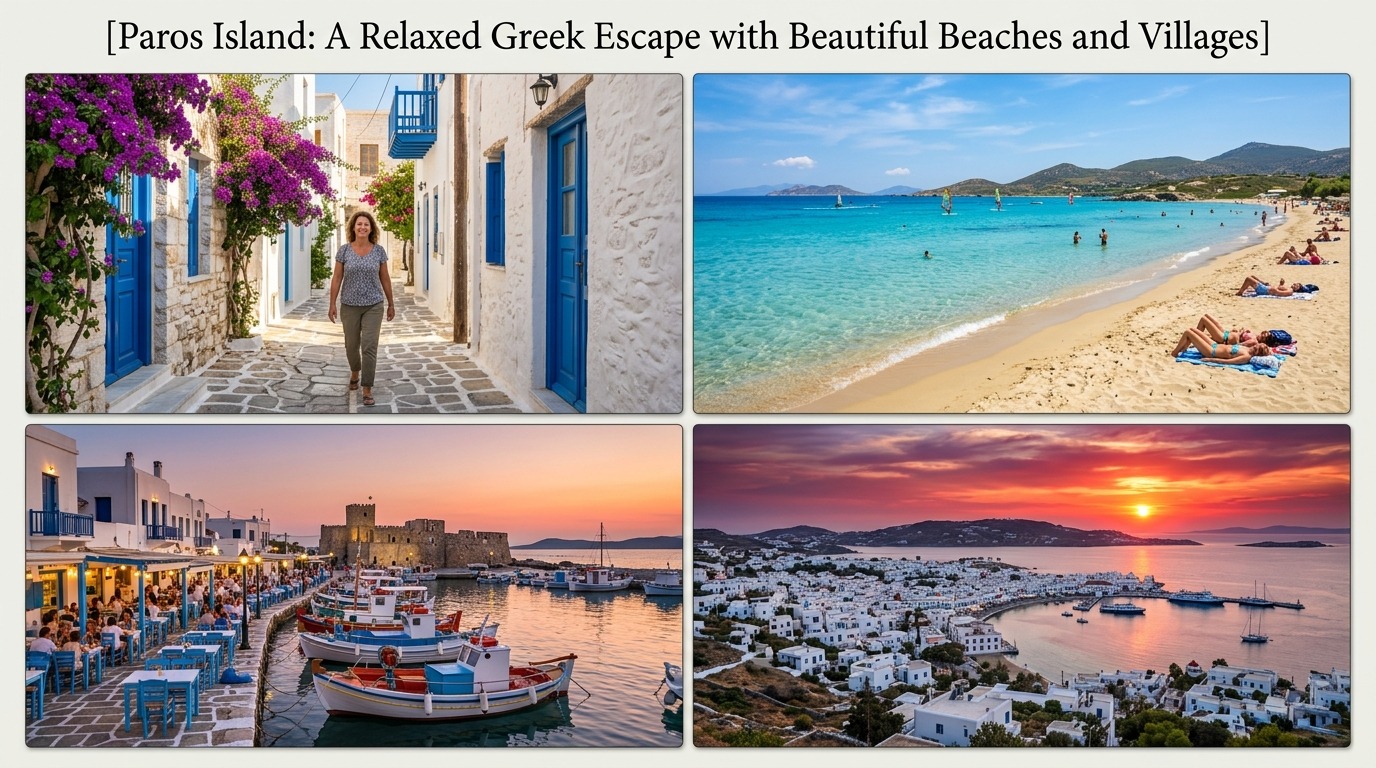
Paros Island is one of the most appealing destinations in the Cyclades for travelers who want a Greek island experience without feeling limited to just beaches. Whitewashed villages, blue-domed churches, quiet countryside, clear Aegean waters, traditional tavernas, and lively waterfront areas come together to create an island that feels both scenic and easygoing. It has enough energy for travelers who enjoy dining and nightlife, yet plenty of peaceful corners for those who prefer a slower holiday.
What makes Paros especially attractive is the variety within a relatively compact island. You can spend a morning swimming at a sandy beach, have lunch beside the sea, wander through a traditional village in the afternoon, and watch the sunset from a harbor in the evening. Whether you are planning a romantic Greek island holiday, a family trip, a beach vacation, or a base for exploring the Cyclades, Paros offers plenty of flexibility.
Why Visit Paros Island?
Paros has a character that sits comfortably between the busier and quieter sides of the Greek islands. It is developed enough to offer a good selection of accommodation, restaurants, cafés, beach clubs, and transportation, but it still retains traditional villages and rural landscapes.
The island is particularly attractive to travelers who do not want their entire vacation centered around one resort. Instead, you can explore several different areas and create an itinerary that matches your interests.
Naoussa is one of the island’s most popular places, known for its picturesque harbor, narrow streets, restaurants, and evening atmosphere. Parikia, the island’s main port town, combines practical convenience with historic streets, waterfront dining, and important cultural sights.
Beyond these towns, Paros has beaches ranging from organized stretches with facilities to quieter coastal spots. Inland villages provide another side of the island, with traditional architecture, small squares, churches, and local tavernas.
The island is also well positioned for island-hopping. Its location in the Cyclades makes it possible to combine a Paros holiday with destinations such as Naxos, Antiparos, Mykonos, or other nearby islands, depending on ferry schedules and your travel plans.
Best Places to Explore in Paros
One of the pleasures of Paros is moving between different villages rather than staying in one location throughout your trip.
Naoussa
Naoussa is a former fishing village that has become one of the island’s most popular places for visitors. Its small harbor, whitewashed buildings, waterfront restaurants, and narrow lanes create a lively setting, especially during summer evenings.
It is a good choice for travelers who enjoy combining daytime beach trips with restaurants, cafés, and evening walks.
Parikia
Parikia is the island’s main port and an important place to stay if convenient ferry connections matter to you. Its old town contains narrow streets and traditional buildings, while the waterfront offers places to eat and watch boats arrive and depart.
The Panagia Ekatontapiliani, also known as the Church of 100 Doors, is one of the most significant historic landmarks on the island.
Lefkes
Located inland, Lefkes provides a different atmosphere from the coastal towns. The village is known for its traditional Cycladic character, narrow lanes, and elevated setting.
It is particularly worthwhile for travelers who want to see more than the island’s beaches.
Marpissa
Marpissa is another traditional village with a quieter feel. It can easily be included in a day exploring the eastern and central parts of Paros.
| Place | Best For | Ideal Time to Visit |
| Naoussa | Harbor, dining, evening atmosphere | Late afternoon and evening |
| Parikia | Port, history, old town | Morning or evening |
| Lefkes | Traditional village experience | Morning or afternoon |
| Marpissa | Quiet streets and local character | Afternoon |
| Aliki | Seaside dining and relaxed atmosphere | Late afternoon |
You do not need to visit every village to understand Paros. Choosing two or three and exploring them without rushing usually makes for a more enjoyable day.
Best Beaches on Paros Island
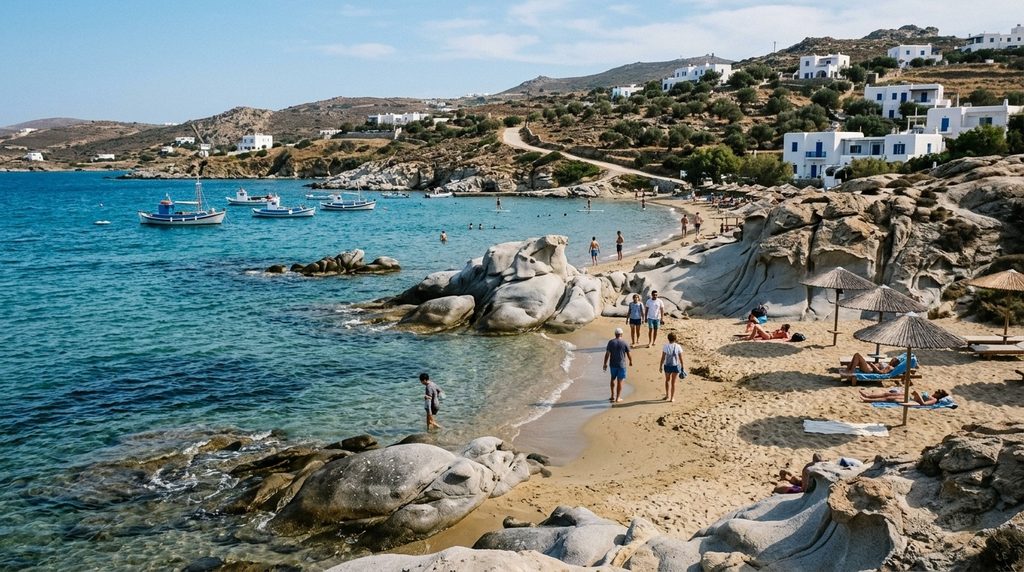
The beaches are a major reason travelers choose Paros. The island offers different types of coastal experiences, from organized beaches with restaurants and sunbeds to more natural spots where the main attraction is simply the sea and surrounding landscape.
Kolymbithres Beach
Kolymbithres is known for its unusual granite rock formations, which have been shaped by wind and water over time. The landscape gives the beach a distinctive appearance and makes it one of the island’s recognizable coastal areas.
The small coves around the rocks can be attractive for swimming when sea conditions are suitable.
Golden Beach
Golden Beach, or Chrissi Akti, is one of the better-known beaches on the island. Its long sandy shoreline and open setting make it popular with both swimmers and watersports enthusiasts.
Winds can be an important part of the experience, particularly for visitors interested in windsurfing.
Santa Maria Beach
Located near Naoussa, Santa Maria offers clear water and a range of facilities. It is convenient for travelers staying in or around northern Paros.
Monastiri Beach
Monastiri is situated in a protected area near the northern tip of the island. Its surroundings provide a scenic setting and opportunities to combine swimming with exploration of the nearby landscape.
When visiting beaches, keep in mind that conditions can vary with wind. A beach that is calm on one side of the island may feel much rougher on another day.
Things to Do in Paros Beyond the Beaches
A Paros itinerary does not need to revolve entirely around swimming and sunbathing. The island has enough history, culture, outdoor activities, and local experiences to fill several days.
Walking through the old streets of Parikia is an easy way to add some history to your trip. The Panagia Ekatontapiliani is particularly important and is one of the island’s major religious monuments.
Travelers interested in hiking can explore routes connecting villages and countryside areas. The Byzantine Road near Lefkes is one of the island’s better-known walking routes and offers an opportunity to experience the landscape away from the main coastal areas.
Water activities are another option. Depending on conditions and local operators, visitors can try windsurfing, kitesurfing, sailing, kayaking, or other activities.
Boat trips can also be a worthwhile addition. Some excursions focus on swimming and coastal scenery, while others may include visits to nearby islands or secluded areas that are easier to reach from the water.
For a slower afternoon, simply choose a village, find a shaded café, and take your time. Greek island travel does not always need to be built around scheduled attractions.
Best Time to Visit Paros Island
The best time to visit Paros depends on what you want from the island. Summer brings the warmest weather, busiest beaches, and liveliest evenings, while the shoulder seasons can provide a calmer experience.
June is often attractive for travelers who want warm weather and beach conditions without the full intensity of the busiest summer period.
July and August are the peak summer months. They are ideal if your priority is swimming, watersports, beach clubs, and nightlife, but accommodation and popular restaurants can be busier.
September can be an excellent choice for travelers who want warm sea temperatures and a somewhat more relaxed atmosphere. The island remains active while the peak summer period begins to fade.
Spring and later autumn can work well for hiking, sightseeing, and exploring villages, although beach-oriented travelers should check seasonal opening dates and weather conditions.
| Period | Weather & Atmosphere | Best For |
| April–May | Mild, greener, quieter | Villages, walking, sightseeing |
| June | Warm and increasingly lively | Beaches and balanced travel |
| July–August | Hot, busy, peak season | Swimming, nightlife, watersports |
| September | Warm with a calmer feel | Beaches and couples |
| October | Milder and quieter | Exploring and relaxed trips |
If your main goal is a classic summer beach holiday, June through September is generally the most practical period. For a quieter trip focused on walking and village exploration, the shoulder seasons can be more appealing.
How to Get to Paros
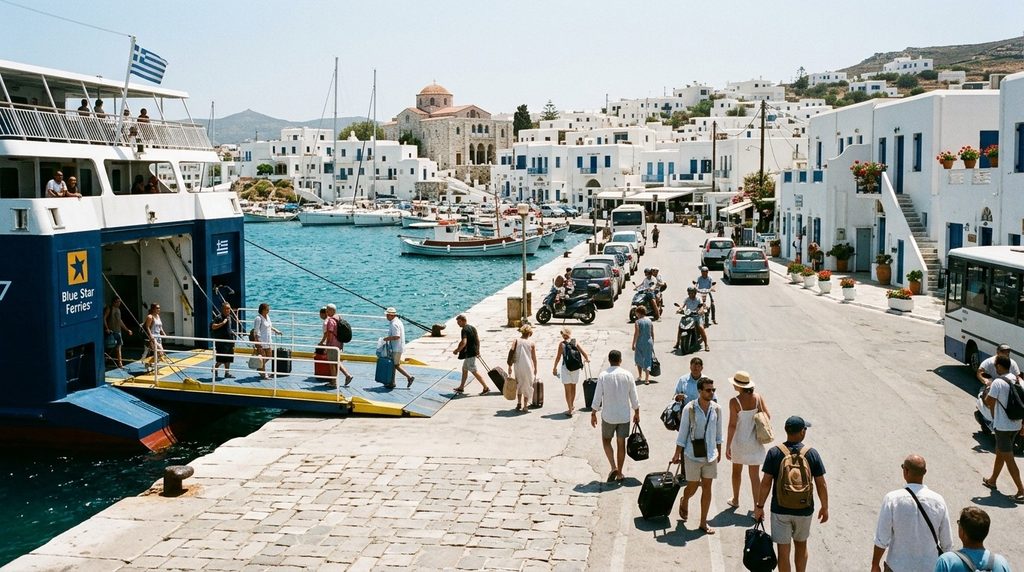
Most travelers reach Paros by ferry or by air. The island has an airport with domestic connections, while ferries provide links with Athens and several other Greek islands.
Ferry travel is particularly useful for island-hopping. Routes and journey times vary depending on the departure point, vessel, and season, so checking the current timetable before planning connecting islands is important.
If you arrive by ferry, Parikia is your main arrival point. From there, buses, taxis, rental vehicles, and other local transportation options can help you reach your accommodation.
For travelers arriving during the busy summer months, it is sensible to organize your first transfer in advance if you have a specific hotel or late arrival time.
Paros is also a useful island-hopping base. A trip can be structured around several nights in Paros followed by a short stay on another Cycladic island.
Because ferry schedules can change with weather and seasonal operations, avoid planning extremely tight same-day connections between separate bookings.
Where to Stay in Paros
The best area to stay depends heavily on the type of vacation you want.
Naoussa is a strong choice for travelers who want restaurants, nightlife, a picturesque harbor, and easy access to beaches in northern Paros. It is particularly popular with couples and visitors who enjoy an active evening atmosphere.
Parikia is practical for travelers who value ferry access and want a combination of old-town character, restaurants, shops, and transportation.
Aliki offers a more relaxed seaside environment and can appeal to families or travelers who prefer a quieter base.
Piso Livadi is another coastal option with a pleasant waterfront atmosphere and access to nearby beaches.
When choosing accommodation, consider transportation as much as the appearance of the property. If you plan to explore multiple beaches and villages, being near a bus route or having access to a rental vehicle can make a major difference.
Also consider how much evening activity you want. Staying directly in a busy center can be convenient, but a property a short distance away may provide a quieter night’s sleep.
Food, Restaurants, and Local Flavors
Food is an important part of the Paros experience. Local tavernas serve dishes based on Greek ingredients such as tomatoes, olive oil, fresh vegetables, seafood, cheeses, herbs, and locally produced meats.
A meal by the water is an obvious choice, but some of the most enjoyable dining experiences can also be found in village settings away from the busiest waterfronts.
Look for traditional Greek dishes such as grilled fish, octopus, Greek salads, local cheeses, stuffed vegetables, and slow-cooked meat dishes. Menus vary from restaurant to restaurant, so trying several styles can make your trip more interesting.
Wine lovers may also want to explore the island’s local wine tradition. Paros has a long history of viticulture, and some wineries offer visits or tastings depending on the season and their current schedules.
For dessert or a quick break during sightseeing, Greek pastries, yogurt with honey, and other local sweets are easy choices.
During the busiest months, popular restaurants in Naoussa and other tourist centers can become crowded during dinner. If you have a particular restaurant in mind, booking ahead is worthwhile.
Practical Tips for Planning a Paros Trip
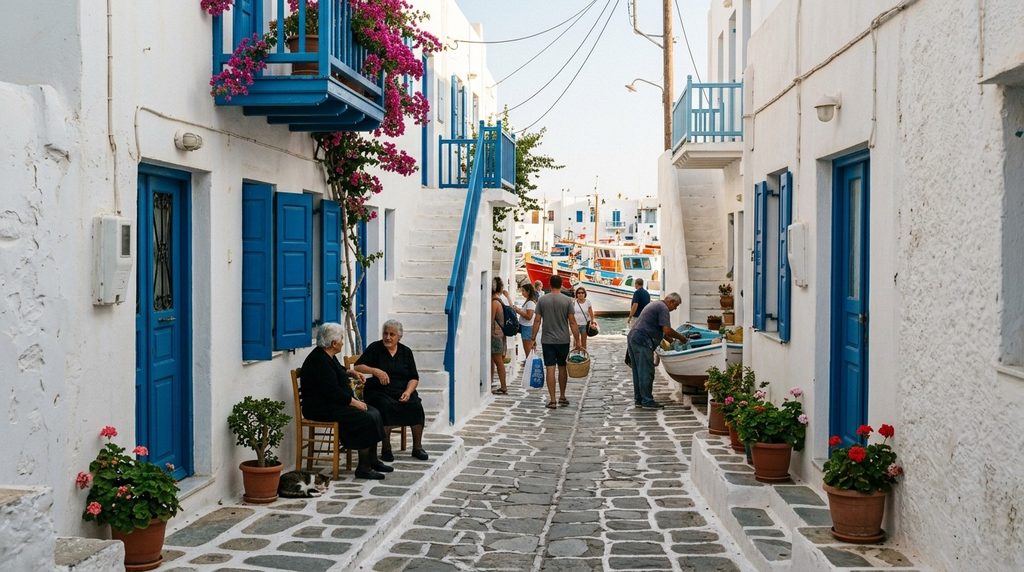
A little preparation will help you enjoy Paros without turning the holiday into a strict schedule.
Start by deciding whether you want to rent a car, scooter, or rely on buses and taxis. A rental vehicle gives you more flexibility for beaches and villages, while public transportation can work well if you plan to stay around the main towns.
Pack comfortable footwear because old villages contain narrow streets and uneven surfaces. Lightweight clothing is useful in summer, while a light layer can be helpful on windy evenings.
Sun protection is essential during the warmer months. Bring sunscreen, sunglasses, a hat, and enough drinking water when spending time outdoors.
The famous meltemi winds can affect the Cyclades during summer. Wind can make some beaches less comfortable while making others ideal for watersports, so keeping your itinerary flexible is helpful.
It is also worth planning around ferry schedules rather than assuming every route operates every day. If your trip involves several islands, leave enough flexibility for delays or changes.
Most importantly, do not feel that you have to cover the entire island in one trip. Paros rewards travelers who leave time for an unplanned swim, a long lunch, or an evening walk through a village.
FAQs
Is Paros Island worth visiting?
Yes. Paros is a strong choice for travelers who want beautiful beaches, traditional villages, good food, outdoor activities, and a lively but flexible Greek island atmosphere.
What is Paros Island best known for?
Paros is best known for its beaches, Cycladic villages, Naoussa harbor, traditional food, water sports, and easy connections with other Greek islands.
How many days do you need in Paros?
Four to five days is a good starting point for exploring Paros without rushing. A longer stay allows more time for beaches, villages, hiking, and relaxed evenings.
Is Paros better than Santorini for a beach holiday?
For travelers primarily interested in beaches and a more relaxed island experience, Paros can be a better fit. Santorini is especially famous for its caldera scenery and sunsets, while Paros offers a broader beach-and-village experience.
What is the best area to stay in Paros?
Naoussa suits travelers seeking restaurants and evening activity, while Parikia is convenient for ferry connections. Aliki and other smaller coastal areas can be better for a quieter stay.
Conclusion:
Paros Island brings together many of the experiences travelers look for in a Greek island holiday: beautiful beaches, whitewashed villages, waterfront dining, historic sites, outdoor adventures, and relaxed evenings. Its variety means you can spend one day exploring traditional villages and another simply enjoying the Aegean coast.
Whether you are planning a romantic escape, a family vacation, or a wider Cyclades island-hopping trip, Paros gives you plenty of flexibility. Take time to explore beyond the most photographed places, try local food, visit different beaches, and leave some space in your itinerary for slow island moments.
Read more:Datca Turkey: A Relaxed Guide to the Turquoise Aegean Coast