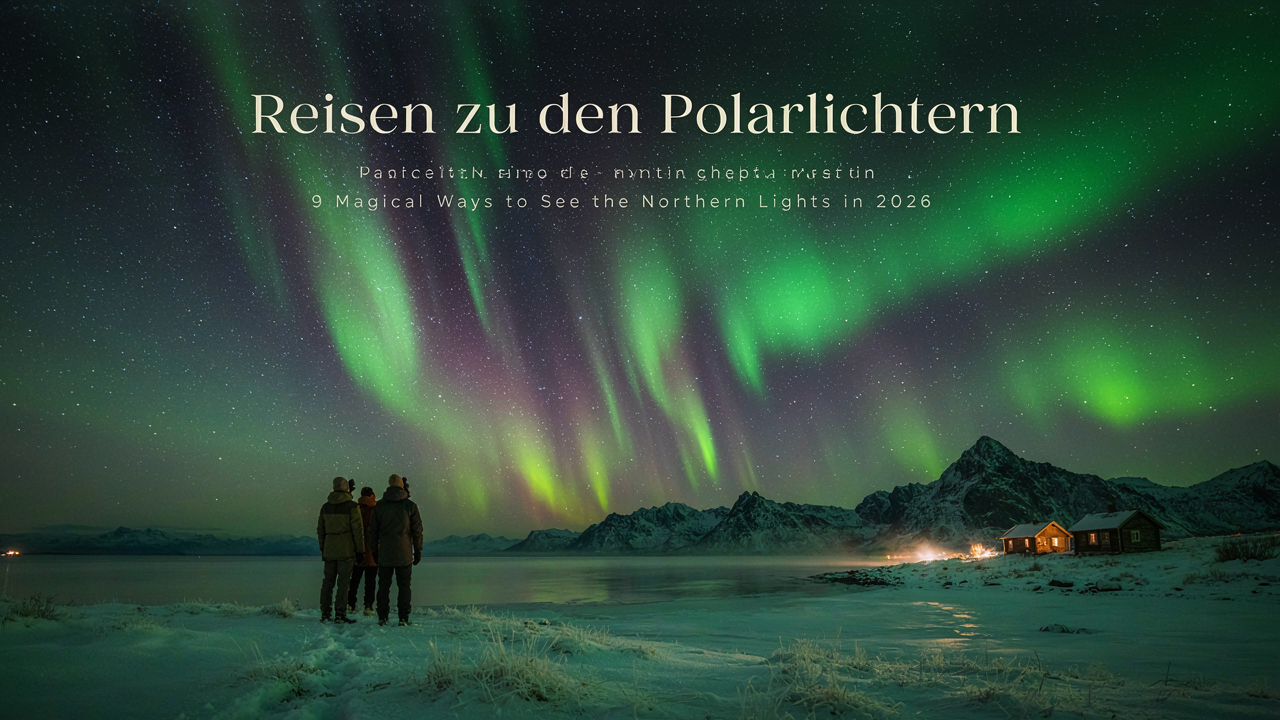
Seeing the Northern Lights is one of those travel dreams that feels almost unreal. One moment you are standing beneath a dark Arctic sky, and the next, ribbons of green, violet, or reddish light may begin moving above you. For many travelers from the United States, a trip to northern Europe offers a memorable way to experience this natural phenomenon while also enjoying snow-covered landscapes, local food, wildlife, and winter adventures.
Reisen zu den Polarlichtern | Wikinger Reisen is particularly interesting for travelers who do not want a trip that focuses only on standing outside and waiting for the Aurora. The company’s current Northern Lights offerings combine the search for the lights with activities such as guided hiking, snowshoeing, husky experiences, cultural encounters, and visits to Arctic landscapes.
This guide explains how these trips work, where you can go, when to travel, what to pack, what to expect, and how to increase your chances of seeing the Aurora Borealis.
Quick Answer
Yes. Reisen zu den Polarlichtern | Wikinger Reisen can be a strong choice for travelers who want to combine the Northern Lights with guided outdoor experiences, winter landscapes, local culture, and activities such as snowshoe hiking and husky tours.
Wikinger Reisen currently features Northern Lights trips in destinations including Iceland, Finnish and Swedish Lapland, and Norway’s Lofoten and Vesterålen. Its official Polar Lights collection also lists trips connected with destinations such as Canada and Greenland.
The important thing to remember is that no tour operator can guarantee an Aurora Borealis display. Clear skies, darkness, location, and solar activity all matter. A guided trip can improve your planning and experience, but nature always has the final say.
What Are Reisen zu den Polarlichtern?
Reisen zu den Polarlichtern are trips designed around the opportunity to see the Aurora Borealis, also called the Northern Lights. The phenomenon happens when charged particles from the solar wind interact with gases in Earth’s upper atmosphere.
The result can be a moving display of light across the night sky. Green is the color most people associate with the Northern Lights, but stronger displays can also include pink, red, violet, and blue tones.
A Northern Lights vacation is not simply about finding the farthest-north destination possible. You also need:
- Dark skies
- Good visibility
- Favorable weather
- Sufficient solar activity
- A suitable viewing location
- Patience
Wikinger Reisen explains that the best viewing opportunities generally occur during the darker part of the year, while September/October and February/March can offer particularly good statistical conditions.
Why Choose a Guided Northern Lights Trip?
A guided tour can make Arctic travel easier for first-time visitors.
Instead of organizing every transfer, winter activity, hotel, and excursion yourself, a guided itinerary can bring these pieces together. This can be especially useful in remote areas where winter weather and transportation require additional planning.
Wikinger’s Northern Lights trips are generally built around active travel, meaning the Aurora is often one part of a broader experience rather than the only activity.
Best Destinations for Wikinger Reisen Polarlichter Trips
Choosing the right destination is one of the biggest decisions you will make. Iceland offers volcanic scenery and geothermal pools, while Lapland provides forests, snow, huskies, reindeer, and a deep Arctic atmosphere. Norway’s Lofoten Islands add dramatic mountains and fishing villages.
Here are the main options worth considering.
Swedish Lapland
Swedish Lapland is an excellent choice for travelers who want a combination of Northern Lights and outdoor adventure.
Wikinger Reisen currently features trips involving snowshoe hiking, husky experiences, winter landscapes, Sami culture, and Northern Lights viewing. Its Lapland offerings describe the region as a remote landscape of forests, lakes, wildlife, and Arctic winter experiences.
One current example is a guided trip around Malå that combines a husky experience with a nighttime snowshoe walk while guests wait for the Aurora.
Best for: Adventure travelers, couples, photographers, active travelers.
Finnish Lapland
Finnish Lapland is another popular Northern Lights destination. The region is known for snow-covered forests, frozen lakes, reindeer, saunas, and winter activities.
Wikinger’s Finland offerings include winter journeys with activities such as dog-sledding, snowmobile rides, cross-country skiing, and snowshoe hiking.
Best for: Families, couples, first-time Arctic travelers, winter activity lovers.
Iceland
Iceland gives you something different. Instead of viewing the Northern Lights against only snowy forests, you may see them above waterfalls, glaciers, volcanoes, black-sand landscapes, and geothermal areas.
Wikinger describes Iceland’s winter as a quieter season with snowy scenery, frozen waterfalls, hot springs, and opportunities to see red, green, and blue Aurora displays.
Best for: Road-trip lovers, photographers, nature travelers, couples.
Lofoten and Vesterålen, Norway
The Lofoten Islands are particularly attractive to photographers because of their dramatic combination of mountains, fishing villages, fjords, and the Norwegian Sea.
Wikinger’s current Lofoten and Vesterålen winter itinerary is an 8-day guided trip with a focus on winter landscapes, Sami culture, and Northern Lights opportunities.
Best for: Photographers, hikers, scenery lovers, couples.
Destination Comparison
| Destination | Best Feature | Activities | Ideal Traveler |
| Swedish Lapland | Wilderness and Aurora | Huskies, snowshoes, sauna | Adventure travelers |
| Finnish Lapland | Classic Arctic winter | Huskies, snowmobiles, skiing | Families & couples |
| Iceland | Dramatic landscapes | Hiking, geothermal baths, sightseeing | Nature lovers |
| Lofoten | Mountains and sea | Hiking, photography, culture | Photographers |
| Greenland | Remote Arctic experience | Hiking, wildlife, cultural experiences | Experienced adventurers |
Best Time to See the Northern Lights
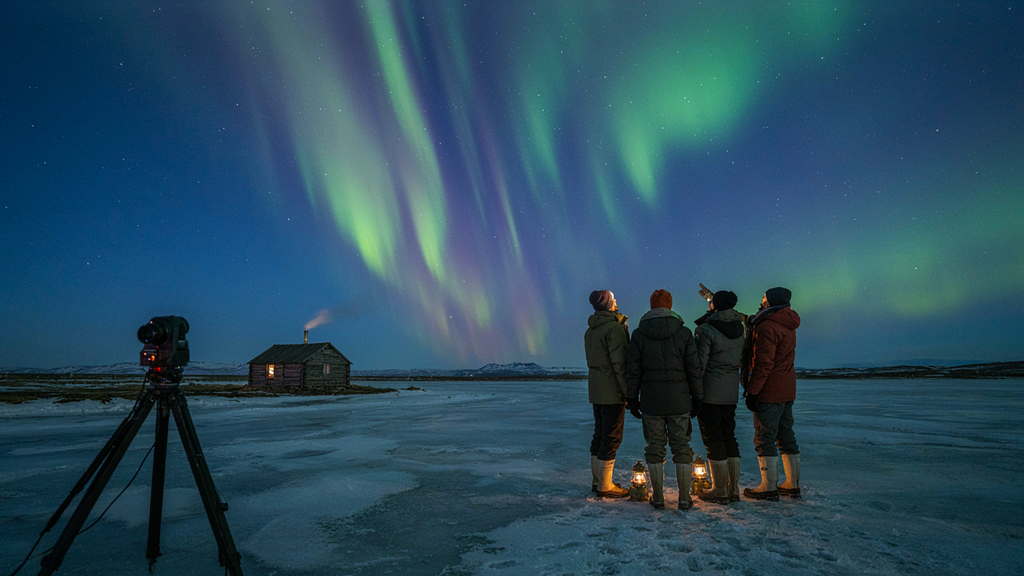
One of the most common questions travelers ask is: When is the best time to see the Northern Lights?
The simple answer is that you need darkness and suitable conditions. That makes the Northern Hemisphere’s autumn, winter, and early spring especially useful for Aurora trips.
Wikinger Reisen notes that the Northern Lights are commonly sought between October and March, while September and April can also provide opportunities. Its current Polar Lights information highlights February/March and September/October as statistically strong periods.
September and October
These months can offer a good balance between darkness and relatively milder conditions than deep winter.
The major advantage is that you may not need to deal with the coldest Arctic temperatures.
November to January
This is the classic winter period.
Expect:
- Long nights
- Snow-covered landscapes
- Short daylight hours
- Winter activities
- Very cold conditions in some areas
The short days can provide more darkness, but weather conditions remain important.
February and March
Late winter can be an excellent period for Northern Lights travel.
You still have snowy landscapes and long dark evenings, while daylight gradually begins returning.
April
Aurora viewing may still be possible, but nights become shorter as spring progresses.
Northern Lights Season at a Glance
| Month | Darkness | Winter Scenery | Aurora Potential |
| September | Good | Limited | Good |
| October | Excellent | Increasing | Very good |
| November | Excellent | Strong | Good |
| December | Excellent | Strong | Good |
| January | Excellent | Strong | Good |
| February | Excellent | Excellent | Very good |
| March | Good | Excellent | Very good |
| April | Decreasing | Moderate | Possible |
Remember that these are general travel conditions rather than guarantees.
How to Increase Your Chances of Seeing the Aurora Borealis
There is no guaranteed method, but smart planning can improve your odds.
Choose Dark Locations
Artificial light can make faint Aurora displays harder to see.
Remote areas away from large cities are usually better for night-sky viewing.
Watch the Weather
Cloud cover can hide an active Aurora.
A strong solar forecast does not help much if thick clouds cover the sky.
Stay for Several Nights
A one-night Northern Lights trip is risky.
If you have four or five nights, you have multiple opportunities to experience favorable conditions.
Be Flexible
The Aurora does not follow your itinerary.
You might need to stay outside late, change your viewing location, or wait longer than expected.
Trust Experienced Guides
Local guides can help identify suitable viewing locations and understand local weather and terrain.
This is one of the practical advantages of guided Reisen zu den Polarlichtern | Wikinger Reisen.
What Can You Do Besides Watching the Northern Lights?
A good Northern Lights vacation should offer more than several hours of waiting in the cold.
Current Wikinger Reisen itineraries show how Aurora travel can be combined with active experiences such as snowshoe walks, husky tours, winter hiking, reindeer encounters, skiing, sauna experiences, and cultural activities.
Husky Sledding
Dog sledding is one of the classic Arctic experiences.
You glide through snowy forests while a team of trained dogs pulls the sled. It can be an unforgettable daytime activity before heading outside again at night for Aurora viewing.
Snowshoe Hiking
Snowshoes allow travelers to walk across deep snow without sinking as easily.
They are particularly useful in forested Arctic landscapes.
Reindeer Experiences
Reindeer are closely connected with life and culture in northern Scandinavia.
Some trips also provide opportunities to learn about Sami culture.
Sauna
After spending time outdoors in freezing weather, a warm sauna can be a welcome part of the experience.
Winter Photography
Snow, mountains, frozen lakes, cabins, wildlife, and the Aurora create excellent photography opportunities.
What to Pack for a Northern Lights Trip
Packing correctly can make the difference between enjoying the Aurora and spending the evening trying to stay warm.
Essential Clothing
Use layers rather than relying on one extremely thick jacket.
A basic system can include:
- Moisture-wicking base layer
- Warm insulating layer
- Windproof and waterproof outer layer
- Thermal socks
- Winter boots
- Gloves
- Warm hat
- Neck warmer
Photography Equipment
If photography is important to you, consider:
- Camera with manual controls
- Wide-angle lens
- Sturdy tripod
- Extra batteries
- Spare memory cards
- Lens cloth
- Remote shutter release
Cold weather can reduce battery performance, so carrying spare batteries is especially useful.
Wikinger’s own Northern Lights guidance also recommends manual camera settings, a bright lens, a stable tripod, and additional batteries for cold conditions.
Smartphone Photography
Modern smartphones can capture impressive Aurora photos.
Use:
- Night mode
- A stable surface or tripod
- Low movement
- A clean lens
- Extra battery capacity
Pros and Cons of Reisen zu den Polarlichtern | Wikinger Reisen
| Pros | Cons |
| Guided travel experience | Northern Lights cannot be guaranteed |
| Arctic winter activities | Cold temperatures |
| Small-group travel options | Some itineraries can be expensive |
| Local cultural experiences | Long travel time from the USA |
| Multiple Northern Lights destinations | Weather can change quickly |
| Outdoor adventure included | Limited daylight in deep winter |
| Less itinerary planning for travelers | Aurora may require patience |
For travelers who value an organized active vacation, these advantages can outweigh the disadvantages.
However, people who prefer completely independent travel may prefer planning their own Northern Lights adventure.
Common Mistakes to Avoid
Expecting a Guaranteed Aurora
No travel company can control solar activity or clouds.
Treat the Northern Lights as a natural bonus rather than a guaranteed event.
Staying Only One Night
One night gives you limited opportunities.
Several nights increase your chances.
Ignoring the Cold
Standing outdoors for hours is very different from taking a short winter walk.
Dress for long periods outside.
Choosing a City Center
Bright lights can reduce visibility.
If Aurora viewing is your priority, dark surroundings matter.
Focusing Only on Photos
A camera may capture colors that are difficult to see with the naked eye during weaker displays.
Put the camera down sometimes and enjoy the experience.
Overloading Your Schedule
Arctic travel works best with flexibility.
Leave enough time for rest and spontaneous Aurora opportunities.
Expert Tips for a Better Northern Lights Vacation
Book Multiple Nights
More nights generally mean more chances.
Travel Around Darker Months
October through March is a popular period for Aurora trips, with opportunities also possible around September and April.
Select the Destination Based on Your Interests
Choose Lapland if you want forests, snow, huskies, reindeer, and Arctic activities.
Choose Iceland if you want waterfalls, volcanoes, glaciers, and geothermal experiences.
Choose Lofoten if dramatic coastal scenery and photography are high priorities.
Prepare for Waiting
Aurora viewing can involve standing outside for a long time.
Bring warm clothing, a thermos, and patience.
Keep Your Camera Simple
You do not need an expensive professional camera to enjoy Aurora photography.
A stable tripod and a camera capable of manual exposure can be more important.
Respect Local Communities
Arctic destinations are people’s homes, not just photography locations.
Follow local guidance, respect wildlife, and avoid damaging fragile landscapes.
Think Beyond the Bucket List
A successful trip does not have to mean seeing a huge green Aurora directly above your hotel.
The Arctic landscape, winter activities, local culture, and peaceful atmosphere can make the journey worthwhile even when the sky remains quiet.
Northern Lights Trip Checklist
Before leaving for your Arctic vacation, use this checklist:
- Passport and required travel documents
- Travel insurance
- Warm base layers
- Waterproof outerwear
- Insulated winter boots
- Thermal socks
- Gloves and spare gloves
- Warm hat
- Camera
- Tripod
- Extra camera batteries
- Power bank
- Sunglasses
- Personal medication
- Reusable water bottle
- Small backpack
- Offline copies of important travel information
How Much Do Reisen zu den Polarlichtern Cost?
The cost depends on the destination, trip length, flights, accommodation, activities, season, and what is included.
As an example, the official Wikinger Reisen Polar Lights page currently lists several guided trips with different durations and prices. Current examples include an 8-day Lofoten and Vesterålen trip from about €2,795, an 8-day Swedish Lapland trip from about €2,375, and an Iceland winter trip from about €2,698. Prices and availability can change, so travelers should verify the current itinerary before booking.
What Can Affect the Price?
| Factor | Effect on Cost |
| Trip duration | Longer trips usually cost more |
| Flights | Airfare can significantly affect the total cost |
| Accommodation | Higher-quality lodging increases cost |
| Activities | Husky and snowmobile excursions add value and cost |
| Season | Popular periods can affect pricing |
| Group size | Small-group experiences may cost more |
| Destination | Remote Arctic regions can require more logistics |
For a USA-based traveler, also remember to budget for the flight to Europe, baggage, travel insurance, meals not included in the itinerary, and personal expenses.
Is a Guided Wikinger Northern Lights Trip Right for Americans?
For a US traveler visiting the Arctic for the first time, a guided trip can reduce some of the complexity of planning.
Northern Scandinavia and Iceland are easy to enjoy but can still involve winter transportation, unfamiliar weather conditions, remote locations, and activities that require local knowledge.
A guided itinerary can be especially attractive if you want to combine Aurora viewing with hiking, snowshoeing, husky tours, cultural activities, and nature experiences instead of organizing each element separately.
Wikinger also emphasizes its long-standing focus on guided walking and active travel and describes its approach as “gentle” tourism, with an emphasis on respecting people, cultures, nature, and the environment.
External Authority Sources to Reference
For stronger E-E-A-T signals, consider citing authoritative sources in your published article where relevant:
- Wikinger Reisen – official tour information and current itineraries.
- NASA – solar activity and space-weather information.
- NOAA Space Weather Prediction Center – Aurora and geomagnetic activity information.
- Visit Finland – destination information for Finnish Lapland.
- Visit Sweden – Swedish Lapland travel information.
- Visit Norway – Northern Norway and Lofoten travel information.
- Visit Iceland – Iceland destination and seasonal travel information.
- National weather services – current weather and forecasting information.
For current trip prices, dates, availability, and inclusions, the official tour operator should always be treated as the primary source.
Frequently Asked Questions
What are the best Reisen zu den Polarlichtern?
The best trip depends on your interests. Swedish and Finnish Lapland are excellent for snow, huskies, reindeer, and outdoor activities. Iceland is ideal for dramatic natural scenery, while Lofoten is especially appealing for mountain and coastal photography.
When is the best time to see the Northern Lights?
October through March is a popular Aurora-viewing period because of the long nights. September, October, February, and March can also offer favorable conditions.
Can Wikinger Reisen guarantee that I will see the Northern Lights?
No. The Aurora is a natural phenomenon affected by solar activity and weather. A tour can improve your opportunities but cannot guarantee a sighting.
Is Lapland better than Iceland for Northern Lights?
Neither is universally better. Lapland is excellent for traditional Arctic winter experiences, while Iceland offers a combination of Northern Lights and volcanoes, waterfalls, glaciers, and geothermal landscapes.
Are Northern Lights trips suitable for beginners?
Yes. Guided trips can be particularly useful for first-time visitors because transportation, activities, accommodation, and parts of the itinerary are organized.
What should I wear to see the Northern Lights?
Wear multiple warm layers, insulated boots, thermal socks, gloves, a warm hat, and a windproof outer layer. You may be outside for an extended period.
Can I photograph the Aurora with a smartphone?
Yes. Many modern smartphones have effective night modes. A tripod or stable surface and sufficient battery power can improve results.
How many nights should I spend in the Arctic?
For a better chance of seeing the Aurora, spending several nights is preferable to making a very short trip. Weather and solar activity are unpredictable.
Are Wikinger Reisen Polarlichter trips only about the Northern Lights?
No. Many itineraries combine Aurora viewing with hiking, snowshoeing, husky tours, reindeer experiences, cultural activities, winter sports, and other Arctic experiences.
What is Aurora Borealis?
Aurora Borealis is the scientific name commonly used for the Northern Lights. It is a natural light display produced by interactions between charged solar particles and gases in Earth’s upper atmosphere.
Conclusion
For travelers dreaming of the Aurora Borealis, Reisen zu den Polarlichtern | Wikinger Reisen offers an appealing way to combine Northern Lights viewing with a wider Arctic adventure.
The biggest advantage is that the journey does not have to depend entirely on whether the sky lights up. Depending on the itinerary, you can experience snowy forests, dramatic mountains, husky tours, snowshoe hikes, reindeer, Sami culture, saunas, Icelandic landscapes, or the spectacular scenery of the Lofoten Islands.
For USA travelers planning their first Northern Lights vacation, the smartest approach is to choose a destination that matches your interests, stay several nights, prepare properly for the cold, and keep realistic expectations. The Aurora is never guaranteed—but the Arctic experience itself can still be unforgettable.
Before booking, check the latest itinerary, dates, inclusions, prices, and travel requirements directly with the tour operator, since these details can change over time.
SEO takeaway: The strongest search intent around this topic is not simply “Northern Lights.” Users also want to know where to see them, when to go, how much the trip costs, what to pack, and whether a guided tour is worth it. Covering these questions makes the article more useful for traditional search, Featured Snippets, People Also Ask, and voice-search queries.
26 Unreal & Exciting Things to Do in Shibuya During the Day & Night