
El Nido is one of the Philippines’ most famous coastal destinations, known for towering limestone cliffs, turquoise lagoons, white-sand beaches, and clear tropical water. Located at the northern end of Palawan, it offers a remarkable mix of island adventures and laid-back coastal life, making it appealing to beach lovers, photographers, divers, couples, and independent travelers.
The scenery is the main attraction, but El Nido is more than a collection of beautiful viewpoints. Boat trips lead to hidden lagoons and small islands, while inland roads reveal waterfalls, beaches, and quieter communities. With a little planning around weather, boat schedules, and accommodation, travelers can enjoy the area at a comfortable pace rather than trying to see everything in one rushed trip.
Where Is El Nido and How Do You Get There?
El Nido is a municipality in northern Palawan, an island province in the western Philippines. The main tourist area is El Nido town, which sits beside Bacuit Bay and serves as the starting point for most island-hopping excursions.
The easiest option for many travelers is flying to El Nido Airport, also known as Lio Airport, from selected Philippine destinations. Another common route is flying to Puerto Princesa and continuing overland to El Nido. The road journey from Puerto Princesa takes several hours, depending on traffic, road conditions, and stops.
Travelers should choose their arrival route based on flight availability, budget, and how much time they have.
Getting Around El Nido
Within the main town and nearby beaches, tricycles are widely used for short journeys. Scooters can be rented by experienced and properly licensed riders who are comfortable with local road conditions.
For island-hopping, transportation is generally arranged through a boat tour rather than independently.
Best Time to Visit El Nido
El Nido can be visited throughout the year, but weather plays an important role because many of the area’s best experiences involve boat travel.
The drier months are generally more convenient for island-hopping, swimming, kayaking, and outdoor sightseeing. The wetter season can bring rain and rougher seas, although conditions can vary considerably from one day to another.
December through April is often popular with travelers seeking more predictable beach weather, while the shoulder months can offer a balance between weather and visitor numbers.
| Travel Period | General Conditions | Best For |
| December–February | Generally warm with favorable beach conditions | Island-hopping and sightseeing |
| March–May | Hot and often suitable for water activities | Beaches, swimming, and kayaking |
| June–October | Higher chance of rain and changing sea conditions | Flexible travelers and quieter stays |
| November | Transitional weather | Mixed itineraries and fewer peak crowds |
If your trip is centered around boat tours, leave some flexibility in your schedule in case weather affects departures.
Best Things to Do in El Nido
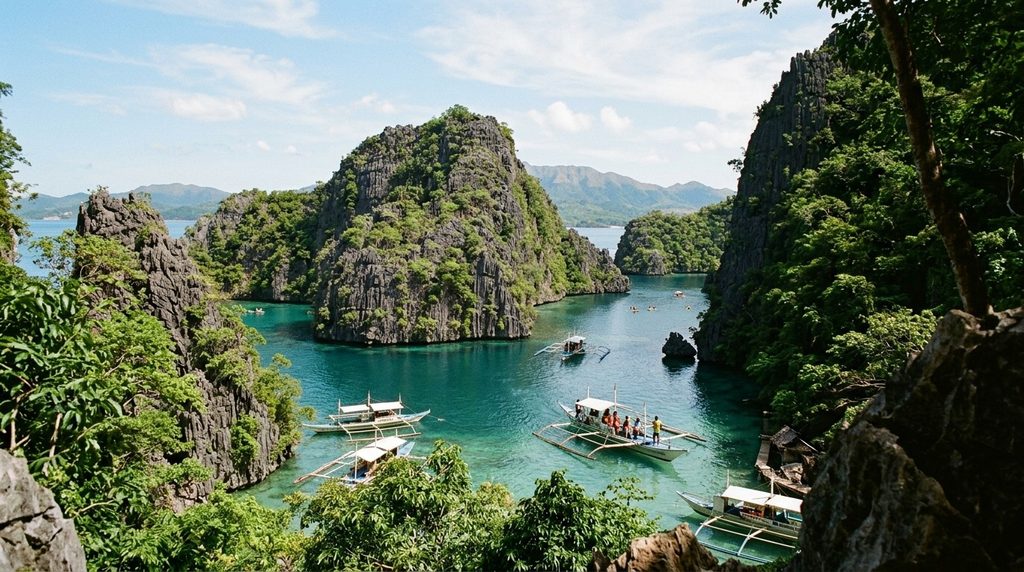
El Nido’s most famous experiences take place around Bacuit Bay, where limestone islands rise dramatically from the sea.
Explore Big Lagoon
Big Lagoon is surrounded by towering limestone cliffs and calm turquoise water. Boats enter through a narrow opening, creating a dramatic transition from open sea to sheltered lagoon.
Kayaking is a popular way to explore the lagoon more quietly and get closer to the surrounding scenery.
Visit Small Lagoon
Small Lagoon is another striking natural attraction where limestone walls surround a sheltered body of water. Depending on current regulations and conditions, visitors may enter by kayak or swimming.
Because access arrangements can change, check the rules included with your tour before visiting.
Discover Hidden Beach
Hidden Beach is enclosed by limestone formations and is accessed through a small opening from the sea. The entrance and water conditions can make arrival more challenging than at a typical beach, so follow your boat guide’s instructions.
Relax at Nacpan Beach
Nacpan Beach is known for its long stretch of sand and open coastal scenery. It provides a welcome change from the enclosed lagoons and is a good place to spend several hours away from the busier town center.
Island-Hopping and Boat Tours
Island-hopping is the defining experience of an El Nido trip. Tour operators commonly organize different routes through Bacuit Bay, with each itinerary focusing on a combination of lagoons, beaches, snorkeling sites, and islands.
The traditional tours are commonly identified by letters, although exact stops and inclusions can vary.
Choosing an Island-Hopping Tour
Popular routes may include combinations of:
- Big Lagoon
- Small Lagoon
- Secret Lagoon
- Hidden Beach
- Shimizu Island
- Seven Commandos Beach
- Other snorkeling and beach locations
| Tour Style | Typical Highlights | Suitable For |
| Lagoon-focused route | Lagoons, kayaking, limestone scenery | First-time visitors and photographers |
| Beach and snorkeling route | Beaches, coral areas, swimming | Families and water lovers |
| Mixed island route | Beaches, lagoons, snorkeling | Travelers wanting variety |
| Private boat trip | Flexible stops and timing | Couples, families, small groups |
Before booking, confirm what is included in the price, such as meals, equipment, environmental fees, hotel transfers, and kayak charges.
Beaches and Snorkeling Around El Nido
The waters surrounding El Nido are home to coral reefs and tropical marine life, making snorkeling one of the easiest ways to experience the area’s underwater environment.
Seven Commandos Beach
Seven Commandos Beach is a popular stop on some island-hopping routes. Its sandy shoreline, palm trees, and clear water make it a natural place to swim and relax between boat journeys.
Shimizu Island
Shimizu Island is commonly included on snorkeling-focused itineraries. The surrounding water can provide opportunities to see reef fish and coral, although visibility depends on sea conditions.
Nacpan Beach
Nacpan is especially appealing if you want more time on a beach rather than moving between several short island stops. Its long shoreline provides room to walk, swim when conditions permit, or simply relax.
Always follow local snorkeling rules, avoid touching coral, and maintain a respectful distance from marine animals.
Lagoons, Limestone Cliffs, and Outdoor Adventures
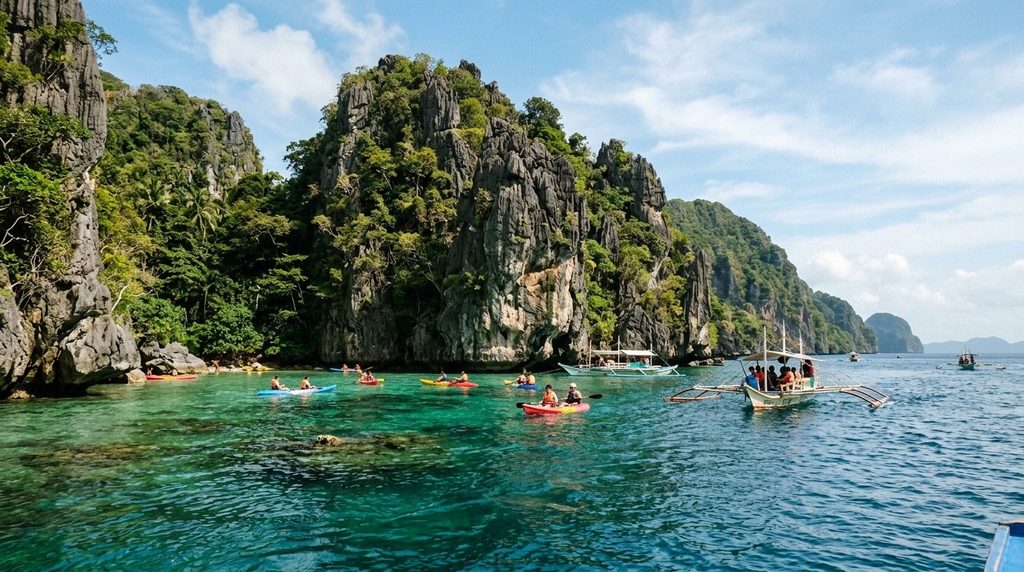
El Nido’s dramatic landscape is largely shaped by limestone formations that rise from both the sea and surrounding land. These formations create the cliffs, caves, lagoons, and hidden beaches that define Bacuit Bay.
Kayaking
Kayaking is one of the best ways to explore calm lagoons. It allows visitors to move at their own pace and appreciate the scale of the surrounding cliffs.
Wear appropriate flotation equipment and follow local instructions, particularly when entering narrow passages.
Snorkeling and Freediving
Several areas around the islands offer opportunities for snorkeling and freediving. Conditions vary, so activities should be adjusted according to currents, visibility, and weather.
Cliff and Coastal Views
Some inland and coastal viewpoints provide broad panoramas over Palawan’s landscape. If hiking to a viewpoint, wear suitable shoes and carry water, particularly during hot weather.
Where to Stay in El Nido
Accommodation in El Nido ranges from budget hostels and guesthouses to boutique hotels and higher-end beachfront resorts.
The best location depends on whether you want nightlife and convenience, easy beach access, or a quieter setting.
El Nido Town
Staying in town is convenient for restaurants, shops, tour operators, and boat departures. It is particularly practical for travelers planning several island-hopping excursions.
The trade-off is that the town can be busy and noisy during peak periods.
Corong Corong
Corong Corong is close to town but generally has a more relaxed coastal atmosphere. It is known for sunset views and beachfront accommodation.
Lio Area
The Lio area offers a more organized resort setting with accommodation, restaurants, and beach access. It can appeal to travelers looking for a quieter base away from the central town.
Nacpan Area
Staying near Nacpan provides greater access to the beach and a more secluded atmosphere, although reaching town and boat-tour departure points can require additional transport.
Food, Restaurants, and Local Life
El Nido’s food scene has grown considerably as tourism has expanded. Travelers can find Filipino dishes, fresh seafood, vegetarian meals, international cuisine, cafés, and casual beach restaurants.
Filipino Foods to Try
- Chicken or pork adobo
- Sinigang
- Kinilaw
- Grilled seafood
- Pancit
- Fresh tropical fruit
- Rice-based meals
- Filipino-style barbecue
Local eateries are often a good way to try traditional food, while restaurants in tourist areas provide broader international menus.
Seafood and Island Dining
Fresh seafood is naturally popular in a coastal destination like El Nido. Availability can depend on weather, fishing conditions, and restaurant supply.
For a quieter evening, consider dining outside the busiest part of town or choosing a restaurant around Corong Corong.
Exploring El Nido Beyond the Boat Tours

Although island-hopping is the main attraction, spending some time inland can make an El Nido trip feel more complete.
Nacpan and Calitang
The twin beaches area around Nacpan and Calitang provides wide coastal scenery and a more open landscape than the enclosed islands of Bacuit Bay.
Nagkalit-Kalit Waterfalls
Nagkalit-Kalit is associated with a short nature excursion involving forest and waterfall scenery. Conditions and access can change seasonally, particularly after heavy rain.
Las Cabanas Beach
Las Cabanas is a popular place for sunset views and relaxed beach time. It is also associated with a zipline experience across the water for visitors seeking an extra adventure.
Exploring these areas can be especially worthwhile on days when sea conditions make island-hopping less convenient.
Practical Travel Tips for El Nido
El Nido is relatively easy to visit, but the tropical climate and dependence on boats mean that preparation helps.
What to Pack
Bring lightweight clothing, swimwear, comfortable sandals, reef-conscious sunscreen, insect repellent, a reusable water bottle, and a waterproof bag.
Water shoes can be useful around rocky beaches and shallow reef areas. A dry bag is particularly helpful during boat transfers.
Money and Connectivity
Cash remains useful for smaller restaurants, tricycle rides, local businesses, and some tour-related expenses. Card acceptance is more common in established hotels and restaurants but should not be assumed everywhere.
Internet access is available in tourist areas, although connection quality can vary.
Boat and Weather Safety
If sea conditions deteriorate, boat tours may be delayed or adjusted. Follow local authorities and tour operators rather than attempting to continue an unsafe trip.
Avoid standing on unstable rocks for photographs and pay attention to tides around beaches, lagoons, and coastal formations.
How Long Should You Stay?
Four to five days provides enough time for island-hopping, beach visits, inland exploration, and some relaxed downtime.
A shorter three-day trip can work if you focus on the major attractions, while a longer stay allows you to explore more slowly and leave room for weather changes.
Responsible Tourism in El Nido
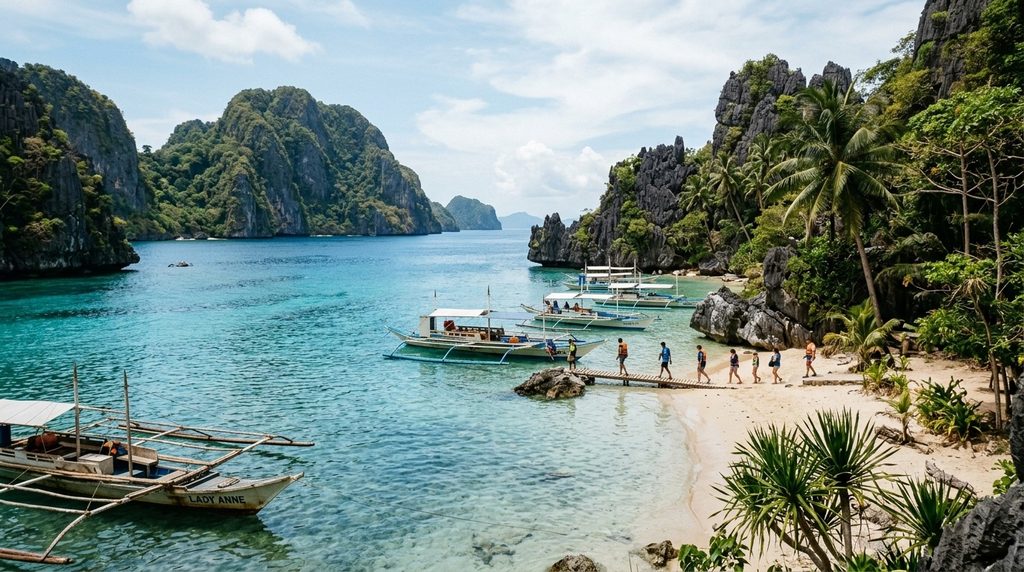
El Nido’s natural attractions are also its most vulnerable resources. Coral reefs, beaches, lagoons, and wildlife all depend on responsible visitor behavior.
Simple Ways to Travel Responsibly
- Avoid single-use plastic where possible.
- Carry your rubbish until you find an appropriate disposal point.
- Never touch or stand on coral.
- Do not feed wild marine animals.
- Follow visitor limits and local environmental rules.
- Respect local communities and cultural sites.
- Choose reputable tour operators.
- Use reef-conscious personal-care products where practical.
Travelers can also support local businesses by eating at independent restaurants, hiring local guides, and choosing locally owned accommodation when it suits their needs.
FAQs
Is El Nido worth visiting?
Yes, El Nido is worth visiting for its limestone cliffs, lagoons, beaches, snorkeling, kayaking, and island-hopping experiences. It is particularly suited to travelers who enjoy coastal scenery and outdoor activities.
How many days are enough for El Nido?
Four to five days is a comfortable length for most travelers. This allows time for island-hopping, beach visits, inland attractions, and rest without making every day too busy.
What is El Nido famous for?
El Nido is famous for the dramatic limestone islands and lagoons of Bacuit Bay, along with beaches, snorkeling, kayaking, island-hopping tours, and spectacular coastal scenery.
Is El Nido expensive?
El Nido offers accommodation and dining at different price levels. Costs depend on where you stay, the type of boat tour you choose, transportation, and how many activities you include.
What is the best area to stay in El Nido?
El Nido Town is convenient for restaurants and boat tours, Corong Corong is appealing for sunsets and a quieter coastal setting, while Lio and Nacpan provide more resort-style or secluded options.
Conclusion:
El Nido brings together the natural features that make Palawan such a memorable part of the Philippines. Towering limestone cliffs, turquoise lagoons, white-sand beaches, coral reefs, and quiet coastal areas provide enough variety for both adventurous travelers and those who simply want time beside the sea.
A good El Nido itinerary does not need to include every possible attraction. Give yourself time to enjoy a few well-chosen boat trips, explore the beaches beyond town, try local food, and leave room for changing weather. With responsible travel habits and realistic planning, El Nido can be an enjoyable and rewarding destination in any Palawan journey.
Read more:Siargao Island: A Complete Guide to Surfing, Beaches, and Tropical Adventures