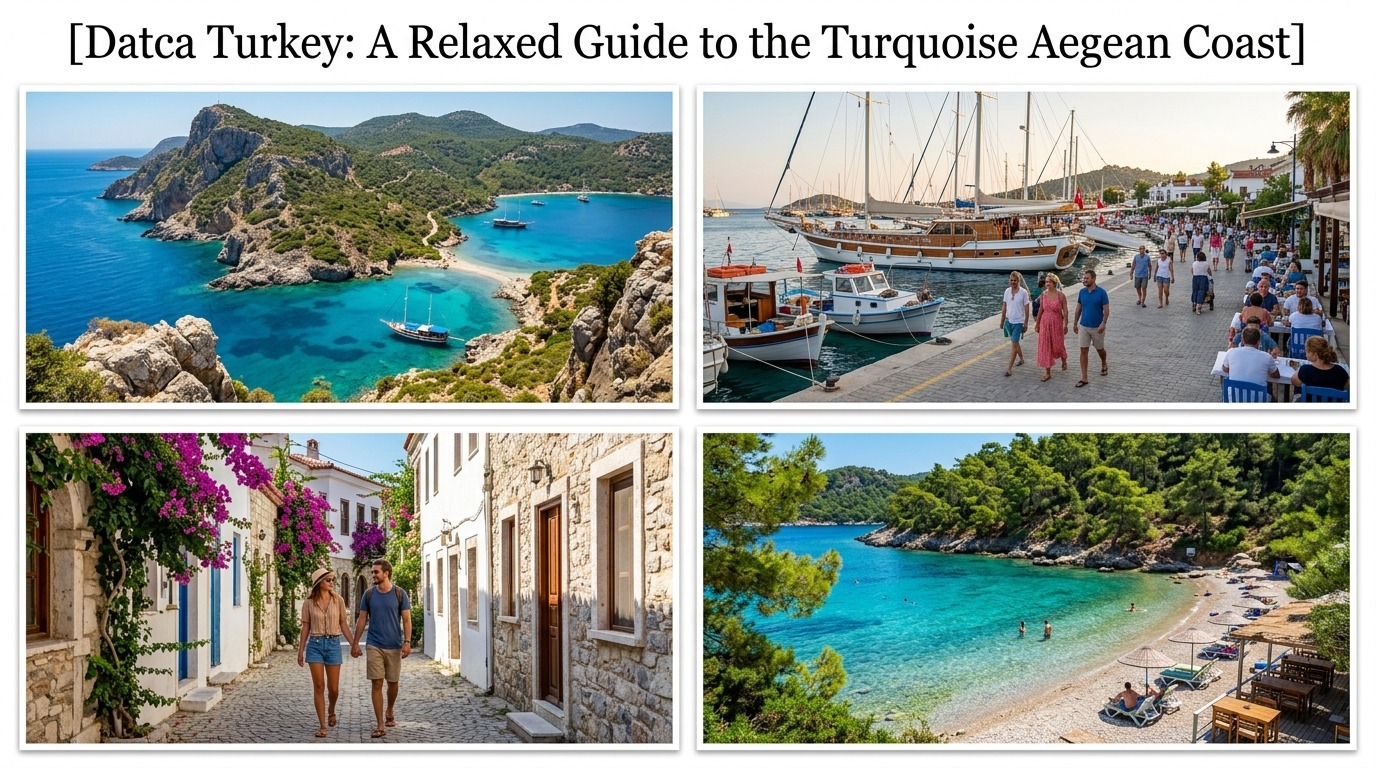
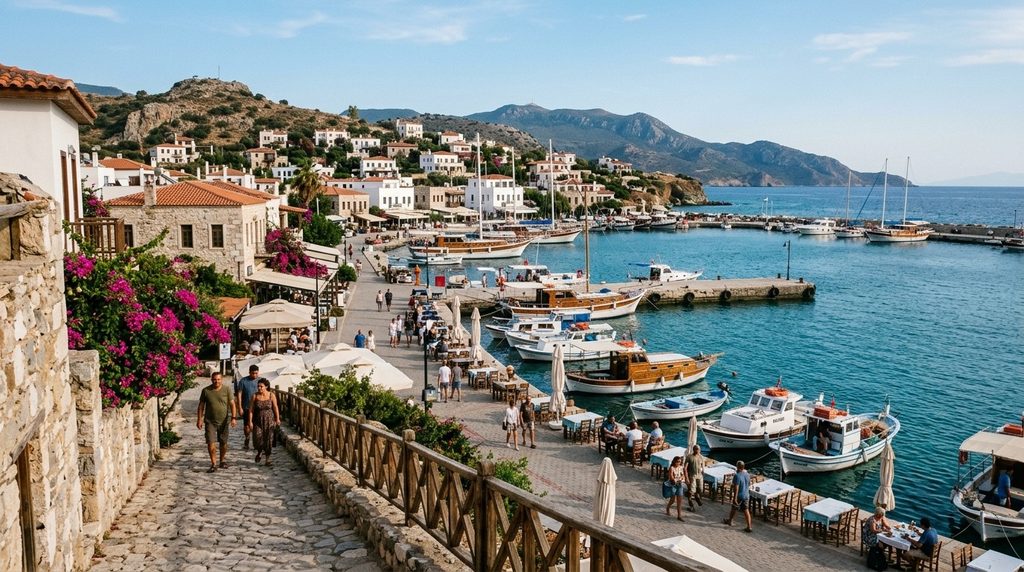
Datca Turkey is a beautiful coastal destination in southwestern Türkiye, known for its clear bays, rugged hills, quiet beaches, olive groves, and laid-back atmosphere. Set on a long peninsula between the Aegean and Mediterranean seas, Datca feels noticeably calmer than many of the country’s busier resort towns. It is a place where scenic drives, swimming, seafood lunches, and slow afternoons by the water fit naturally into the same holiday.
The peninsula also offers more than beaches. Visitors can explore the old village of Eski Datca, walk among traditional stone houses, discover the ancient ruins of Knidos, and stop at small coves along the coast. Whether you are planning a relaxed summer escape, a road trip through southwestern Türkiye, or a quieter alternative to larger beach resorts, Datca Turkey offers plenty of reasons to stay for more than a day.
Where Is Datca Turkey?
Datca is a district and peninsula in Muğla Province in southwestern Türkiye. The peninsula stretches westward into the sea, with the Aegean on one side and the Mediterranean on the other.
Its position gives Datca a distinctly coastal character. The road into the peninsula passes through mountainous scenery before opening toward the sea, and the landscape remains relatively undeveloped compared with some of Türkiye’s larger resort destinations.
Datca town is the main base for most visitors. From here, travelers can reach beaches, small bays, villages, restaurants, and historical sites by car or local transport.
The peninsula is also close enough to other well-known destinations in southwestern Türkiye to fit naturally into a wider itinerary. Visitors often combine Datca with places such as Marmaris, although the journey itself can be part of the appeal because of the changing mountain and coastal scenery.
Why Visit Datca Turkey?
The biggest attraction of Datca is its atmosphere. Travelers looking for a lively nightlife destination may prefer larger resorts, but those who enjoy peaceful beaches, local restaurants, nature, and scenic coastal drives will find plenty to appreciate here.
The peninsula has a strong connection with the sea and traditional agriculture. Olive trees, almond trees, rocky hills, and small settlements appear throughout the landscape.
Datca is also a good destination for travelers who prefer independent exploration. Rather than following a packed sightseeing schedule, you can spend a morning swimming in a quiet bay, have lunch in town, and then drive toward another coastal viewpoint in the afternoon.
The region’s history adds another layer to the experience. Ancient Knidos, located at the far western end of the peninsula, is one of the most important archaeological attractions in the area.
Another advantage is the variety of accommodation. Visitors can choose from small hotels, guesthouses, apartments, boutique properties, and other stays in and around Datca town.
Best Places to Visit in Datca
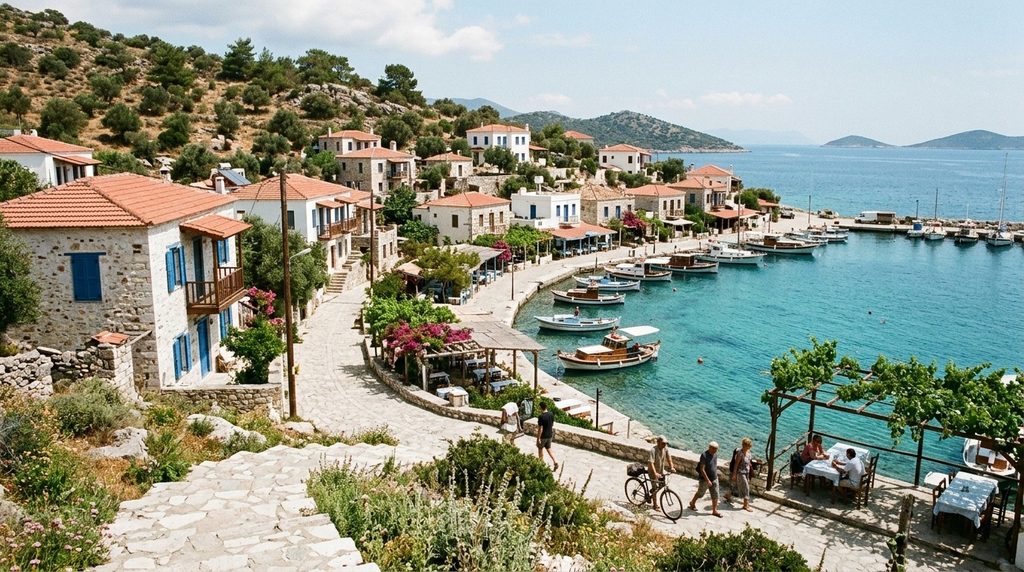
Although the peninsula is not enormous, different parts of Datca offer different experiences. Spending a few days here makes it easier to see more than just the main town.
Datca Town
Datca town is the practical center of the peninsula and a convenient base for exploring nearby beaches and villages.
The waterfront is a pleasant place to walk, especially toward the evening when restaurants and cafés become busier. The town also provides access to basic services, shops, accommodation, and transport.
Eski Datca
Eski Datca, meaning Old Datca, is one of the most atmospheric places to visit. Its narrow streets and traditional stone houses give it a character that feels very different from a modern beach resort.
The area is especially enjoyable for a slow walk. Small cafés, local shops, flowers, stone walls, and restored houses make it a good place to visit when you want a break from the beach.
Knidos
At the western tip of the peninsula lies the ancient city of Knidos. The archaeological site sits in a dramatic coastal setting and is one of the major reasons history lovers travel toward the far end of Datca.
The combination of ancient ruins and open sea makes Knidos particularly memorable. Because it is some distance from Datca town, allow enough time for the journey rather than treating it as a quick stop.
Palamutbuku
Palamutbuku is one of the peninsula’s best-known coastal areas. Its clear water, pebble beach, restaurants, and relaxed atmosphere make it popular during the warmer months.
It can become busy in summer, but it remains a good option for travelers who want a full day by the sea with places to eat nearby.
Places and Experiences Worth Adding to Your Trip
| Place or experience | What makes it interesting | Best for |
| Datca town | Waterfront, restaurants and local atmosphere | First-time visitors |
| Eski Datca | Traditional stone houses and quiet streets | Culture and photography |
| Knidos | Ancient ruins and dramatic coastal views | History lovers |
| Palamutbuku | Clear water and beach time | Swimming and families |
| Coastal bays | Peaceful swimming spots and scenery | Couples and nature lovers |
| Peninsula road trip | Mountain and sea views | Road-trip travelers |
| Local markets | Regional produce and everyday life | Food and culture |
You do not need to visit every beach or bay to enjoy Datca. One of the pleasures of the peninsula is being able to stop when a view or small coastal settlement catches your attention.
Beaches and Swimming Spots Around Datca
Beach time is an important part of a Datca holiday, particularly between late spring and early autumn.
Some beaches are close to the main town, while others require a drive along the peninsula. This makes a car useful if you want to explore several different coastal areas.
Palamutbuku is among the better-known options, with clear water and a developed waterfront. Other smaller bays can offer a quieter experience, although facilities may be limited.
Beach conditions also vary. Some spots have pebbles rather than sand, so water shoes can be useful for travelers who prefer easier entry into the sea.
For families, a beach with nearby restaurants, toilets, shade, and easy access may be more convenient than an isolated cove. Couples or travelers seeking solitude may prefer smaller bays where facilities are more limited.
The sea is generally one of the main reasons visitors come to Datca, but it is worth remembering that conditions can change with wind and weather. Always pay attention to local swimming advice.
Exploring Eski Datca
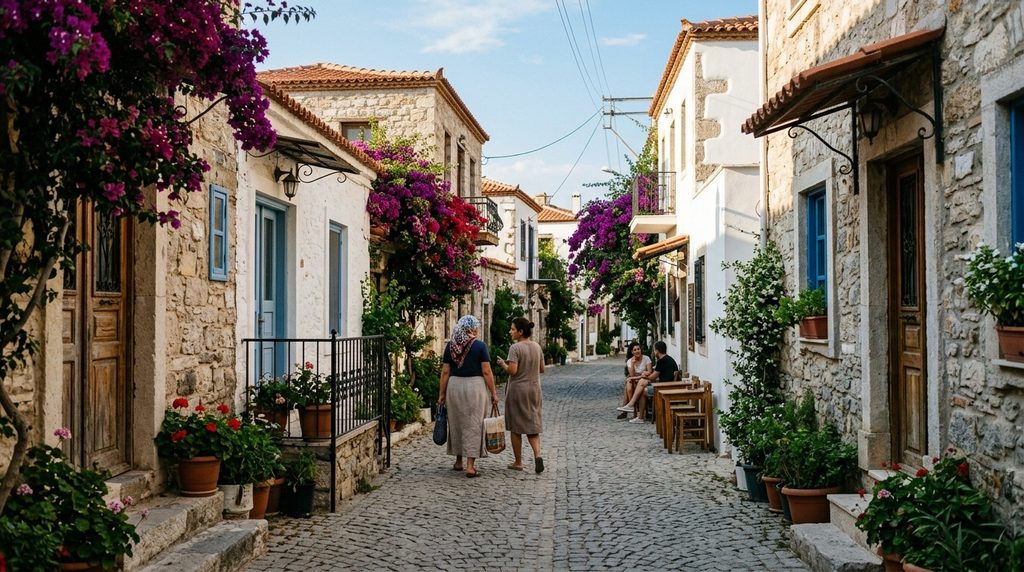
Eski Datca deserves more than a quick photograph. The old settlement is one of the best places to experience the traditional side of the peninsula.
Its narrow lanes are lined with stone houses, small gardens, cafés, and local businesses. The architecture reflects the region’s history and gives visitors a sense of what the area looked like before modern tourism transformed many Turkish coastal destinations.
A walk through Eski Datca works particularly well in the morning or later in the afternoon. The warmer part of the day can be better spent at the coast, while the old village becomes an enjoyable place for a relaxed stroll and meal.
The area is also associated with the Turkish poet Can Yücel, who lived in Datca during the later part of his life. His connection with the town remains part of its cultural identity.
If you enjoy photography, Eski Datca offers plenty of details to notice rather than just large landmarks: stone walls, wooden doors, flowers, small courtyards, and quiet lanes.
Visiting Ancient Knidos
Knidos is one of the most significant historical sites on the Datca Peninsula. The ancient city developed as an important settlement in the ancient world and occupied a strategic position overlooking the sea.
Today, visitors can explore the remains of the ancient city while enjoying the dramatic landscape around it. Columns, stone structures, terraces, and other archaeological remains are spread across the site.
The setting is arguably as important as the ruins themselves. Knidos sits at the end of the peninsula, surrounded by sea and exposed to the landscape that helped make the location strategically important.
Because Knidos is relatively remote from Datca town, it is best approached as a half-day or full-day excursion rather than a short sightseeing stop.
Bring water, sun protection, comfortable walking shoes, and enough time to explore. Summer heat can make walking around exposed archaeological areas more demanding.
The road toward Knidos is also part of the experience, with mountain and coastal views along the way. Travelers should drive carefully because parts of the route are winding.
Things to Do in Datca Turkey
A Datca holiday does not have to revolve around one activity. The peninsula is well suited to days that combine several small experiences.
Swimming is the obvious choice during warm weather. You can start the day at one bay and move to another later if you have a car.
Boat trips are another way to experience the coastline. Depending on the season and local operators, excursions may visit several bays and swimming areas.
Walking is particularly enjoyable in Eski Datca and around quieter coastal areas. More ambitious hikers can look into local trails, but mountain conditions and route information should always be checked before setting out.
Food is another major part of the experience. Seafood restaurants, meze, olive oil-based dishes, fresh vegetables, and regional products fit naturally into a coastal itinerary.
You can also spend time simply enjoying the waterfront. Datca is not a destination where every hour needs to be filled with sightseeing.
Food and Local Flavors in Datca
Food in Datca reflects its coastal location and agricultural surroundings.
Fresh seafood is naturally common on local menus, particularly in restaurants close to the water. Fish, calamari, octopus, prawns, and other seafood may be served alongside meze and seasonal vegetables.
Olives and olive oil are also important to the local food culture. The peninsula’s olive trees are part of the landscape, and visitors will find olive-based products in markets and shops.
Almonds are another local product associated with Datca. Depending on the season, travelers may see almonds and almond-based products in local shops and markets.
A typical meal can be quite simple: several small meze dishes, fresh bread, a main course, and something cold to drink. Taking your time over lunch or dinner suits the pace of the peninsula.
For visitors interested in food, local markets are worth exploring. They provide an opportunity to see regional produce and everyday ingredients rather than only tourist-oriented products.
Where to Stay in Datca
Choosing where to stay depends on how you want your holiday to feel.
Datca town is the easiest option for first-time visitors. It provides restaurants, shops, the waterfront, accommodation, and relatively straightforward access to other parts of the peninsula.
Eski Datca is better suited to travelers who want atmosphere and traditional surroundings. Staying here can make the old village part of your daily experience rather than simply a sightseeing stop.
Palamutbuku is a good choice for travelers who want to put the beach at the center of their trip. It is especially appealing if swimming and relaxed seaside days are more important than being close to the main town.
For travelers with a car, smaller coastal settlements can provide a more secluded experience.
| Travel style | Recommended area | Why it works |
| First visit | Datca town | Convenient for restaurants and sightseeing |
| Beach holiday | Palamutbuku | Easy access to the coast |
| Traditional atmosphere | Eski Datca | Historic streets and local character |
| Quiet escape | Smaller coastal areas | More relaxed surroundings |
| Road trip | Datca town or central peninsula | Convenient for exploring different areas |
| Longer stay | Split between two areas | More variety without constant driving |
Booking early is sensible during the main summer season, particularly if you want a specific location close to the sea.
Getting Around Datca
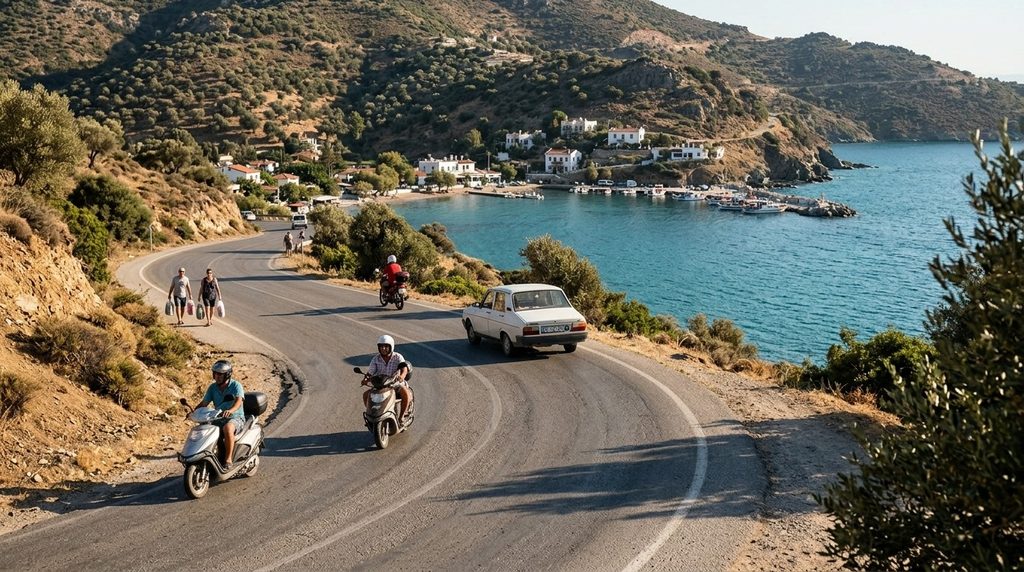
A car is one of the most useful things to have if you want to explore beyond Datca town.
The peninsula covers a large area, and many beaches, bays, villages, and viewpoints are separated by winding roads. Driving gives you the freedom to stop when you find somewhere interesting.
However, mountain roads require patience. Distances that look short on a map can take longer because of curves, elevation changes, and slower traffic.
Local buses and minibuses can be useful for some routes, especially between Datca town and nearby settlements. Services may be more frequent during the main tourist season, so checking the current timetable is important.
Taxis can also be useful for shorter journeys, although costs can add up if you rely on them for long trips.
If you plan to rent a car, choose a vehicle that you are comfortable driving on winding roads. During summer, parking near popular beaches can also become more difficult during the busiest hours.
Best Time to Visit Datca Turkey
The best time to visit depends on what you want from your holiday.
Summer is the main season for swimming, beach days, boat trips, and seaside dining. July and August can be hot and busy, particularly at popular beaches.
Late spring can be a good choice for travelers who prefer warmer days without the peak summer heat. The landscape is also attractive during this period, and outdoor sightseeing can be more comfortable.
Early autumn is another appealing option. September can provide warm sea temperatures and a more relaxed atmosphere than the busiest summer weeks.
Winter is much quieter. Some tourist businesses may have reduced hours or seasonal closures, but the peninsula can appeal to travelers interested in local life, walking, scenery, and a peaceful coastal atmosphere.
For a balanced beach holiday, late spring and early autumn can be particularly attractive. For the warmest sea and full summer atmosphere, July and August are more suitable.
A Simple Datca Itinerary
A few days are enough to experience the highlights without rushing.
A Three-Day Trip
Spend your first day exploring Datca town and Eski Datca. Take your time with the old streets, have a local meal, and enjoy the waterfront later in the day.
On the second day, choose a beach or bay for swimming. Palamutbuku is a natural option if you want a developed seaside setting.
Use the third day for a trip toward Knidos. Leave enough time for the drive and archaeological site rather than trying to fit several unrelated attractions into the same day.
A Five-Day Trip
With five days, you can slow the itinerary down.
Spend one day around Datca town and Eski Datca, another at the beach, and another visiting Knidos.
The remaining days can be used for a boat trip, another coastal area, local food experiences, or simply returning to a favorite beach.
This pace is particularly suitable for Datca because the peninsula is better enjoyed slowly than treated as a checklist of attractions.
Datca for Families
Datca can be a good choice for families who want a quieter Turkish coastal holiday.
Families can choose beaches with nearby restaurants and facilities rather than isolated coves. Having accommodation with a pool or kitchen can also make longer stays easier, particularly with younger children.
The old streets of Eski Datca can provide a change of pace from beach days, while boat trips can be enjoyable for older children if conditions are suitable.
Families planning to explore the peninsula by car should keep driving times in mind. Winding roads may make some journeys feel longer than expected, especially for young children.
It is also worth carrying plenty of water and sun protection during summer excursions.
Datca for Couples and Slow Travel
Datca is particularly attractive to couples who prefer relaxed travel.
Instead of large nightlife districts and crowded entertainment areas, the peninsula offers waterfront restaurants, quiet coves, scenic drives, old stone streets, and long meals.
A typical day can be simple: breakfast in town, swimming in a bay, lunch near the sea, a late-afternoon walk through Eski Datca, and dinner outdoors.
Couples who enjoy photography, food, nature, and small villages may find Datca more rewarding than a heavily developed resort destination.
The slower atmosphere is one of the main reasons people return to the peninsula.
Practical Tips for Visiting Datca
A few simple preparations can make your trip much easier.
Bring comfortable shoes if you plan to explore Knidos or walk around old villages. The combination of uneven archaeological surfaces and stone streets makes practical footwear more useful than fashionable shoes.
Carry sun protection during summer. The coastal landscape offers plenty of exposed areas, and archaeological sites can have limited shade.
If you are driving, fill up when convenient rather than waiting until the tank is nearly empty, especially before heading toward remote parts of the peninsula.
Keep some flexibility in your schedule. Wind and weather can affect boat trips and swimming conditions.
It is also worth checking opening times for archaeological sites, museums, and local attractions before making a long journey.
Finally, do not underestimate the value of an unplanned stop. One of the pleasures of Datca is discovering a small café, viewpoint, beach, or village while traveling between major destinations.
Responsible Travel in Datca
Datca’s appeal comes partly from its relatively natural coastline and slower pace, so responsible tourism matters.
Avoid leaving plastic bottles, food packaging, or other waste on beaches and hiking routes. If a beach has limited facilities, carry your waste with you until you find a suitable disposal point.
Respect local residents, particularly in smaller villages where tourism may be quieter than in the main town.
When visiting archaeological sites such as Knidos, do not climb on protected structures or remove stones and objects. These places are part of Türkiye’s cultural heritage and should be treated accordingly.
Choosing locally owned restaurants, guesthouses, markets, and shops can also help support the communities that make Datca distinctive.
FAQs
Is Datca Turkey a good place to visit?
Yes. Datca is a strong choice for travelers interested in beautiful beaches, clear water, quiet villages, coastal scenery, local food, and historical attractions.
What is Datca Turkey famous for?
Datca is known for its peaceful coastline, clear bays, olive and almond trees, Eski Datca, Palamutbuku, and the ancient ruins of Knidos.
How many days do you need in Datca?
Three to five days is a good starting point for seeing the main highlights. A longer stay is ideal if you want to explore more beaches and enjoy the peninsula at a slower pace.
What is the best time to visit Datca Turkey?
Late spring, summer, and early autumn are popular for beach and sea activities. September can be especially appealing for warm weather and a more relaxed atmosphere.
Is Datca Turkey suitable for families?
Yes. Families can enjoy beaches, swimming, boat trips, relaxed restaurants, old villages, and scenic drives. Choosing accommodation close to suitable facilities can make the trip easier with children.
Conclusion:
Datca Turkey is a destination where the mountains are only part of the story. Historic towns, peaceful lakes, traditional food, welcoming villages, and protected natural areas give the region a varied character that can suit both active travelers and people who simply want to enjoy beautiful surroundings at a relaxed pace.
Whether you visit for a winter ski holiday, a summer hiking trip, or a scenic journey through the French Alps, Datca Turkey offers plenty to discover. Rather than rushing between attractions, choose a few places that match your interests and give yourself time to enjoy the landscapes, food, and local atmosphere along the way.
Read more:Savoie France: A Natural Guide to the French Alps