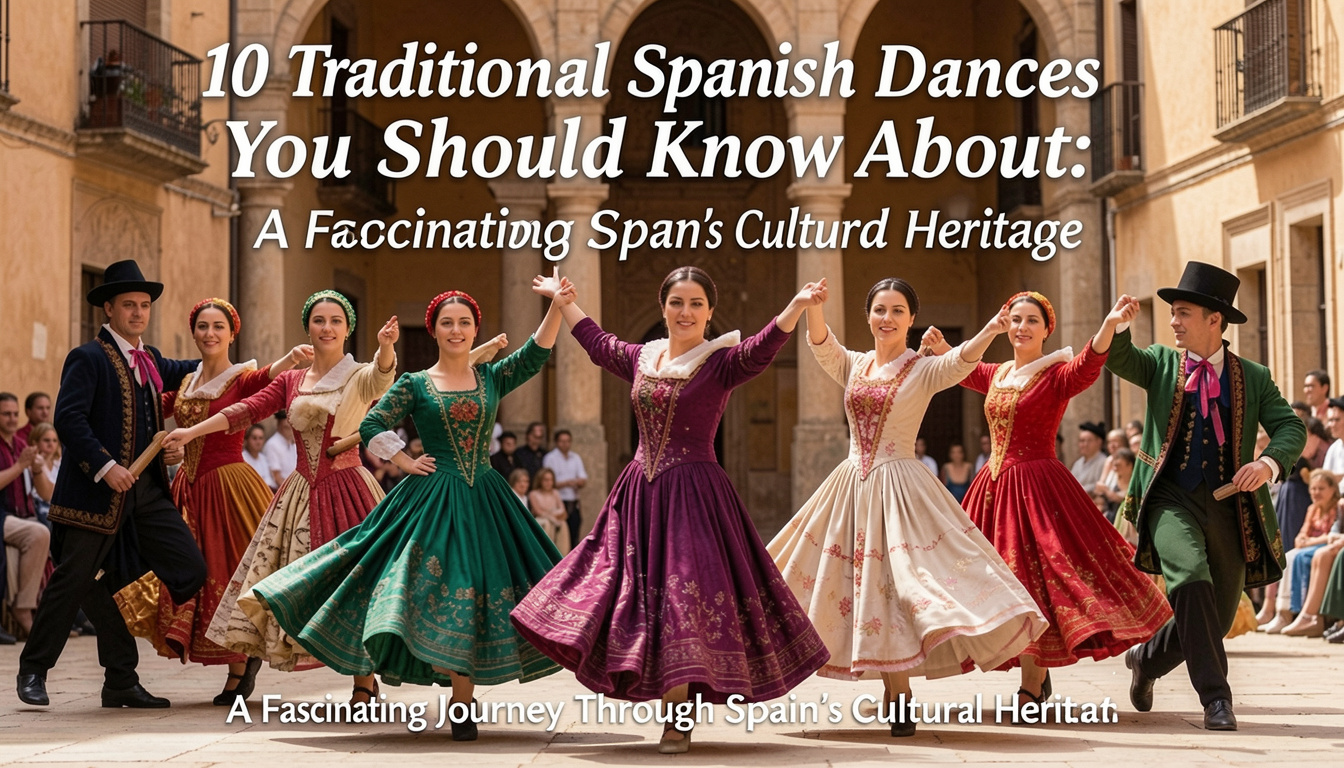
Spain is famous for its beautiful architecture, delicious cuisine, and vibrant festivals. However, one of the country’s most treasured cultural expressions is its traditional dance heritage. From passionate footwork to graceful group performances, Spanish dances tell stories of history, identity, and community.
Many travelers visit Spain hoping to experience authentic cultural performances. Whether you are exploring Andalusia, Catalonia, Galicia, or the Basque Country, you’ll find unique dances that reflect the spirit of each region. Understanding these traditions can make your trip more meaningful and memorable.
In this guide, we’ll explore the 10 Traditional Spanish Dances You Should Know About, including their origins, cultural significance, and where you can experience them during your travels.
Quick Answer
If you’re interested in Spain’s cultural heritage, the 10 Traditional Spanish Dances You Should Know About include Flamenco, Jota, Sardana, Muñeira, Sevillanas, Fandango, Bolero, Aurresku, Chotis, and Palo de Mayo. These dances represent different regions of Spain and showcase unique music, costumes, and traditions that have been passed down through generations.
Flamenco – Spain’s Most Iconic Dance
Flamenco is undoubtedly the most recognized Spanish dance worldwide. Originating in the Andalusia region of southern Spain, Flamenco combines dance, singing, guitar music, and emotional expression into a powerful artistic performance.
The dance developed over centuries through influences from Romani, Moorish, Jewish, and Andalusian cultures. Today, Flamenco is recognized by UNESCO as an Intangible Cultural Heritage of Humanity.
Key Characteristics of Flamenco
- Intense emotional expression
- Complex footwork (Zapateado)
- Rhythmic hand clapping (Palmas)
- Elegant arm and hand movements
- Live guitar accompaniment
Why Travelers Love Flamenco
Flamenco performances create an unforgettable cultural experience. The passion, energy, and storytelling captivate audiences even if they don’t understand Spanish.
Best Places to Watch Flamenco
| Location | Why Visit |
| Seville | Birthplace of many Flamenco traditions |
| Granada | Historic caves with authentic shows |
| Córdoba | Traditional Flamenco festivals |
| Madrid | World-class professional performances |
Fun Fact
Many people think Flamenco is only a dance, but it actually consists of three essential elements:
- Cante (singing)
- Baile (dance)
- Toque (guitar playing)
Jota – The Energetic Folk Dance of Aragon
Jota is one of the oldest and most energetic traditional dances in Spain. It originated in the Aragon region but later spread throughout several parts of the country. Each region developed its own variation while maintaining the dance’s lively spirit.
The Jota is known for its fast-paced rhythm, impressive jumps, and colorful costumes. Dancers often perform in pairs while accompanied by guitars, castanets, lutes, and traditional singing.
Origins of the Jota
Historians believe the dance emerged during the 18th century, although some elements may be much older. Over time, Jota became a symbol of regional pride and cultural identity.
Key Features
| Feature | Description |
| Rhythm | Fast and lively |
| Performance Style | Usually danced in pairs |
| Music | Guitar, castanets, traditional vocals |
| Costumes | Regional folk attire |
| Difficulty | Moderate to advanced |
Regional Variations
Aragonese Jota
The most famous version, featuring powerful jumps and dramatic movements.
Castilian Jota
A slightly calmer style focusing on graceful choreography.
Valencian Jota
Includes unique regional musical influences and costumes.
Cultural Importance
Jota performances remain a major attraction during local festivals, national celebrations, and cultural events. The dance continues to play an important role in preserving Spain’s folk traditions.
Where to Experience Jota
Travelers can enjoy authentic Jota performances during:
- Fiestas del Pilar in Zaragoza
- Regional cultural festivals
- Traditional folk music events
- Local heritage celebrations
Quick Comparison: Flamenco vs Jota
| Feature | Flamenco | Jota |
| Origin | Andalusia | Aragon |
| Mood | Emotional & dramatic | Energetic & festive |
| Music | Guitar, vocals, clapping | Guitar, castanets, folk music |
| Performance | Solo or group | Usually pairs |
| UNESCO Recognition | Yes | No |
| Popularity | Global | Mainly Spain |
Why These Dances Matter to Travelers
Understanding traditional Spanish dances helps visitors connect with local culture beyond famous landmarks. These performances reveal centuries of history, artistic expression, and community traditions.
Whether you’re visiting Seville’s Flamenco venues or attending a Jota festival in Zaragoza, experiencing these dances can become one of the most memorable highlights of your trip to Spain.
Jota is one of Spain’s oldest and most energetic folk dances. It is especially popular in the northeastern region of Aragón but has many regional variations throughout the country.
Overview
Known for its lively jumps, quick footwork, and traditional costumes, Jota is often performed during local festivals and religious celebrations. Dancers usually perform in pairs while musicians play guitars, bandurrias, lutes, and castanets.
| Feature | Details |
| Origin | Aragón, Spain |
| Music | Guitar, bandurria, lute, castanets |
| Style | Fast-paced, energetic partner dance |
| Best Place to See It | Zaragoza and Aragón festivals |
Why Jota Is Special
Jota represents joy, pride, and community spirit. Every region that performs Jota has added its own unique style, making it one of Spain’s most diverse traditional dances.
Many performances include singing along with the dance, creating a lively atmosphere that encourages audience participation.
Key Characteristics
- Fast footwork
- High jumps and spins
- Castanet rhythms
- Colorful regional costumes
- Partner choreography
Cultural Significance
Jota has been passed down through generations for centuries. It remains an important part of Spanish national celebrations and local cultural festivals, helping preserve regional traditions.
Travel Tip
Visit Zaragoza during local festivals to experience authentic Jota performances by regional dance groups wearing traditional Aragonese clothing.
Sardana is one of the most meaningful traditional dances in Catalonia. Unlike many Spanish dances, Sardana focuses on unity and community rather than individual performance.
Overview
People form a circle, hold hands, and dance together with carefully measured steps while a traditional orchestra called a cobla provides the music.
| Feature | Details |
| Origin | Catalonia |
| Music | Cobla orchestra |
| Style | Circle dance with synchronized steps |
| Best Place to See It | Barcelona and Girona |
Why Sardana Is Unique
Sardana symbolizes equality because everyone joins the same circle regardless of age, gender, or background.
Visitors are often welcome to participate, making it one of Spain’s most accessible cultural experiences.
What Makes Sardana Different?
- Danced in a circle
- Slow, graceful movements
- Community participation
- Traditional Catalan music
- Symbol of regional identity
Cultural Importance
For many Catalans, Sardana represents cultural pride and unity. It is commonly performed in city squares on weekends, national holidays, and cultural festivals.
Travel Tip
Visit Barcelona Cathedral Square on Sunday mornings, where locals frequently gather to perform Sardana in an authentic and welcoming environment.
Muñeira is the signature folk dance of Galicia in northwestern Spain. Its lively rhythm reflects the Celtic influence found throughout the region.
Overview
Traditionally danced during village celebrations and harvest festivals, Muñeira features quick steps, graceful arm movements, and lively music played with the Galician bagpipe, known as the gaita.
| Feature | Details |
| Origin | Galicia |
| Music | Gaita (Galician bagpipe), drums |
| Style | Fast folk dance with Celtic influences |
| Best Place to See It | Santiago de Compostela and rural Galicia |
Why Muñeira Stands Out
The dance showcases Galicia’s unique cultural identity, which differs noticeably from southern Spain’s flamenco traditions.
Its energetic style makes it one of the most entertaining regional dances for visitors.
Main Features
- Fast circular movements
- Bagpipe music
- Traditional embroidered costumes
- Group or partner performances
- Cheerful festival atmosphere
Historical Background
Muñeira originated as a rural celebration dance performed after harvests and community gatherings. Today, it continues to play an important role during Galician cultural events.
Travel Tip
Plan your visit during Galicia’s summer festivals to enjoy authentic Muñeira performances alongside traditional food, music, and local celebrations.
Comparison Table: Jota vs. Sardana vs. Muñeira
| Feature | Jota | Sardana | Muñeira |
| Region | Aragón | Catalonia | Galicia |
| Dance Style | Energetic partner dance | Community circle dance | Fast folk dance |
| Difficulty | Moderate | Easy to Moderate | Moderate |
| Music | Guitar & Castanets | Cobla Orchestra | Bagpipes & Drums |
| Best For | Festivals | Community Events | Cultural Festivals |
| Tourist Friendly | ⭐⭐⭐⭐⭐ | ⭐⭐⭐⭐⭐ | ⭐⭐⭐⭐☆ |
Quick Travel Checklist
Before watching traditional Spanish dances, remember to:
- ✔ Research local festival dates.
- ✔ Book tickets for popular flamenco shows in advance.
- ✔ Wear comfortable walking shoes for festivals.
- ✔ Carry a camera or smartphone for photos (where permitted).
- ✔ Respect local customs and performance etiquette.
- ✔ Learn a few basic Spanish phrases to enhance your experience.
Fandango is one of Spain’s oldest and most influential traditional dances. Known for its lively rhythm and expressive movements, it has inspired many other Spanish dance styles, including flamenco.
Overview
Originating in southern Spain, Fandango is typically performed by couples. The dance combines graceful arm movements, rhythmic footwork, and the sound of castanets, creating an elegant yet energetic performance.
| Feature | Details |
| Origin | Andalusia and Extremadura |
| Music | Guitar, castanets, hand clapping |
| Style | Romantic partner dance |
| Best Place to See It | Huelva, Málaga, and Andalusia |
Why Fandango Is Special
Fandango tells stories through movement. Depending on the region, performances may appear playful, romantic, or dramatic.
Its influence extends beyond Spain, inspiring traditional dances in Portugal and Latin America.
Key Characteristics
- Fast and slow rhythm changes
- Elegant partner interaction
- Graceful arm movements
- Castanet accompaniment
- Emotional storytelling
Cultural Importance
For centuries, Fandango has been a central part of Spanish festivals and family celebrations. Today, regional versions continue to preserve local traditions while showcasing Spain’s rich artistic heritage.
Travel Tip
Visit Huelva during local cultural festivals to watch authentic Fandango performances by professional folk dance groups.
Bolero is a refined and elegant Spanish dance that became popular during the late 18th century. It combines classical ballet influences with traditional Spanish movements.
Overview
Unlike the modern Latin American Bolero, the Spanish Bolero focuses on precise footwork, graceful posture, and carefully controlled movements.
| Feature | Details |
| Origin | Spain |
| Music | Classical Spanish orchestra and guitar |
| Style | Elegant theatrical dance |
| Best Place to See It | Madrid and Spanish dance theaters |
Why Bolero Is Unique
Bolero emphasizes elegance rather than speed. Every movement is carefully timed to match the music, creating a sophisticated performance.
Professional dancers often spend years mastering its techniques.
Main Features
- Controlled footwork
- Ballet-inspired posture
- Flowing arm movements
- Castanet performance
- Formal costumes
Historical Background
Bolero became highly popular among Spanish nobility during the 18th and 19th centuries. It later influenced many classical dance schools throughout Europe.
Travel Tip
Attend a traditional dance performance in Madrid to experience authentic Spanish Bolero presented by professional dance companies.
Paso Doble is one of Spain’s most dramatic dances. Inspired by the excitement of the bullring, it tells the story of a bullfighter and their graceful movements during a bullfight.
Overview
Although widely recognized in ballroom competitions worldwide, Paso Doble has deep Spanish roots and remains an important part of the country’s cultural identity.
| Feature | Details |
| Origin | Spain |
| Music | Military-style marches |
| Style | Dramatic theatrical partner dance |
| Best Place to See It | Madrid, Valencia, and cultural festivals |
Why Paso Doble Is Famous
The male dancer traditionally represents the matador, while the female partner often symbolizes the flowing cape.
Its powerful music and confident choreography make it one of the most recognizable Spanish dances around the world.
Signature Elements
- Strong posture
- Sharp movements
- Dramatic facial expressions
- March-like rhythm
- Confident partner choreography
Cultural Importance
Paso Doble reflects Spain’s historical traditions while evolving into an internationally celebrated ballroom dance performed in competitions and exhibitions.
Travel Tip
Many Spanish cultural festivals feature Paso Doble performances that focus on artistic expression rather than bullfighting traditions.
Comparison Table: Fandango vs. Bolero vs. Paso Doble
| Feature | Fandango | Bolero | Paso Doble |
| Region | Andalusia | Central Spain | Nationwide |
| Dance Type | Folk Dance | Classical Dance | Theatrical Dance |
| Difficulty | Moderate | Advanced | Moderate to Advanced |
| Mood | Romantic & Expressive | Elegant & Graceful | Bold & Dramatic |
| Music | Guitar & Castanets | Orchestra & Guitar | March-Style Music |
| Partner Dance | Yes | Yes | Yes |
| Festival Favorite | ⭐⭐⭐⭐⭐ | ⭐⭐⭐⭐☆ | ⭐⭐⭐⭐⭐ |
Expert Tips for Experiencing Traditional Spanish Dances
Whether you’re visiting Spain for the first time or planning a cultural tour, these expert tips will help you enjoy authentic dance performances:
Visit During Local Festivals
Regional festivals often feature the most authentic performances with traditional costumes and live musicians.
Choose Smaller Venues
Small theaters and local community events usually provide a more intimate and genuine cultural experience than large tourist shows.
Learn Basic Dance History
Understanding each dance’s origin makes performances more meaningful and enjoyable.
Respect Local Traditions
Avoid interrupting performances with flash photography or loud conversations.
Explore Regional Differences
Every Spanish region has its own dance style, music, and costumes. Visiting multiple regions offers a deeper appreciation of Spain’s diverse cultural heritage.
Zambra is one of Spain’s most captivating traditional dances, deeply rooted in the history of Granada and the Roma (Gitano) communities of Andalusia. It is known for its emotional storytelling, graceful movements, and rich cultural heritage.
Overview
Originally performed during Moorish wedding celebrations, Zambra evolved into a beautiful artistic dance that blends Arabic, Romani, and Andalusian influences. Today, it is most commonly performed in the historic caves of Sacromonte, Granada.
| Feature | Details |
| Origin | Granada, Andalusia |
| Music | Flamenco guitar, singing, hand clapping |
| Style | Emotional solo or group dance |
| Best Place to See It | Sacromonte, Granada |
Why Zambra Is Special
Unlike many Spanish folk dances, Zambra focuses on storytelling through slow, expressive movements rather than fast footwork. The dance reflects centuries of cultural exchange between different civilizations that shaped southern Spain.
Key Characteristics
- Graceful arm and hand movements
- Expressive facial expressions
- Flowing costumes
- Emotional storytelling
- Strong flamenco influences
Cultural Importance
Zambra represents Granada’s multicultural history and remains an important symbol of Andalusian identity. Performances often take place in traditional cave venues that create an unforgettable atmosphere.
Travel Tip
Visit the Sacromonte district in Granada during the evening for authentic Zambra performances accompanied by live flamenco musicians.
Aurresku is a ceremonial Basque dance that symbolizes honor, respect, and celebration. Unlike many other Spanish dances, it is usually performed as a tribute to an individual during important events.
Overview
Aurresku originated in Spain’s Basque Country and is traditionally performed by a single dancer. Today, it remains an important part of weddings, civic ceremonies, festivals, and official celebrations.
| Feature | Details |
| Origin | Basque Country |
| Music | Txistu flute and drum |
| Style | Ceremonial solo dance |
| Best Place to See It | Bilbao, San Sebastián, and Basque festivals |
Oktoberfest 2026 Schedule of Events: Ultimate Day-by-Day Guide for First-Time Visitors
Why Aurresku Is Unique
Aurresku is not simply entertainment—it is a respectful tribute. Every movement has symbolic meaning, expressing dignity, gratitude, and cultural pride.
Signature Elements
- Solo performance
- High jumps
- Precise footwork
- Traditional Basque clothing
- Live flute accompaniment
Historical Significance
Dating back several centuries, Aurresku continues to play a central role in Basque culture. It is one of Spain’s best-preserved ceremonial dances and remains an important cultural tradition.
Travel Tip
Attend a Basque cultural festival in Bilbao or San Sebastián to witness authentic Aurresku performances in their traditional setting.
Comparison Table: All 10 Traditional Spanish Dances
| Dance | Region | Style | Difficulty | Best For |
| Flamenco | Andalusia | Passionate | Advanced | Cultural Shows |
| Sevillanas | Andalusia | Social | Beginner | Festivals |
| Jota | Aragón | Energetic | Moderate | Folk Festivals |
| Sardana | Catalonia | Circle Dance | Easy | Community Events |
| Muñeira | Galicia | Celtic Folk | Moderate | Summer Festivals |
| Fandango | Andalusia | Romantic | Moderate | Folk Performances |
| Bolero | Central Spain | Elegant | Advanced | Theater Shows |
| Paso Doble | Nationwide | Dramatic | Moderate | Cultural Events |
| Zambra | Granada | Emotional | Moderate | Flamenco Venues |
| Aurresku | Basque Country | Ceremonial | Advanced | Official Celebrations |
Pros and Cons of Watching Traditional Spanish Dances
| Pros | Cons |
| Experience authentic Spanish culture | Popular shows can sell out quickly |
| Learn regional traditions and history | Some performances are seasonal |
| Enjoy live music and colorful costumes | Tourist shows may feel less authentic |
| Great activity for families and couples | Language barriers at smaller venues |
| Excellent photography opportunities | Premium seats can be expensive |
Checklist Before Watching Traditional Spanish Dances
Use this checklist to make the most of your cultural experience.
- ✅ Book popular performances in advance.
- ✅ Check local festival calendars.
- ✅ Arrive at least 20–30 minutes early.
- ✅ Wear comfortable clothing and shoes.
- ✅ Carry a light jacket for evening outdoor performances.
- ✅ Respect photography rules.
- ✅ Learn basic Spanish greetings.
- ✅ Bring cash if visiting local festivals.
- ✅ Support local artists by purchasing handmade souvenirs.
- ✅ Keep your phone on silent during performances.
Common Mistakes Tourists Make
Assuming Every Spanish Dance Is Flamenco
Spain has many regional dances, each with its own history, music, and traditions. Exploring different styles provides a richer cultural experience.
Choosing Only Tourist-Oriented Shows
Large commercial performances can be entertaining, but local cultural centers and regional festivals often provide more authentic experiences.
Ignoring Regional Differences
Each region has unique costumes, instruments, and dance styles. Don’t miss the opportunity to explore beyond Andalusia.
Booking at the Last Minute
Popular festivals and flamenco venues frequently sell out, especially during spring and summer travel seasons.
Forgetting Cultural Etiquette
Avoid talking during performances, using flash photography, or walking around while dancers are performing.
Expert Tips for Travelers
Attend Regional Festivals
The most authentic performances happen during local festivals, where communities proudly celebrate their traditions.
Learn the Story Behind Each Dance
Understanding the history and symbolism makes every performance more meaningful.
Visit Multiple Regions
Each Spanish region offers a completely different dance experience, from Catalonia’s Sardana to Galicia’s Muñeira.
Support Local Performers
Purchase tickets directly from local venues whenever possible and consider buying handcrafted souvenirs made by local artisans.
Combine Dance with Local Cuisine
Many cultural festivals also feature traditional Spanish dishes, regional wines, and local desserts, creating a complete cultural experience.
Best Places in Spain to Experience Traditional Dances
| Destination | Famous Dance |
| Seville | Flamenco, Sevillanas |
| Granada | Zambra, Flamenco |
| Zaragoza | Jota |
| Barcelona | Sardana |
| Santiago de Compostela | Muñeira |
| Madrid | Bolero, Paso Doble |
| Bilbao | Aurresku |
| Córdoba | Flamenco |
| Málaga | Fandango |
| Valencia | Paso Doble |
Conclusion
Spain’s dance traditions are much more than colorful performances—they are living expressions of the country’s history, identity, and regional pride. From the passionate rhythms of Flamenco in Andalusia to the graceful ceremonial steps of Aurresku in the Basque Country, each dance tells a unique story that has been preserved through generations.
Whether you’re planning your first trip to Spain or simply exploring its culture from home, learning about these 10 Traditional Spanish Dances You Should Know About offers a deeper appreciation of the nation’s diverse heritage. Watching live performances, joining local festivals, and discovering regional traditions can transform an ordinary vacation into an unforgettable cultural experience.
As you plan your next adventure, consider adding a traditional Spanish dance performance to your itinerary. It’s one of the best ways to experience the heart, soul, and vibrant spirit of Spain.
FAQs
What is the most famous traditional dance in Spain?
The most famous traditional Spanish dance is Flamenco. Originating in Andalusia, Flamenco is known for its passionate footwork, expressive hand movements, emotional singing, and guitar music. It is recognized by UNESCO as an Intangible Cultural Heritage of Humanity.
How many traditional dances are there in Spain?
Spain has dozens of traditional regional dances. Some of the best-known include Flamenco, Sevillanas, Jota, Sardana, Muñeira, Fandango, Bolero, Paso Doble, Zambra, and Aurresku. Each region has its own unique dance traditions.
Where can tourists watch authentic Spanish dances?
Visitors can enjoy authentic performances in cities such as:
- Seville (Flamenco and Sevillanas)
- Granada (Zambra and Flamenco)
- Barcelona (Sardana)
- Zaragoza (Jota)
- Bilbao (Aurresku)
- Santiago de Compostela (Muñeira)
Local festivals and traditional theaters often provide the most authentic experiences.
Is Flamenco the same as Sevillanas?
No. While both originated in Andalusia, Flamenco is a highly expressive performance art, whereas Sevillanas is a social dance commonly performed in pairs during festivals, weddings, and celebrations.
Which traditional Spanish dance is easiest to learn?
Sevillanas and Sardana are considered beginner-friendly because they have structured steps and are commonly taught during festivals and community events.
What should I wear to attend a traditional dance performance?
Smart casual clothing is appropriate for most performances. Comfortable shoes are recommended, especially if attending outdoor festivals where you may walk or stand for long periods.
Are traditional Spanish dances family-friendly?
Yes. Most traditional dance performances are suitable for visitors of all ages. Many festivals also include live music, local food, children’s activities, and cultural exhibitions.
When is the best time to experience traditional Spanish dances?
Spring and summer are ideal because many cities host cultural festivals featuring regional dances. Events like Seville’s April Fair and numerous summer festivals offer unforgettable performances.
Can tourists participate in traditional Spanish dances?
Yes. Community dances such as Sardana and Sevillanas often welcome visitors, especially during local festivals. Joining respectfully is a great way to experience Spanish culture.
Why are traditional Spanish dances important?
Traditional dances preserve Spain’s history, regional identity, music, and customs. They connect generations and showcase the country’s diverse cultural heritage through movement and celebration.
Read More: Curious and Wondrous Travel Destinations – Atlas Obscura