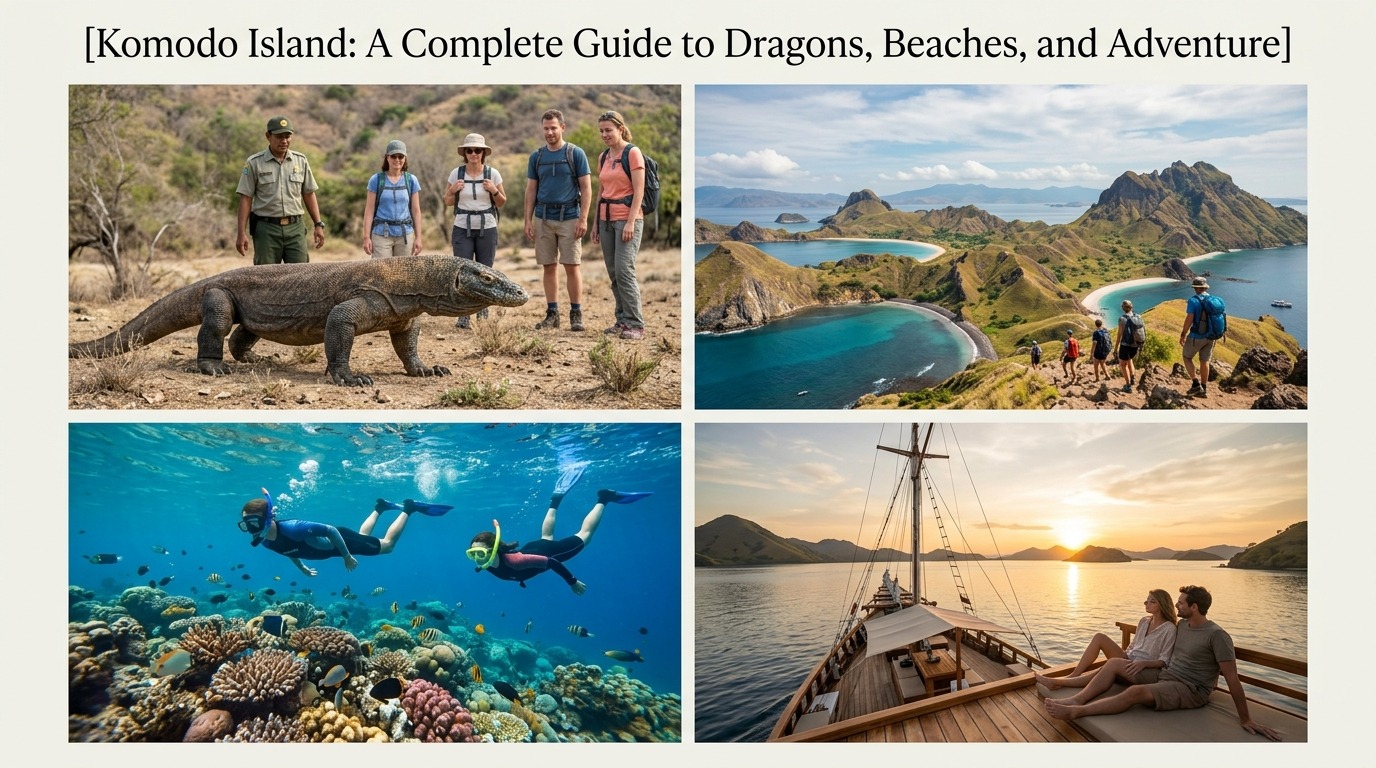
Komodo Island is one of Indonesia’s most remarkable natural destinations, known around the world for its Komodo dragons and rugged landscapes. Part of Komodo National Park in East Nusa Tenggara, the island combines dry hills, dramatic coastlines, small bays, and wildlife experiences that feel very different from Indonesia’s more developed beach destinations. A visit here is less about resort-style tourism and more about discovering a protected environment through guided walks, boat trips, snorkeling, and time outdoors.
The wider area around Komodo Island is just as important as the island itself. Travelers can combine a dragon-watching excursion with pink-sand beaches, clear tropical water, coral reefs, viewpoints, and nearby islands. Most trips are organized from Labuan Bajo on the island of Flores, making the destination especially suitable for travelers who enjoy nature, photography, marine life, and adventure. With thoughtful planning, a Komodo trip can become a memorable part of an Indonesian itinerary.
Why Visit Komodo Island?
The main reason to visit Komodo Island is the opportunity to see Komodo dragons in their natural environment. These enormous monitor lizards are found only in a limited area of Indonesia, including several islands within Komodo National Park.
But the dragons are only one part of the experience. The landscape itself is striking, with dry savannah-covered hills contrasting against deep blue water and rugged volcanic-looking coastlines. During the drier months, the hills can take on a golden-brown appearance, while wetter periods bring greener vegetation.
Komodo National Park also protects important marine habitats. The waters around the islands support coral reefs, fish, sea turtles, and other marine life, making snorkeling and diving major reasons to visit the region.
Another attraction is the feeling of remoteness. Away from the main harbor areas, there are few signs of urban development. A boat journey through the national park can take you past small islands, secluded bays, and beaches that are difficult to reach independently.
The destination is particularly suitable for travelers who prefer experiences over conventional sightseeing. A typical day might involve an early boat departure, a guided walk to look for Komodo dragons, swimming or snorkeling, a viewpoint hike, and sunset on the water.
Komodo National Park and Its Natural Environment
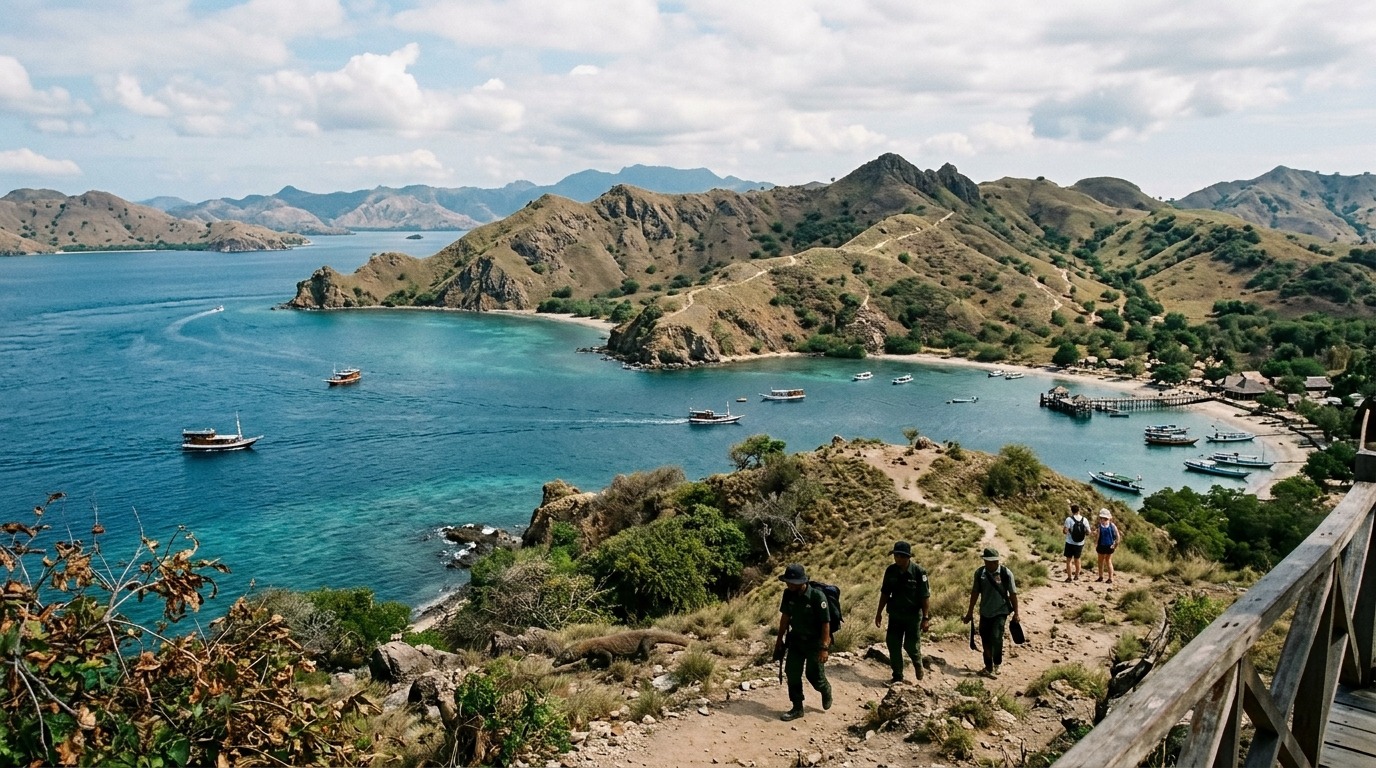
Komodo Island is part of Komodo National Park, a protected area established to conserve the Komodo dragon and the wider ecosystems surrounding the islands.
The park includes several major islands and numerous smaller islands and marine areas. Komodo, Rinca, and Padar are among the best-known destinations visited by travelers.
The environment is unusual because it combines tropical marine ecosystems with relatively dry island landscapes. Rainfall patterns and seasonal conditions influence the appearance of the vegetation, especially across the hills and savannah.
Wildlife encounters are not guaranteed. Komodo dragons are wild animals, and sightings depend on their movements and local conditions. Rangers and guides help visitors follow appropriate safety procedures.
The park’s marine environment is equally important. Coral reefs and coastal habitats support a wide variety of species, which is why responsible snorkeling and diving practices matter.
Visitors should follow all national park instructions, stay with their guides, and avoid approaching wildlife independently. Komodo dragons are powerful predators, and maintaining a safe distance is essential.
Seeing Komodo Dragons Safely
Seeing a Komodo dragon is often the highlight of a trip, but it should always be treated as a wildlife encounter rather than a conventional zoo visit.
Komodo dragons are large wild reptiles capable of moving surprisingly quickly over short distances. They have a powerful bite and should never be approached, fed, touched, or intentionally disturbed.
Visitors normally explore designated areas with trained park rangers or guides. The guides understand the behavior of the animals and know the local environment, helping visitors enjoy the experience while reducing unnecessary risk.
Do not wander away from your group, even if the trail looks easy. A dragon may be difficult to notice until you are relatively close to it.
Food should also be handled according to park rules. Avoid carrying or displaying food around wildlife unless your guide specifically explains what is permitted.
Wear practical walking shoes, bring water, and protect yourself from the sun. Some trails can be exposed, with limited shade.
| Wildlife Experience | What Travelers Should Expect |
| Komodo dragon sightings | Possible but not guaranteed |
| Guided walks | Rangers or local guides accompany visitors |
| Walking conditions | Uneven, dry, and sometimes exposed terrain |
| Wildlife safety | Keep distance and follow guide instructions |
| Photography | Use a zoom lens rather than approaching animals |
| Best approach | Observe quietly without disturbing wildlife |
The most important rule is simple: let the ranger control the distance between you and the animals. The goal is to observe wild Komodo dragons without changing their behavior.
Best Things to Do Around Komodo Island
A Komodo trip can include much more than dragon watching. The surrounding national park provides a wide range of outdoor experiences.
Hike to a Scenic Viewpoint
Padar Island is famous for its dramatic viewpoint overlooking several curved bays. The hike is steep in sections, but the panoramic view from above is one of the most recognizable landscapes in the region.
Start early if possible, especially during warmer months. The combination of sun, exposed terrain, and uphill walking can make the hike demanding in the middle of the day.
Visit a Pink Beach
Several beaches in the wider region are associated with pink or reddish sand. The color comes from a mixture of pale sand and fragments of red coral.
Pink Beach is one of the better-known stops, although the intensity of the color can vary depending on light, weather, tides, and the condition of the beach.
Snorkeling
The waters around Komodo National Park provide opportunities to see coral, tropical fish, and other marine life. Snorkeling conditions depend on location, tides, currents, weather, and seasonal conditions.
Diving
Komodo is also a significant diving destination. Divers can encounter coral reefs, reef fish, rays, turtles, and other marine species, although conditions and suitable sites vary according to experience and local guidance.
Boat Trips
A boat is central to most Komodo itineraries. Day trips can combine several attractions, while longer liveaboard journeys allow travelers to spend more time exploring remote parts of the national park.
Best Time to Visit Komodo Island
The best time for Komodo Island depends on your priorities. Weather, sea conditions, wildlife activity, hiking comfort, and marine visibility can all affect the experience.
The dry season is generally associated with sunnier weather and drier landscapes. This can be attractive for hiking and boat trips, although temperatures can be hot and the hills may look quite dry.
The wetter season can bring greener landscapes and different weather conditions. Rain and rougher seas may affect some boat journeys, so travelers should allow flexibility.
For diving and snorkeling, conditions can vary considerably between locations and throughout the year. Visibility is not guaranteed on every day.
If your main goal is hiking and exploring multiple islands by boat, prioritize a period with suitable weather and sea conditions rather than choosing dates solely because they are considered “peak season.”
Always check current marine conditions and local park information shortly before departure.
How to Get to Komodo Island
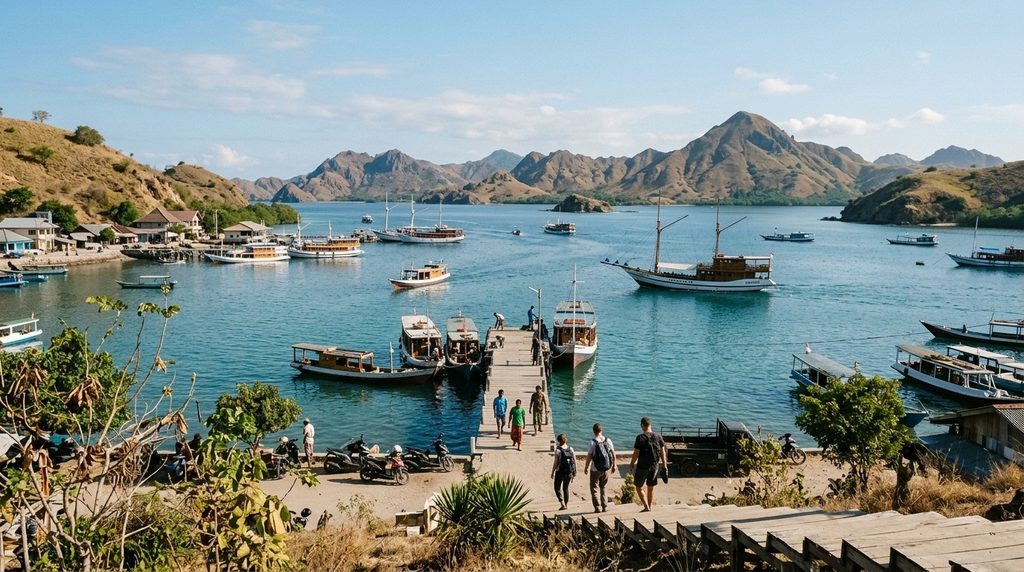
Most travelers begin their journey in Labuan Bajo, a coastal town on Flores that serves as the main gateway to Komodo National Park.
Labuan Bajo has an airport with domestic connections, making it possible to reach the region from other Indonesian cities. From the town, visitors typically continue by boat into the national park.
The exact journey depends on your tour, boat type, and itinerary. Some trips visit Komodo Island as part of a full-day excursion, while others include overnight stays on boats.
Because boat travel is such an important part of the experience, check what is included in your package before booking. Ask about departure times, meals, drinking water, safety equipment, snorkeling gear, guide services, and national park fees.
For travelers prone to seasickness, preparation is worthwhile. Bring appropriate medication if you normally use it and consider where you will spend the most time on the boat.
If your international flight arrives in Indonesia late in the day, consider spending a night in Labuan Bajo before beginning a boat trip rather than arranging an unnecessarily tight connection.
Where to Stay for a Komodo Island Trip
There are limited conventional accommodation options on Komodo Island itself compared with popular Indonesian resort destinations. Most travelers stay in Labuan Bajo or choose an overnight boat or liveaboard experience.
Labuan Bajo offers the widest range of hotels, guesthouses, restaurants, cafés, and travel services. It is the most practical base for travelers taking day trips into the national park.
A liveaboard is a different experience. Instead of returning to town each evening, you sleep on the boat and continue exploring different parts of the park over several days.
When choosing accommodation in Labuan Bajo, consider how early your boat leaves. A hotel closer to the harbor can make an early departure easier.
For liveaboards, compare cabin conditions, sleeping arrangements, bathroom facilities, food, safety equipment, group size, and the exact itinerary rather than choosing solely on price.
Day Trip or Liveaboard?
A day trip can work well for travelers with limited time. It allows you to experience major highlights without changing accommodation.
A liveaboard provides more time in the national park and can include additional snorkeling, diving, beaches, and viewpoints. However, sleeping on a boat requires greater comfort with basic or confined accommodation, depending on the vessel.
| Trip Style | Typical Experience | Suitable For |
| Day trip | Major highlights in one long day | Short itineraries |
| Two-day trip | More time for islands and activities | First-time explorers |
| Multi-day liveaboard | More remote locations and marine activities | Adventure travelers |
| Diving liveaboard | Multiple dive sites over several days | Certified divers |
Choose the format based on your available time, comfort level, and interest in marine activities.
Food, Local Culture, and Labuan Bajo
A Komodo adventure usually begins and ends in Labuan Bajo, so spending some time in town can add another dimension to the trip.
The local food scene includes Indonesian staples, seafood, rice dishes, grilled fish, noodles, and regional specialties. Fresh seafood is a natural choice in a coastal town, although menus vary between restaurants.
Travelers can also find cafés and international-style restaurants, particularly in areas serving visitors.
Beyond food, it is worth remembering that the national park and surrounding islands are part of a living region with local communities and long-established traditions. Responsible tourism means respecting local customs, avoiding litter, and supporting businesses that operate with appropriate environmental practices.
If you buy souvenirs, consider locally made products rather than wildlife products or anything made from protected species.
Travelers interested in photography should also be respectful when photographing local people. Ask permission when taking close-up portraits instead of assuming that someone wants to be photographed.
Snorkeling, Diving, and Marine Life
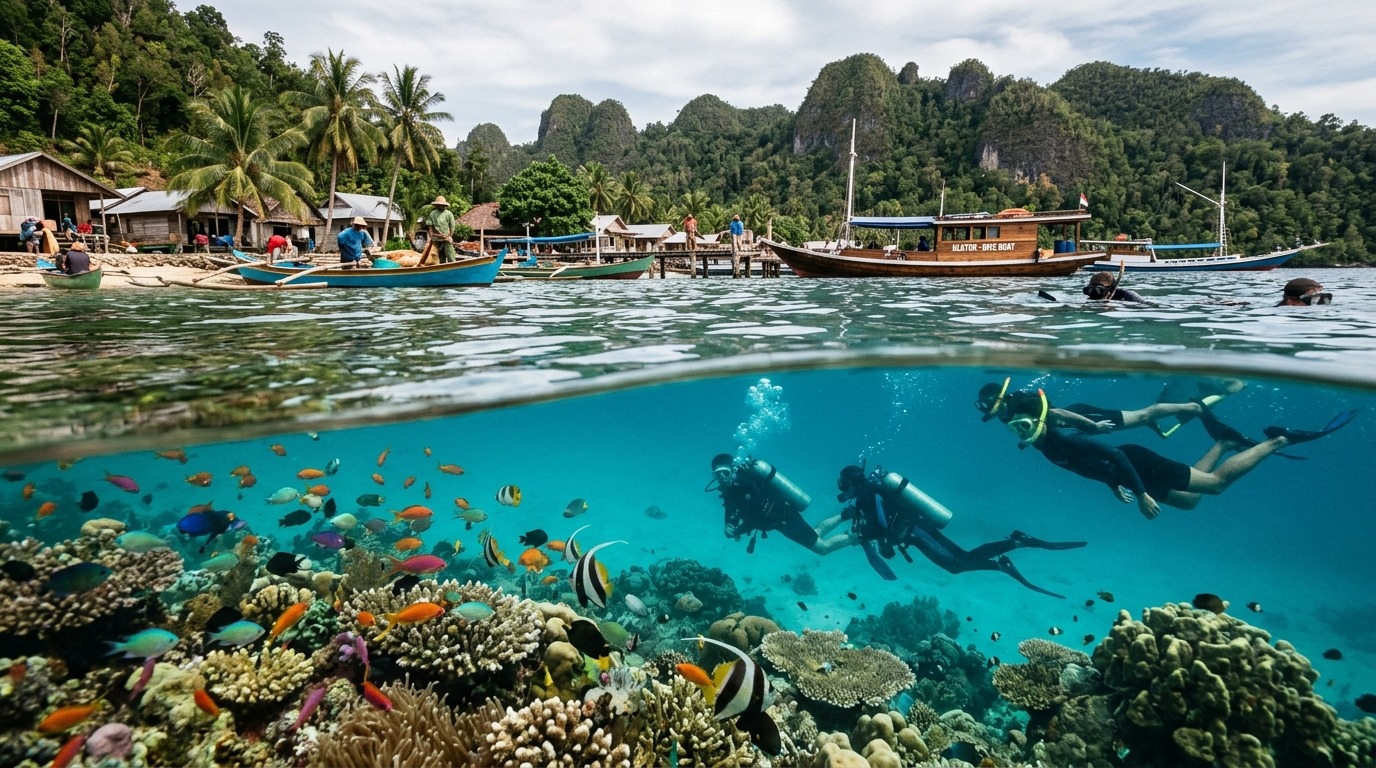
The underwater environment is one of the biggest reasons experienced travelers return to Komodo National Park.
The park’s waters contain coral reefs and diverse marine habitats. Depending on the site and conditions, snorkelers and divers may encounter reef fish, sea turtles, rays, and other marine species.
Strong currents are an important consideration in parts of Komodo. Some dive and snorkeling locations are better suited to experienced participants, while others can be more manageable for beginners under appropriate supervision.
Never choose a marine activity solely because a particular location looks beautiful in photographs. Ask your operator about currents, weather, visibility, depth, equipment, and your own experience level.
Responsible snorkeling also matters. Do not stand on coral, touch marine animals, chase turtles, or collect shells and coral. Sunscreen and other products can also affect marine environments, so follow local guidance about reef-friendly practices.
For divers, use a reputable operator with properly maintained equipment and qualified guides. Safety should always take priority over seeing a particular animal or reaching a particular site.
Practical Tips for Planning a Komodo Island Trip
A little preparation makes a major difference because Komodo travel is strongly influenced by weather, boat schedules, and outdoor conditions.
Pack lightweight clothing, comfortable walking shoes, swimwear, sun protection, a reusable water bottle, and a dry bag for electronics. A hat and sunglasses are particularly useful on exposed trails and boats.
Bring enough cash for situations where card payments may not be convenient, especially when traveling away from Labuan Bajo. Check current local payment options before leaving town.
Protect your phone and camera equipment from seawater. A waterproof bag or dry pouch can be useful during boat transfers and beach stops.
Do not underestimate the sun. Even when a boat ride feels comfortable because of the wind, UV exposure can be significant.
Book reputable operators and ask exactly what your tour includes. National park fees, meals, equipment, accommodation, transfers, and guide services are not necessarily included in every package.
Most importantly, keep your schedule flexible. Weather can affect boat departures and sea conditions, and wildlife encounters cannot be guaranteed.
Komodo Island is best experienced as a protected natural environment rather than a checklist of attractions. Respect the landscape, follow ranger instructions, and leave natural areas as you found them.
FAQs
Is Komodo Island worth visiting?
Komodo Island is a strong destination for travelers interested in wildlife, hiking, marine life, and remote island landscapes. The surrounding national park offers experiences beyond seeing Komodo dragons.
How many days do you need for Komodo Island?
A day trip can cover several major highlights, but two to four days allows more time for snorkeling, hiking, wildlife viewing, and exploring different islands.
Can you see Komodo dragons safely?
Yes, visitors can observe Komodo dragons with trained park rangers or guides. Travelers should stay with their group, maintain the instructed distance, and never approach or feed the animals.
What is the best time to visit Komodo Island?
The best period depends on your activities and current conditions. Drier months can be convenient for hiking and boat travel, while marine conditions vary by location and season.
Where should you stay when visiting Komodo Island?
Labuan Bajo is the main base for most visitors and offers hotels, restaurants, and boat connections. Travelers can also choose overnight boats or liveaboards for longer national park trips.
Conclusion:
Komodo Island offers a rare combination of wildlife, rugged landscapes, tropical seas, and outdoor adventure. From watching Komodo dragons with park rangers to hiking above the bays of Padar, snorkeling over coral reefs, and relaxing on quiet beaches, the experience is centered on nature rather than conventional resort tourism.
A successful Komodo Island trip depends on choosing a responsible tour operator, allowing enough time, preparing for sun and changing sea conditions, and respecting the protected environment. With thoughtful planning and a flexible attitude, the islands around Komodo National Park can provide an unforgettable part of an Indonesian adventure.
Read more:Jeju Island: A Complete Guide to South Korea’s Volcanic Paradise