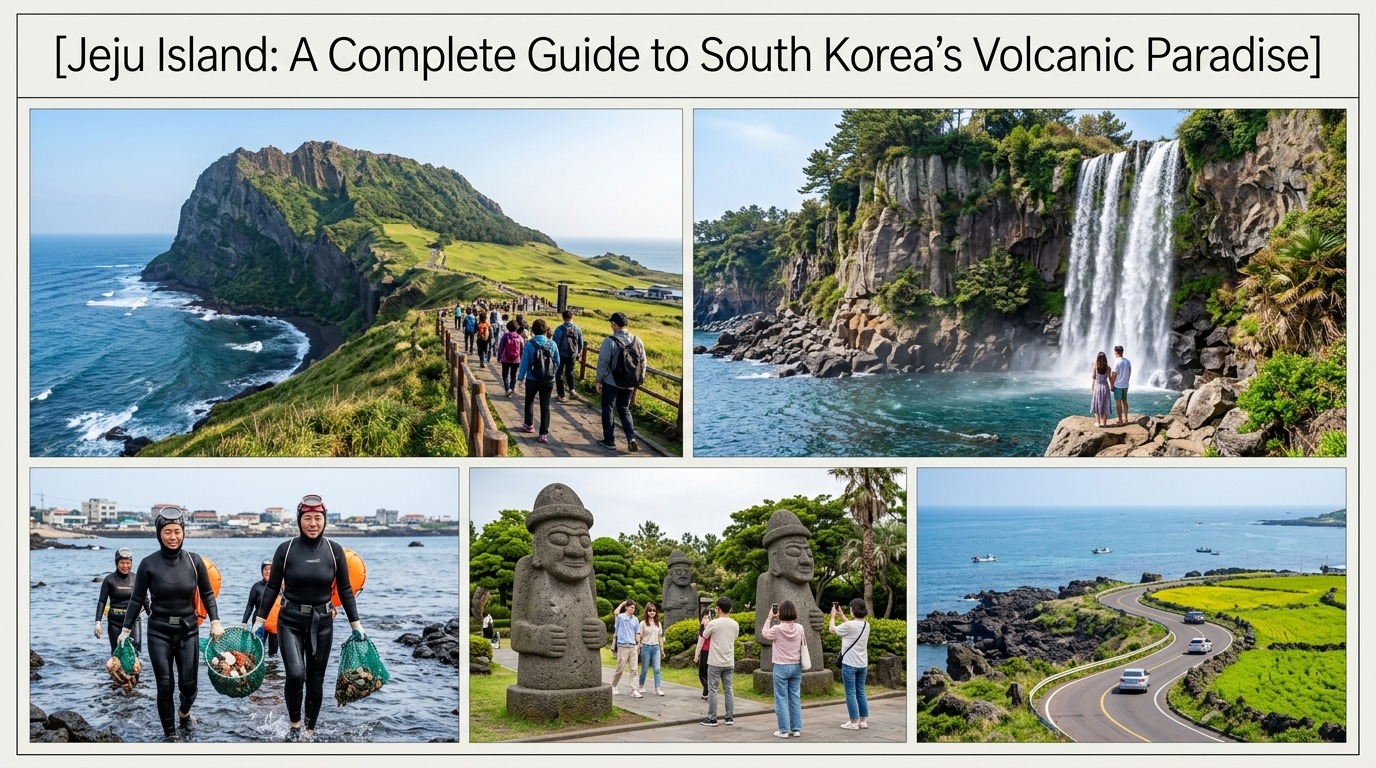
Jeju Island is a destination where volcanic landscapes, dramatic coastlines, green countryside, waterfalls, and distinctive local culture come together in one memorable setting. Located south of the Korean Peninsula, the island offers a refreshing change from the busy streets of Seoul and Busan. Travelers can explore lava-formed scenery in the morning, walk along a coastal trail in the afternoon, and enjoy fresh seafood or local specialties by evening.
What makes Jeju Island particularly appealing is its variety. You can hike Hallasan, visit a quiet village, explore lava tubes, watch the sunrise from Seongsan Ilchulbong, or simply spend a day moving between beautiful beaches and coastal viewpoints. With attractions spread across the island, Jeju rewards travelers who slow down and plan enough time to experience different regions rather than trying to see everything in a single day.
Why Visit Jeju Island?
Jeju Island is South Korea’s largest island and one of its best-known natural destinations. Its volcanic origins have shaped almost every part of the landscape, from the mountain at its center to rocky coastlines, lava formations, caves, and distinctive stone structures.
For first-time visitors, the island offers a combination that is difficult to find in one compact destination. There are major natural attractions for outdoor travelers, cultural experiences for curious visitors, beaches for relaxed days, and plenty of cafés and restaurants for slower afternoons.
Nature is the biggest attraction. Hallasan rises in the center of the island, while volcanic cones known as oreum appear throughout the countryside. Along the coast, you can find cliffs, sea caves, rocky shorelines, sandy beaches, and dramatic viewpoints.
Jeju also has a strong local identity. Haenyeo, the island’s traditional female divers, are an important part of Jeju’s cultural heritage. Local food, stone walls, folk villages, and regional traditions add depth to a trip that might otherwise focus only on scenery.
The island works well for different kinds of travelers. Couples can build a scenic and relaxed itinerary, families can choose attractions with easier access, and hikers can spend several days exploring mountain and coastal trails.
Best Places to Visit on Jeju Island
Jeju is large enough that different areas offer noticeably different experiences. Rather than treating the island as one single destination, it helps to divide your sightseeing into regions.
Jeju City is the main urban gateway and a practical arrival point. It has markets, restaurants, cafés, museums, and access to the airport.
Seogwipo on the southern coast is another important base. The area is close to several waterfalls, coastal attractions, and scenic viewpoints.
Seongsan in the east is especially popular because of Seongsan Ilchulbong, the famous volcanic tuff cone rising beside the sea.
Hallasan and central Jeju are best suited to travelers interested in hiking and mountain scenery.
The western coast has beaches, coastal roads, countryside, and numerous cafés and viewpoints.
| Area | Main Highlights | Best For |
| Jeju City | Markets, restaurants, airport access | First arrivals and short stays |
| Seogwipo | Waterfalls, coast, outdoor attractions | Nature and sightseeing |
| Seongsan | Seongsan Ilchulbong, coastal scenery | Sunrise and volcanic landscapes |
| Hallasan area | Hiking, forests, mountain scenery | Outdoor adventures |
| Western Jeju | Beaches, cafés, countryside | Relaxed road trips |
Choosing one base can work for a short visit, but travelers staying four or more days may prefer splitting accommodation between two areas. This can reduce driving time and make it easier to explore both the eastern and western sides.
Top Natural Attractions and Things to Do
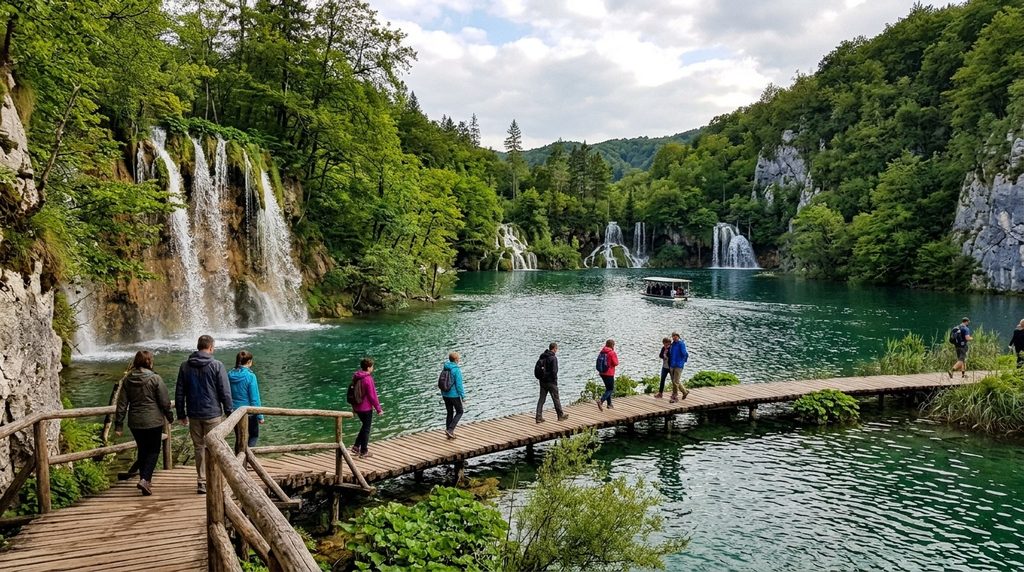
Jeju’s natural attractions are the heart of the island experience. Some are major landmarks, while others are simply places where you can stop, walk, and appreciate the landscape.
Seongsan Ilchulbong
Seongsan Ilchulbong, also called Sunrise Peak, is one of Jeju’s most recognizable landmarks. The volcanic cone was formed by an underwater eruption and rises prominently from the eastern coast.
The site is particularly famous for sunrise, although the surrounding landscape is worth seeing at other times as well. The climb involves steps and an uphill section, so comfortable shoes are recommended.
Hallasan National Park
Hallasan is the highest mountain in South Korea and dominates the center of Jeju. The mountain is protected within Hallasan National Park and offers hiking routes through changing landscapes.
Not every visitor needs to attempt a summit hike. There are trails and viewpoints suited to different levels of fitness, but hikers should always check current trail conditions, weather, and access rules before setting out.
Manjanggul and Jeju’s Lava Landscapes
Jeju’s volcanic history can also be seen underground. The island contains extensive lava tube systems, which formed when flowing lava cooled at the surface while molten material continued moving beneath it.
Manjanggul Lava Tube is one of the best-known examples, although access to individual sections can change because of conservation and maintenance work. Check current opening information before including it in your itinerary.
Waterfalls
The southern coast around Seogwipo is known for waterfalls. Cheonjiyeon Falls and Jeongbang Falls are among the better-known places to visit, offering easy ways to add water and coastal scenery to a sightseeing day.
Jeju Beaches and Coastal Experiences
Although Jeju is not primarily known as a traditional beach-resort destination, its coastline provides plenty of opportunities for swimming, walking, photography, and relaxed afternoons.
Hyeopjae Beach on the western side is known for clear water, pale sand, and views toward Biyangdo Island. Its relatively accessible setting makes it popular during warmer months.
Woljeongri Beach on the east coast has become well known for its scenic shoreline and café culture. It is a convenient choice for combining a beach stop with food and coffee.
Hamdeok Beach near Jeju City is another popular coastal area. Its sheltered appearance, clear water, and surrounding facilities make it attractive to visitors looking for an easy beach day.
Beyond the beaches, Jeju’s coastal walking routes provide a completely different way to experience the island. The Olle Trails connect different parts of the island through villages, fields, forests, cliffs, and shorelines.
Walking even part of an Olle route can give you a better sense of local landscapes than simply driving between major attractions.
The coast is also closely connected with Jeju’s food culture. Depending on the area and season, seafood restaurants may feature abalone, sea urchin, grilled fish, squid, and other local ingredients.
Best Time to Visit Jeju Island
Jeju can be visited throughout the year, but the ideal season depends on whether your priority is hiking, flowers, beaches, or comfortable sightseeing.
Spring is popular for its mild weather and seasonal flowers. Canola fields and cherry blossoms can add color to the landscape, although exact flowering periods vary from year to year.
Summer is warmer and better suited to swimming and beach activities. It is also a popular vacation period, so major attractions can become busy.
Autumn is especially attractive for hiking and outdoor sightseeing. Cooler temperatures make longer walks more comfortable, while changing foliage adds another layer to the island scenery.
Winter is colder, but Jeju can still be rewarding. Hallasan may receive snow, creating a very different landscape from the warmer seasons. Winter weather can also affect hiking conditions and transportation.
| Season | Typical Appeal | Best For |
| Spring | Flowers and mild conditions | Scenic drives and sightseeing |
| Summer | Warm weather and beaches | Swimming and coastal trips |
| Autumn | Cooler air and foliage | Hiking and outdoor exploration |
| Winter | Cold weather and mountain scenery | Quiet trips and snow landscapes |
Weather on Jeju can change quickly, especially around Hallasan. Check forecasts shortly before outdoor activities rather than relying only on the general seasonal pattern.
How to Get Around Jeju Island
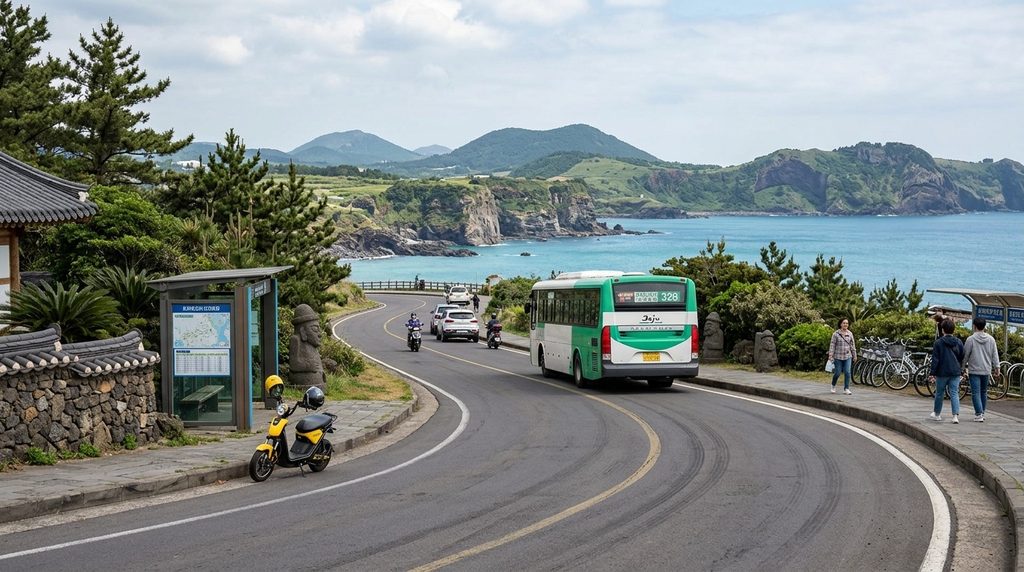
Transportation is one of the most important considerations when planning a Jeju trip. Attractions are spread across the island, and journey times can be significant even when places look relatively close on a map.
Renting a Car
For many independent travelers, renting a car is the most flexible option. It allows you to visit beaches, villages, viewpoints, hiking areas, and restaurants according to your own schedule.
Before renting, make sure you understand South Korea’s driving requirements and whether your license and international driving permit meet the rental company’s conditions.
Public Transportation
Buses connect Jeju City, Seogwipo, and many other parts of the island. Public transportation can be a practical option for travelers who prefer not to drive, but routes and travel times may require more planning.
Taxis and Organized Tours
Taxis can be useful for shorter journeys, while organized tours can simplify visits to several major attractions in one day.
Whichever option you choose, avoid building an itinerary that requires crossing the entire island repeatedly. Grouping nearby attractions together will save time and make the trip less tiring.
Where to Stay in Jeju Island
Where you stay can shape your entire itinerary because Jeju’s major attractions are distributed across different parts of the island.
Jeju City is convenient if you want easy airport access, restaurants, shopping, and urban facilities. It is especially practical for a first or final night.
Seogwipo is a strong choice for travelers focused on waterfalls, southern coastal scenery, and outdoor attractions.
Seongsan works well for visitors who want early access to Sunrise Peak and the eastern side of the island.
Aewol and western Jeju appeal to travelers looking for cafés, coastal scenery, and a more relaxed atmosphere.
For longer stays, splitting your accommodation between two regions can make sense. For example, you could spend several nights in the north or west and then move toward the south or east.
When comparing hotels, look beyond the room itself. Parking, breakfast, proximity to restaurants, public transportation, and driving access can all matter on Jeju.
Jeju Food and Local Specialties
Food is one of the easiest ways to connect with Jeju’s local character. The island’s cuisine reflects its coastal location, agricultural traditions, and distinctive ingredients.
Black pork is one of Jeju’s best-known specialties. It is commonly served grilled and is widely associated with the island’s food culture.
Abalone is another important local ingredient. It may appear in porridge, grilled dishes, seafood meals, and other preparations.
Seafood is naturally prominent, with restaurants offering different types of fish, shellfish, seaweed, and other products from the surrounding waters.
Jeju’s tangerines and citrus fruits are also well known. Depending on the season, visitors may encounter fresh fruit, juices, desserts, and other citrus-based products.
Local markets provide another way to explore the food scene. Dongmun Traditional Market in Jeju City is a popular place to browse local foods, snacks, seafood, and prepared dishes.
If you have dietary restrictions, check ingredients carefully. Some dishes may contain seafood, meat-based stock, or other ingredients that are not obvious from the name alone.
Jeju Culture, History, and Local Experiences

Jeju’s scenery is impressive, but understanding some of its culture makes the island more meaningful.
The haenyeo are among Jeju’s most distinctive cultural symbols. These female divers traditionally gather seafood from the sea without relying on modern breathing equipment. Their traditions have been recognized by UNESCO as intangible cultural heritage.
Jeju’s stone walls are another familiar feature. Built from the island’s volcanic rocks, they historically served practical purposes in agriculture and land management and remain an important visual part of the countryside.
The island also has a complex modern history. Visitors interested in understanding Jeju beyond its tourist attractions can learn about events such as the Jeju 4.3 period through museums and memorial sites.
Traditional villages provide additional cultural context. Seongeup Folk Village, for example, gives visitors an opportunity to see traditional houses and learn about older forms of island life.
When visiting cultural or memorial sites, take time to read the information provided rather than treating them simply as photo stops. Jeju’s history is an important part of what makes the island different from a typical resort destination.
Practical Tips for Planning a Jeju Island Trip
A successful Jeju itinerary is usually more about smart planning than trying to visit the maximum number of attractions.
Start by deciding how many days you have. Three days can cover a few major highlights, but five to seven days gives you much more freedom to explore different parts of the island.
Check opening hours and reservation requirements for major attractions before traveling. Some activities may operate seasonally or have restrictions based on weather and conservation needs.
Download useful maps and transportation information before leaving your accommodation each morning. Mobile coverage is generally useful, but having important information available offline can still help.
Bring comfortable walking shoes. Even attractions that do not involve serious hiking can require stairs, paths, or uneven surfaces.
Weather should influence your daily schedule. If a clear day is forecast, consider prioritizing major viewpoints or mountain activities. Save museums, markets, cafés, and flexible attractions for less favorable weather.
Finally, give yourself more travel time than you might expect. Jeju looks manageable on a map, but moving between distant parts of the island can take a substantial portion of a day.
FAQs
How many days are enough for Jeju Island?
Three to four days can cover several major attractions, but five to seven days is better for travelers who want to explore different regions without rushing.
What is Jeju Island best known for?
Jeju is best known for its volcanic landscapes, Hallasan, Seongsan Ilchulbong, lava formations, beaches, waterfalls, coastal trails, citrus farming, and distinctive local culture.
Is Jeju Island expensive to visit?
The cost varies considerably depending on accommodation, transportation, dining, and activities. Travelers can choose from budget stays and local restaurants to higher-end hotels and experiences.
Do you need a car in Jeju Island?
A car is not absolutely necessary, but it can make exploring the island much easier because many attractions are spread across different regions. Buses, taxis, and tours are alternatives.
What is the best month to visit Jeju Island?
There is no single best month for everyone. Spring and autumn are attractive for sightseeing and hiking, while summer is better for beach activities and warmer weather.
Conclusion:
Jeju Island combines volcanic landscapes, beautiful coastlines, mountain trails, waterfalls, beaches, local food, and a distinctive cultural heritage in a way that makes every region feel slightly different. From the sunrise views of Seongsan Ilchulbong to the forests of Hallasan and the quiet roads between coastal villages, the island offers far more than a short list of famous attractions.
The best Jeju Island experience comes from giving yourself enough time and keeping your itinerary realistic. Choose a few regions, leave room for weather changes, try local dishes, and explore beyond the busiest tourist stops. With that approach, Jeju can become a rewarding South Korean escape for hikers, families, couples, food lovers, and travelers simply looking for beautiful scenery.
Read more:Paros Island: A Relaxed Greek Escape with Beautiful Beaches and Villages