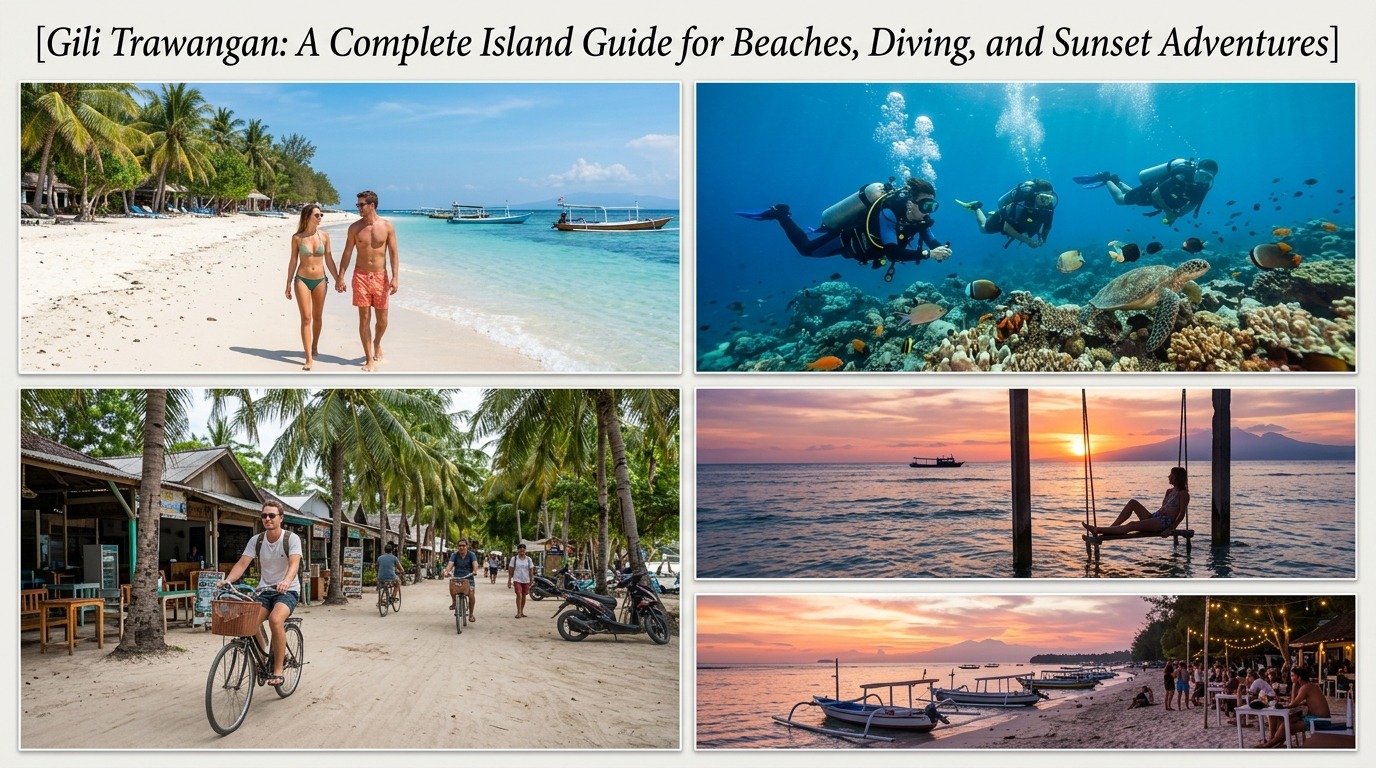
Gili Trawangan is the largest and most lively of Indonesia’s three Gili Islands, located just off the northwest coast of Lombok. Known for clear tropical water, white-sand beaches, colorful coral reefs, and spectacular sunsets, the island attracts travelers who want a mix of relaxation, water activities, and an energetic evening atmosphere.
Despite its reputation for nightlife, Gili Trawangan is more than a party destination. Days can be spent snorkeling with marine life, cycling along sandy paths, enjoying a quiet breakfast by the sea, or watching the sun disappear behind Bali’s distant mountains. With no regular cars or motorbikes on the island, getting around also feels refreshingly different from many other Indonesian destinations.
Where Is Gili Trawangan and How Do You Get There?
Gili Trawangan sits between Bali and Lombok, alongside the smaller islands of Gili Meno and Gili Air. It is part of the Gili Islands, which are administratively connected to Lombok.
Most international visitors reach Gili Trawangan either from Bali or Lombok. Fast boats operate between the islands, although schedules and journey times can vary according to the departure point, operator, weather, and sea conditions.
From Bali, boats commonly leave from ports such as Padang Bai, Sanur, or other coastal departure points depending on the service. Travelers coming from Lombok can use local or fast boat services from areas around the northwest coast.
It is worth checking your exact arrival point before booking accommodation because boat operators may use different landing areas.
Getting to the Island
- From Bali: Fast boats are the most common option.
- From Lombok: Boat transfers can be relatively short from the northwest coast.
- From Gili Air or Gili Meno: Local boats provide connections between the islands.
- Private transfers: Available for travelers who prefer more flexibility.
Boat schedules can change because of sea conditions, so avoid arranging an important onward flight immediately after an island transfer.
Best Time to Visit Gili Trawangan
The dry season, generally from April through October, is often the most convenient period to visit Gili Trawangan. Sunny weather and calmer conditions can make this period particularly suitable for snorkeling, diving, cycling, and boat trips.
July and August are among the busiest months. Accommodation can fill quickly, beaches and restaurants may feel more crowded, and boat services can be in higher demand.
The wetter months can still be enjoyable, particularly for travelers who prefer quieter surroundings, but rain and sea conditions can occasionally disrupt outdoor plans.
| Period | Typical Conditions | Travel Considerations |
| April–June | Warm with generally favorable weather | Good balance of activities and quieter periods |
| July–August | Drier and busy | Book popular accommodation and boats ahead |
| September–October | Warm and often less crowded | Good for beaches and water activities |
| November–March | Greater chance of rain | Keep plans flexible around weather |
For travelers seeking a balance between weather and crowds, the shoulder periods can be a comfortable choice.
Best Things to Do in Gili Trawangan
Gili Trawangan offers plenty of activities beyond simply sitting on the beach. Its compact size makes it easy to combine several experiences in a single day.
Snorkeling with Marine Life
Snorkeling is one of the island’s main attractions. The surrounding waters contain coral reefs and tropical fish, while sea turtles are commonly associated with the Gili Islands.
Local snorkeling trips can take visitors to several reef locations around Trawangan, Meno, and Air. Conditions depend on tides, currents, weather, and visibility.
Always maintain a respectful distance from marine animals and avoid standing on coral.
Cycle Around the Island
Because motorized traffic is restricted compared with most Indonesian destinations, bicycles are a popular way to explore Gili Trawangan.
The island’s perimeter route takes you past beaches, restaurants, small resorts, and quieter stretches of coastline. Some sections can be sandy or uneven, so cycling conditions are not identical everywhere.
Ride a Horse Cart
Traditional horse-drawn carts, commonly called cidomo, are used for transporting passengers and luggage. They can be particularly useful when arriving with bags because there are no regular taxis or private cars on the island.
Visitors should choose operators that appear to treat animals responsibly and avoid journeys during extreme heat when possible.
Relax on the Beach
Gili Trawangan has several stretches of sand where travelers can swim, sunbathe, read, or simply enjoy the ocean views. The eastern side is generally more active, while quieter sections can be found farther from the main village.
Beaches, Swimming, and Sunset Spots
One of the pleasures of Gili Trawangan is that you do not need a complicated itinerary to enjoy the island. A walk along the coast can reveal quiet beaches, small cafés, and places to sit beside the water.
East Coast Beaches
The eastern coast is close to many restaurants, dive shops, accommodation options, and boat services. It is convenient for travelers who want easy access to the island’s main facilities.
Sunset Side
The western side is especially popular in the late afternoon. From here, visitors can watch the sun descend over the sea, often with Bali’s mountainous outline visible in the distance on clear days.
Many beachfront cafés and casual restaurants provide places to enjoy the changing sky.
Swimming Conditions
Not every section of the coastline has the same swimming conditions. Reefs, tides, currents, boats, and coral formations can affect where it is comfortable to enter the water.
If you are unsure, ask local accommodation staff or a reputable water-activity operator about current conditions.
Diving and Underwater Experiences
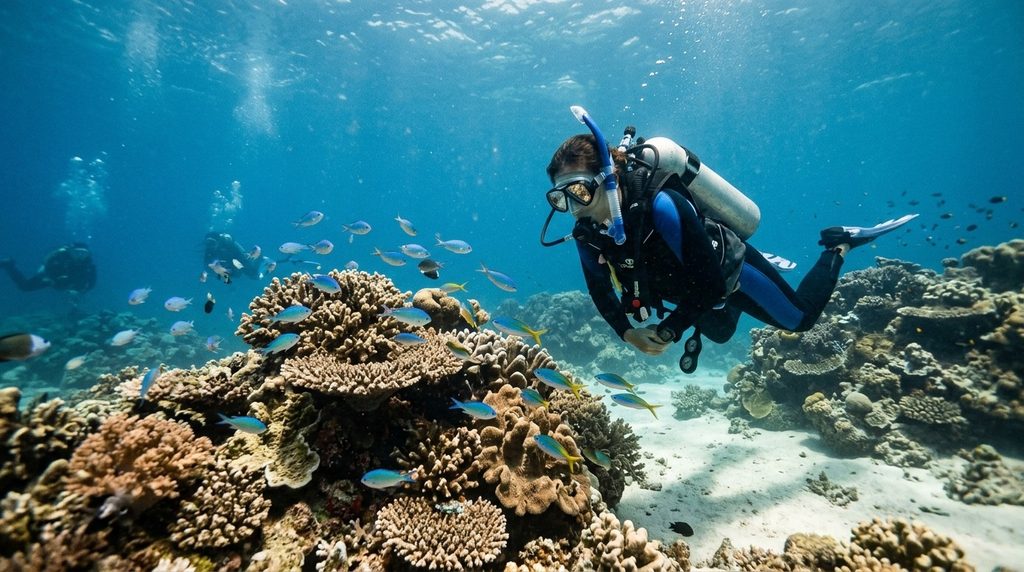
Gili Trawangan is an established diving destination, with dive centers offering courses, guided dives, and equipment rental for different experience levels.
The waters around the Gili Islands provide opportunities to see coral, tropical fish, turtles, and other marine life. Underwater visibility varies with weather, currents, and season.
Learning to Dive
Travelers who have never dived before can look for recognized introductory or certification courses. Choose a professional dive center with qualified instructors, appropriate safety equipment, and clear information about the course requirements.
Diving for Experienced Travelers
Certified divers can explore different sites around the Gili Islands. Some locations may involve currents, so dive operators normally consider experience, conditions, and certification when planning trips.
Do not schedule flying immediately after diving. Follow the decompression guidance provided by your dive operator.
Protecting the Reef
Responsible diving matters in a destination where tourism depends heavily on marine ecosystems.
- Do not touch coral.
- Avoid chasing marine animals.
- Keep equipment away from reefs.
- Never collect coral or shells.
- Listen to local dive guides.
- Use environmentally considerate products where practical.
Where to Stay in Gili Trawangan
Accommodation ranges from simple guesthouses and hostels to boutique hotels, villas, and beachfront resorts. Choosing the right area can significantly affect the atmosphere of your stay.
Near the Main Harbor
Staying close to the harbor is convenient for short visits and travelers carrying luggage. Restaurants, shops, dive centers, and boat services are generally within easy reach.
The area can be lively, especially in the evening.
Northern and Eastern Areas
These areas can provide a balance between convenience and quieter surroundings. They are useful for travelers who want access to the main village without staying directly in the busiest section.
Western Side
The western coast is attractive for travelers who prioritize sunsets and a slower atmosphere. However, some areas have fewer shops and restaurants, so check transport and dining options before booking.
When choosing accommodation, consider noise levels as well as location. If you want peaceful nights, staying directly beside nightlife venues may not be ideal.
Food, Restaurants, and Nightlife

Gili Trawangan has a varied food scene that combines Indonesian cuisine with international dishes. Local restaurants and warungs serve familiar Indonesian favorites, while cafés and resorts offer seafood, vegetarian meals, breakfast dishes, and Western-style options.
Local Foods to Try
- Nasi goreng
- Mie goreng
- Nasi campur
- Satay
- Fresh grilled seafood
- Gado-gado
- Tropical fruit
- Coconut drinks
Fresh seafood is particularly popular in coastal restaurants, although availability can vary by season and restaurant.
Nightlife on Gili Trawangan
The island is well known for its evening entertainment. Bars and restaurants around the main village can become lively after sunset, with music and social events attracting younger travelers and groups of friends.
The atmosphere changes considerably depending on where you stay. Travelers looking for quiet evenings should consider accommodation away from the main nightlife area.
Gili Trawangan also has a more relaxed side, with sunset cafés and restaurants where you can enjoy the evening without joining the party scene.
Exploring Gili Meno and Gili Air
One advantage of staying on Gili Trawangan is the opportunity to explore the other two main Gili Islands.
Gili Meno is generally associated with a quieter atmosphere, making it appealing to travelers seeking a slower island experience. Gili Air combines relaxed beaches with a wider selection of restaurants and accommodation.
Local boats can connect the islands, although departure times and services can vary.
Which Island Should You Explore?
| Island | General Atmosphere | Suitable For |
| Gili Trawangan | Lively and social | Nightlife, diving, groups, varied activities |
| Gili Meno | Quiet and peaceful | Couples, relaxation, slower travel |
| Gili Air | Relaxed but developed | Food, beaches, wellness, longer stays |
You do not necessarily have to choose only one. Travelers with several days can stay on one island and take boat trips to the others.
Getting Around Gili Trawangan
One of the island’s distinctive features is the lack of regular cars and motorbikes. Most visitors explore on foot, by bicycle, or using horse-drawn carts.
Walking is practical for short distances, especially around the central village. Bicycles are better for exploring the full coastline, although sandy paths can make some sections slower.
Transport Options
- Walking: Best for nearby restaurants, beaches, and shops.
- Bicycle: Useful for exploring the island independently.
- Cidomo: Traditional horse-drawn transport for passengers and luggage.
- Boat: Needed for trips to neighboring islands.
If you arrive with heavy luggage, arranging a cart transfer can save effort, especially in hot weather.
Practical Tips for a Comfortable Island Trip

Gili Trawangan is easy to enjoy once you understand its slower island rhythm. Simple preparation can make the trip much smoother.
What to Pack
Bring lightweight clothing, swimwear, sunscreen, sunglasses, insect repellent, comfortable sandals, and a reusable water bottle.
A waterproof pouch or dry bag is useful for boat transfers and beach activities. If you plan to cycle, comfortable footwear is helpful.
Money and Connectivity
Cash can be useful for smaller businesses, local transport, and some casual restaurants. Card and digital payment availability varies between businesses.
Internet access is available in tourist areas, but connection quality can vary. If reliable connectivity is important for work, check recent accommodation reviews before booking.
Health and Safety
Stay hydrated in the tropical heat and use sun protection throughout the day. When snorkeling or diving, follow the instructions of trained guides and be aware of currents.
Travel insurance that covers your planned activities can also be useful, particularly if you intend to dive or participate in other water sports.
How Long Should You Stay?
A two- or three-night stay gives most visitors enough time to enjoy the beaches, snorkeling, cycling, sunset, and evening atmosphere.
Four or more nights can make sense if you want to dive, visit Gili Meno and Gili Air, or simply enjoy a slower island holiday.
FAQs
Is Gili Trawangan worth visiting?
Gili Trawangan is worth considering if you enjoy tropical beaches, snorkeling, diving, cycling, sunsets, and a lively social atmosphere. It also has quieter areas for travelers who prefer a slower pace.
How many days do you need in Gili Trawangan?
Two or three days are enough for the main island experiences, including snorkeling, cycling, beach time, and sunset views. Longer stays work well for diving or visiting the neighboring Gili Islands.
Is Gili Trawangan suitable for families?
Yes, families can visit Gili Trawangan, especially if they choose accommodation away from the busiest nightlife areas. Parents should pay particular attention to swimming conditions and choose child-friendly water activities.
Can you swim in Gili Trawangan?
Swimming is possible in suitable areas, but conditions vary around the island because of coral, tides, currents, and boat traffic. Ask local staff about safe swimming areas before entering the water.
What is Gili Trawangan famous for?
Gili Trawangan is particularly known for its beaches, snorkeling, diving, sea turtles, cycling, spectacular sunsets, and lively nightlife. Its car-free island atmosphere is another distinctive feature.
Conclusion:
Gili Trawangan brings together many of the experiences travelers look for in an Indonesian island escape: clear tropical water, coral reefs, sandy beaches, beautiful sunsets, and plenty of opportunities to explore. Its lively social scene gives it energy, while quieter stretches of coastline provide space to slow down and enjoy the sea.
Whether you arrive for diving, snorkeling, nightlife, cycling, or simply a few peaceful days beside the water, Gili Trawangan offers plenty of ways to shape your own island experience. With sensible planning, respect for the marine environment, and the right choice of accommodation, it can be an enjoyable addition to a Bali or Lombok itinerary.
Read more:Nusa Lembongan: A Peaceful Island Escape Near Bali